Who needs reparations? Not Africa!

Who needs reparations? Not Africa. Centuries from now, uncommon sense will return to African thinkers and there will be a new dawn of fresh thought: A deadly combination of black leadership kleptocracy and Western liberal guilt has harmed Africans more than slavery and colonialism.  Even in the face of overwhelming evidence that Western aid does nothing but enrich African kleptocrats, Western do-gooders continue to heap gobs of US dollars on the “dispossessed” of Africa in the hopeless hope that the problem will go away. Haiti is a problem that was caused by that “little” problem called slavery. Haiti the Problem has remained intractable despite billions of dollars of “aid” funneled through 10,000 NGOs allegedly helping the Haitians through the trauma of their slavery, oppression, poverty, etc. Today, Haiti is still so poor, it is a fourth world nation.

Serious attempts to address the horrible consequences of slavery have been undermined by the arrogance of Western liberals and some African intellectuals who vehemently deny that Africa should be responsible for her own sins. Dialogue is driven underground as new thought is met with the unnecessary roughness of the liberal left, led by black Africa’s self-styled uncle – the great white liberal hope. Ask David Brooks of the New York Times. Recently, he mused aloud about Haiti and responsibility (the personal type). He was heckled off the square of common sense and called all sorts of names, racist, being the most benign of all of them. Brooks will never reminisce aloud again on matters affecting black folks. Who needs the stress? A cat that has sat on a hot stove will never sit on a stove again, ever.

Take the reparations movement. The only thing striking or remotely unique about the reparations movement is its incoherence of thought and vision. What is the problem that its founders are trying to solve? It does not help that some of the leaders of the reparations movement in America have been famous for shamelessly forming lucrative liaisons with some of Africa’s deadliest buffoon-leaders starting with dead dolts like Idi Amin and Mobutu Sese Seko. Different strokes for different folks. It is not slavery when it is black folks doing it to poor black folks. And of course, white liberals, ever so patronizing and avuncular go tsk tsk and look the other way. Where is the outrage?

The reparations movement has attracted a self-selected group of black activists who tend to color their opinions to match the color of green – money. They are outraged by slavery and mark my words, like thieving pedestrians who run into a bus that has just been hit from behind, they are lining up for payback. It serves the white man right, he should never have gone fishing for slaves in West Africa in the first place- capitalism would have provided him all the slaves he needed at 40 percent interest per credit card.

How much are the reparationistas looking to harvest from the offspring of our odious slave owners? Who gets credit for the trillions of aid funneled into Africa and promptly stolen and repatriated to Swiss Banks by thieving African leaders? Who gets credit for the trillions in welfare programs and affirmative action set asides, etc, that have been expended all these years? Before you start yelling, I am a firm believer in affirmative action. I believe also that the state has a moral, if not legal responsibility to ensure the welfare and prosperity of the downtrodden. So there! I am a liberal. Confused enough? Let’s continue.

Don’t get me wrong: Africa needs help. However, thanks to the ineptitude and savage greed of African leaders, all attempts to infuse badly needed aid into Africa have been as useful as giving a hog in a latrine a bath. The trillions of dollars of aid that have been given to Africa have done nothing for anybody I know except the NGO pimps riding around Africa’s desolation in a convoy of tinted SUVs. How about this for reparations: Scour all of the banks in the West, find all of Africa’s stolen funds, load them onto airplanes and drop them on the long suffering peasants of Africa? Now, that would be reparations.

African Americans who have been wronged by African and white kingdoms in that shame called slavery deserve to have a real conversation about what shape, if any, reparations should take. And I agree wholeheartedly with Professor Skip Gates: The question of restitution should include African perpetrators. That we are destitute should not make us any less culpable. There is a new slavery going on today, black on black slavery. In the name of democracy and capitalism, black leaders of all stripes are busy raping, pillaging and carting away what is not welded to the ground. I say to the African, forget the white man, and turn your rage on your real oppressors. They are black. Like you. Now, if the white man is still rich and foolish enough to offer monetary reparations, I want mine, every penny of it. In hundred dollar bills. I said it. Sue me. I am too broke to care.

Guest Blog: Yemisi Ogbe on Nigeria and a culture of disrespect

A CULTURE OF DISRESPECT – Yemisi Ogbe

“…A governor in Lagos, is a governor in Sokoto, is a governor in Ebonyi and anywhere in Nigeria. He is entitled to the same courtesies and respect. Convoys are here with us for good or ill and reasonable people yield the way for a second to allow convoys and sirened vehicle right of way.” – Steve Osuji, Press Secretary to the Imo State governor.

IN 1935, an ambitious young man went to work for the Bata Shoe Company as an accounting clerk. It was a prestigious job. He had a head for figures, and was in fact quite precocious. He would work for Bata for some years, but he always had far-reaching plans, none of which, of course, included a slow climb in a Czechoslovakian company that was opening branches of shoe retail stores in Nigeria.

For many of his contemporaries, it might have been enough if one day they made Chief Clerk in Bata, or even Regional Manager. But times were changing. Nigerian Nationalism was gaining strength and as it did so, it was creating exciting possibilities for the Nigerian capitalist.

In 1948, he was sent on a training programme to Czechoslovakia. In 1949, Nnamdi Azikiwe gave a landmark speech on anti-colonial independence in Washington D.C. Owning the Bata shoe was a near-religious experience. It was a well-made shoe, not stylish, reliable, exclusive, sold in a store where the smell of leather and organised display, and professional sales-person gave the concrete impression of owning something very special.

The reality was that very few Nigerians could afford Bata shoes or the Bata experience, and this was especially clear to the enterprising young man who recognised his opportunity in the sale of second-hand shoes. It is alleged that it was through one major shipment of second hand shoes that his wealth was made, or shall we say, established.

Allegedly, once this shipment of second hand shoes had been successfully introduced to the Nigerian market, he gained the ability to reinvent his identity; an opportunity that only having the means could afford.

Choosing a public persona that made an impression was key. Like the monarch, the masquerade, the minister of the Roman Catholic or Anglican Church, he had not only to dress the part, but also harness the supernatural, to create the idea of something bigger than just a man, bigger than just a Mr. somebody.

He recreated his past, changed his last name; bought association to royalty; acquired titles and added appendages to his changed name. He married a White woman. He discarded the White woman, organised a rambling household with many superfluous servants and beautiful light skinned women.

He fathered many children. He promoted the image of the autonomous Nigerian; the New Nationalist, albeit a particularly flamboyant one, thumbing his nose at multi-national corporations and other small enterprises that were owned by foreigners, and had dominated the Black African economy for many years, and of course colonialism…a particularly aggressive Nigerian entrepreneur, able to define his own frontiers, rule his own people, choose his own moral boundaries. His timing seemed impeccable.

His wealth, his charisma, and his ambitions were employed at exactly the right time. He became a member of the first Nigerian National party, the NCNC. His contemporaries were Obafemi Awolowo, Nnamdi Azikiwe, Mallam Aminu Kano, Herbert Macaulay, Sir Abubakar Tafawa Balewa, Margaret Ekpo.

Basil Davidson notes that Nigerian Nationalists were not perfect. It is a superfluous observation. The critical thing was the body of ideas about self-governance and the future of a Nigeria that seemed held together by very loose threads.

So, this man was not perfect, but his flaws began to manifest themselves in the most dramatic ways, especially in the way that he dressed himself. His wrappers were 30 feet of cloth.

His hats were adorned with extravagant plumage. He wore black English bowler hats brushed till there was not a lint in sight; priceless corals and gold, and the ultimate finishing touch to the man of means wardrobe; the walking cane.

IT was problematic that he was a confirmed member of a political ruling class that had from the start been accused of elitism, and condescension, of thinking itself intellectually superior to the Nigerian people.

And now, here was this man with a god complex, a new nationalist, new royalty, whatever, with his wrapper tied around the commoner’s neck. What had changed? It was not what Nigerians had hoped for in their projections about the end of colonial rule, the indigenisation of foreign trading and manufacturing, the growth of home grown enterprise, and the emergence of the Nigerian capitalist.

As the promise of Nigerians governing Nigerians frayed, never mind if the expectations may have been overestimated, he began to look out of place, so much so that when 1966 came with all its violent disillusionment and strong tribal separations and the consequent coup d’etat, he was the only Minister murdered during the coup.

Again, it was alleged that he was bound up and put in a giant ant-hill in the evening of one day, and brought out dead the next morning. It was a particularly cruel and long-winded process of dying, and his screams were said to have been heard all night and into the early hours of the morning.

There are no official records of these allegations. The records show simply that he was shot. He died with foreign bank accounts bulging with money, rumours suggesting amounts far and above one hundred thousand pounds sterling in one account in the UK, and to this day, Nigerians express all the paradoxes of that time, and the life and myth of the man.

We say he died with “our” money in “his” bank account, that he was the only minister killed during that coup because he was greedy, and obscene in his flamboyance and in his elitism. Yet we never fully trusted these thoughts to the records. Our formal history of his life are ambiguous, his condescension is concrete only in our oral stories. It is as if we are still trying to decide for him, but we can’t completely fool ourselves.

Did he progress through hard work and shrewdness? Was he a true nationalist? Capitalist? Or was he just an opportunist? If we can agree on those questions, then the issue of the beautiful girl around whose neck his wrapper was tied may become irrelevant or be an indulgence we would readily forgive.

Where did I get my more interesting twists on this man’s history? Well, they were a gift from a septuagenarian living in Somerton, in 1999. He handed me a handful of Onini and with it, the story. We argued, and finally agreed to disagree. And it was right that I should be suspicious of him. He was a White man akin to White men whose land were seized in Mugabe’s Zimbabwe.

The times of which he spoke were unique; right and wrong had been successfully muddied. He was working for UAC Nigeria in the time of the new nationalists and so his history could not be impartial. If the story were true, the end of his ownership of Nigeria along with his kind had been heralded by the importation of second hand shoes. He was disdainful, a little too adamant about the genuineness of his twists.

The reader must decide for himself what he believes. I remain enduringly fascinated with the 30-foot train attached to the neck of a beautiful girl, and what the beautiful girl imagined her position in the world to be. Yoruba kings of antiquity were deified in the most extraordinary ways. The Yoruba king was required to keep a positional distance from his people in order to reinforce his authority and divinity.

It was the Yoruba kings who were accused of owning human spittoons. Reverend Samuel Johnson in The History of The Yorubas meticulously describes the institution of force necessary to give the Yoruba King’s authority a superlative quality: The human spittoon’s role was simple, yet profound. A king was too eminent to spit in an inanimate container, so the human spittoon was given a designated place in the kings court, daily, awaiting the king’s urge to spit.

Not only was the king not allowed to spit in any other container apart from the human container, he was also not allowed to purse his lips in preparation for spitting. So, the human spittoon would be informed that the king wished to spit, and then, he would be required to assist the king in pursing his lips, and then he would open his mouth to receive the king’s spittle. This role was one of honour.

The relevance of this historical accusation still referred to in present-day Yoruba adage… “O’n yo ayo fami l’ete tuto” might be that the girl tied to the end of a train of a man of great importance is important because he is important. The king’s spittle makes the commoner special.

I once saw the wife of a governor flick a complimentary card that she had been offered by someone, at his head. He picked up the card from the ground and walked away as if nothing out of the ordinary had happened. I wondered whether having a card rebound off his head was more acceptable than being ignored.

One of my first thoughts on a culture of disrespect was that all communities of the world own their own versions, and it may be taken for granted that wherever one finds anything elitist, it is built on the self-esteem of someone somewhere considered less important, less intelligent, less deserving of some exclusive toy.

AND so perhaps the Nigerian culture of disrespect is not remarkable. Yet, the stories that mark our peculiar culture are unique and fascinating.

They suggest that the Nigerian is daily, excruciatingly demeaned on all levels in Nigeria, but somehow also, remains forever optimistic that his lot in life will change, things will improve; his psyche is rarely ever completely demeaned. It will be criminal of me not to note that a betterment of lot means that one day, one will also find someone to demean as a necessary accessory of becoming elevated.

The environment itself is peculiar. Everything, including all opportunities for advancement, seem to be touched with some measure of illegality or compromise of the person, or fluidity of values.

It is better not to be too virtuous in Nigeria, some people say. The man who is paid N10,000 by his employer for keeping a garden, who sometimes sells some diesel taken from his employer’s house does so with the highest sense of justification. His employer is a rich man, he can afford the loss of 50 litres of diesel every other week.

And really, he knows that his employer knows that no one can really live on just N10,000 a month. His employer knows he is stealing his diesel, but looks the other way.

The mentality is that everyone steals in Nigeria, so the aim is to hire the most considerate of thieves; the one that steals from you with the greatest “show” of modesty and skill, and always pay a salary that takes theft into consideration. The things that are left unsaid in this relationship are the most important.

Why doesn’t the employer pay the employee well? The question seems almost too relative. So maybe the employer is also paying his employee’s children’s tuition fees and providing a roof over his head, but those things cannot be taken for granted, and for that reason, they give the employer a sense of paternity, and the employee, one of the wayward child.

There is nothing nearing equality in their relationship; also rarely is there a real sense of pride in the employee and in carrying out his work. If the employee’s work were valued highly, then his pay should indicate that value… in an ideal world. Sometimes, the employee’s self esteem is boosted by stealing from his employer. When he comes in the morning, he greets his employer by bowing himself to the floor.

He adds “sir” to the end of every sentence, never looks his employer in the eye, and doesn’t speak unless he is spoken to. Sometimes, he endures berating or verbal abuses from his employer, as if he were a child, but if he can steal from him, then he has somehow outwitted him, and this employer is not so smart after all or so elevated.

Nigerians love the rungs of the ladder. Love the fact that people are compelled to know their place, compelled to earn their place by whatever means to suit the context.

The equality of all Nigerians would be a hard sell on any level in Nigeria. If we were all equal, then something very valuable would be lost. The rungs need to be kept intact so that the top can remain as excruciatingly enjoyable as possible. If anyone can use the same crockery as I use, then my fork becomes completely functional, and I will lose the enjoyment of its curves and its reflection of light, and craftsmanship.

A Nigerian diplomat in the ’80s visited a Nigerian monarch’s house in London. The monarch’s wife had recently died, and a delegation had been sent to commiserate with him. The diplomat’s first observation, or confusion on entering the house arose from the pictures on the wall.

They were mostly of the revered political leader, Obafemi Awolowo and his wife. The diplomat wondered why a person would adorn the totality of his walls with pictures of another man and his wife.

This was odd enough, but then they were showed into a living room in which the monarch was receiving guests, and there at the feet of the monarch, playing with his toes, was a former governor of a South-Western state in Nigeria. It seemed also, to be the most natural thing that these monarch’s toes were being massaged by this man.

The incongruity of the whole picture was lost in the fact that no one seemed uncomfortable in the room. The man playing with the monarch’s toes had not only been a former state governor, he was a professional man. He was at that time, managing director of a Nigerian newspaper.

He sat on the floor in his suit and shoes, and it was the most natural thing in the world. And there were the levels, the deference of the monarch to the man on his walls, and the deference of the man sitting on the floor to the one on the throne. All the progressive Nigerians in that room on that day understood perfectly the political connotations of the setting.

The Nigerian mentality is not so straightforward. If every Nigerian knows his place, and understands when to get on and massage a monarch’s toes, why is it that so many Nigerians scramble for the top? Why are we not more laid back, as we say, like the Ghanaians or Cameroonians? Why don’t we let the elites alone and not try to be one of them.
Why are there so many Nigerian big men? In the 1980s, the British government was compelled to make up its own list of which Nigerians were truly worthy of diplomatic recognition, and this was necessitated by the fact that they were inundated with calls from Nigeria requesting that Honourable So and So be picked up from the airport and looked after for the duration of his visit. Nigerians were said to have the longest list ever of VIPs.

The issue is that in order for the elite in society to truly survive, a large group of people must agree to be otherwise. In Nigeria, there is some serious crowding at the top, and the result is the creation of a nation of posers. In a country where wealth is so ostentatiously paraded, where the poor are doubly demeaned, it perhaps makes sense that everyone wants to be rich in Nigeria, as a guarantee against our scorching kind of disrespect.

Everyone needs must have a title of some sort in Nigeria. One’s name is either prefixed with one’s choice of career such as “Engineer” or “Architect” or by one’s religious beliefs; “Elder” in the church or “JP” for Jerusalem Pilgrim. Married women are compelled to insist on their complimentary cards that they are Mrs. Sombody.

The titles Nigerians adopt border on the ridiculous, and the theatrical; titles like Honourable, Excellency… The peculiarities do not end there. I once worked at a pre-school as an administrator. Parents were encouraged to send in gifts one day in the year to appreciate their teachers.

The parents called a meeting the previous year on doing something special for teachers, like getting them manicures or taking them out to lunch. One parent registered her surprise at the suggestion by saying it was analogous to giving a manicure to her maid!

THE statement was bottomless: What was wrong with her maid getting a manicure? How demeaned is the role of a house maid? In comparison to that, how demeaned is that of a school teacher? How can one of the most important jobs in the world be even demeaned at all?

The job of teaching in Nigeria is undeniably one of the least esteemed. That of a maid or housegirl is not even worthy of discussion. Children are shushed if they even breathe the idea of becoming teachers when they grow up and choose a career path.

The gap between the rich and poor is eroding quickly and gnawing at people’s feet, so our response is always one of desperation. I went to that part of Lagos reverentially termed “Old Ikoyi” and stood in a penthouse apartment, looking down into manicured lawns, tennis courts, shimmering swimming pools and the lagoon. I was told that I was standing in rented premises, and that the rent had just been paid for two years: N34,000,000.

My mouth dropped to the floor, and I thought of our staff at home, who sometimes needed a loan to pay a yearly rent of N120,000. It was a shock to the system. How could one not help defining people by such discrepancies in rented accommodation?

There is the story of two women, friends, who would go for walks in the estate referred to as Lekki Peninsula phase I, along the Lagoon. One woman began to excuse herself from going on those walks. The other woman was puzzled but didn’t dwell on it.

She went on the walks by herself. Another friend later confided in the friend who still went on her walks, that the other lady had lost interest because she was a Northern aristocrat and did not like the way her friend greeted everyone they encountered on their walks; security guards, hawkers, building site workers, just any human being really…one had to show some restraint after all, some class consciousness, for God’s sake.

In Lagos especially, that model nucleus of posers, the elites are a pretty close set, and one is either in or out by virtue of such things as having a name, being a member of a family with old money, having one’s own money, having charisma and money and beautiful things, speaking well, living in the right place, owning prime property, etc. The fundamental requirement is having money and some taste and driving and dressing the part.

The layers of snobbery ensure that having money alone can never be enough, one has to speak the lingo, understand the passing of the trends, learn to both wave, and backup by pretending that one is swatting a fly. In 2007, when the elite in Lagos grew tired of being robbed of their watches, they declared swatch watches of necessity, fashionable.

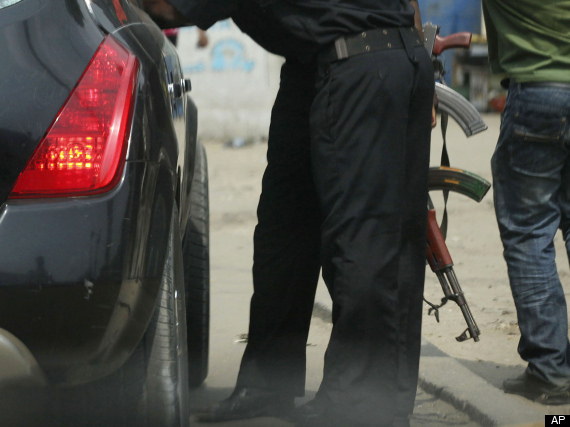
Elizabeth Udoudo was on her way to church on a Sunday morning. Her sons were in the back of the car. It was 9:30 a.m. and the roads were clear of traffic. The Imo State governor’s convoy came up behind her car as she drove up the Falomo Bridge.

The convoy of cars might have driven behind her car for a few minutes and then deciding that she wasn’t moving fast enough, the driver of the lead car motioned for her to get off the road. In response, she said she changed lanes to make way for the cars. They were descending the bridge and coming up to the turning off Kingsway Road, known as Rumens Road.

The lead car of the convoy made as if to overtake hers, drove beside her, the window came down, and a gun came out motioning for her to either stop or get off the road. By this point, the process was confused and she was sandwiched between the lead car, slightly ahead, and the rest of the convoy. The second car, an SUV was a hair breath away from her, nudging her off the road.

A third car ran into her rear passenger side. She swerved sharply and ran clean into the side of another car in the convoy. Everyone, of necessity came to a stop. She attempted to get out her seat-belt. A man in a face cap, grey pants and a white shirt was the first to step out of one of the cars. He came out with his hand on the gun holder on his side.

He drew out his pistol and came towards Elizabeth’s car. Before he got to her, one of the other men was already by her side, and as she was stepping out of the car, and at the same time attempting to ask why she was being harassed, the man slapped her across the face.

She stood between her door and the driver’s seat. There was a saloon car in the convoy that had about four men in the backseat. About six to seven men in total had disembarked from the cars in the convoy. The man that slapped her, slammed her car door against her as she was attempting to step out from behind it. Her sons watched from the back of the car.

One of the mobile policemen kicked in the passenger door on the other side of the car. Another mobile policeman standing behind the man who slapped her, brought down the butt of his gun on her side mirror. The governor’s car drove parallel to hers.

She described it as owning tinted windows and a Nigerian flag. The back window came down momentarily, and she saw a head-rest with a cloth embroidered with the Nigerian coat of arms. She attempted to direct her protest at someone sitting with his back to that headrest, but the window went up quickly after the man addressed the men standing around.

The man’s words seemed to be an order that the men return to their cars. They got back into their cars and continued their journey.

I asked Elizabeth what it felt like to be slapped across the face; if she was humiliated? What was the anatomy of the slap? How much force was used?

The most concrete answer I received was that she was grateful that it was just “a” slap. It is common for people to be beaten, whipped and physically injured by men protecting dignitaries riding in convoys. She felt she had got off lightly by being slapped just once. She believed that if she were a man, it would have fared much worse for her.

Most people go home and nurse their bruises. Elizabeth sent an account of her experience to the Guardian Newspaper. It was written with the help of a friend, and they both thought it judicious to write the account under the name of a “Lateef Gbadamosi”.

The article was titled “Imo State convoy of death”. Then came the most interesting part of the whole affair: the Imo State Governor’s Press Secretary’s response to the Guardian article.

The Press Secretary reference to the incidence began:

“…We are surprised because the incident under reference which happened on the morning of Sunday February 10, 2008 along Alfred Rewane Road, Ikoyi between the convoy of His Excellency, Governor Ikedi Ohakim of Imo State and an unknown woman is better left unrecounted and out of the public arena because it paints a shameful picture of motherhood; of womanhood.”

He described the affair as a security breach, and then went on to clarify the motives of those men who had slapped Elizabeth, and vandalized her car:

“It was indeed a case of a woman feeling too big and couldn’t give a damn whether it was a governor or a god who was going in a convoy and raising all hoopla”.The thing that seemed to have brought out the worst in the men against a five foot two security breach was the fact that she felt too big to get out of the way of the governor’s convoy. She didn’t know her place.

This letter has become one of the most incredible admissions of guilt in recent years. Elizabeth’s incidence as well as others, brought up the necessity of drawing up a code of conduct for “Nigerian big men’s” convoys.

THE code of conduct might have to be extended to all kinds of arena of Nigerian life. It might have to be a code of conduct on how to treat anything that resembles a human being.

It is interesting that a culture of disrespect might be confused for one of respect. One might hear Nigerians making general comparisons with other cultures on how our children are taught to kneel down and greet elders, or how we defer to those older than us by referring to them with titles, how we consider a person’s name so sacred, that only those close to him, or equal to him can mention his name; how we say “Good morning” instead of “Hello”.

How icons of authority remain sacrosanct in our society; how age is highly esteemed. In England, Gordon Brown is Gordon Brown, is at the most elevated Mr. Gordon Brown.

Here, he would be His Excellency. True comparisons perhaps, side by side, with the culture of determining a person’s value by how much money they own, what they drive, how they speak, what sort of mobile phone they own, side by side with the culture of jumping queues and jumping red-lights and moving out of the way of convoys.

Again, the unexpressed things are the most profound. There are homes in which there are special drinking glasses for when the driver requests for a glass of water. The driver knows the glass is special, the lord of the home knows it, and the children know it.

In Calabar in 2007, Tahalia Barrett, a volunteer Business Development Advisor with the Cross River State government looked into the possibility of creating a Nigerian perspective on transatlantic slavery. The Calabar Slavery Museum was the perfect medium. It already owned a building, wax works depicting in oversimplified terms the journey of the slave from his home in Nigeria to the plantation in North America, and then on to emancipation.

The Calabar Slavery Museum in order to offer something more than all the thousands of slavery museums all over the world must have an original voice. Tahalia as an African-American, noted that the story of transatlantic slavery was one that was told and retold in her culture.

If she was standing on Nigerian soil, she could take it for granted that she would hear something new. The issue of reparations remain one of the hottest offshoots of discussions on transatlantic slavery. At the anti-racism conference in 2001, in Durban, then Nigerian President, Olusegun Obasanjo declared that Nigeria

“…stood firmly behind the demand for an explicit apology. The wider international community has consistently failed to appreciate the reality that is particularly painful for us Africans…Apology must be extended by states which practiced and benefited from slavery, the slave trade or colonialism…For us in Africa, an apology is a deep feeling of remorse, expressed with the commitment that never again will such acts be practised”.

Grand words that were somewhat shabbied by Abdoulaye Wade’s declaration that his ancestors owned slaves. In creating an original script for the Calabar museum, word was put out to discover anyone who had ancestors carried away as slaves, but more importantly, anyone who had ancestors who had protested slavery, or died in protest or just stood up in protest.

The first batch of responses came back, and no one in the latter categories could be found. Instead it was offered that most of the old prestigious families in Calabar had traded in slaves.

It was a profound discovery, and one that was sure to create problems. Could one effectively run a museum from a city where one was alleging that its oldest most elevated members were slave traders or children of slave traders? What would be one’s contribution to the dialogue on reparations and our demands for apologies?

One could argue that, yes Africans owned slaves from antiquity, but that we were always humane to them, but would the argument have integrity, especially in the light of our modern environment?

Again, the issue of the anatomy of the slap. For me it was important that Elizabeth Udoudo define what her feelings were in the clearest of terms. It had been months since the incident and there had been many commentaries on the internet and in newspapers about it; what did she hope to gain from keeping it alive in the press and talking about it? Did she want some form of financial compensation? Did she want her car repaired?

Why had she paid a lawyer to come up with formal terms of reference on the incident? What was the value of the apology if it were forced? I wanted to really understand what her motives were? Somehow I believed, possibly erroneously, that if money were the issue, then there was some loss of integrity.

I pushed Elizabeth, and she was clear that the physical slap meant little, but to term her an unknown woman…In her own words, it meant: “I don’t have any value. I am not important. If we were to put it in the most accurate of terms, I don’t exist. I am irrelevant”.

This was the issue. If she were a nobody, then anything could be done to her without fear of repercussions. She had to show her children that you just didn’t walk up to a woman, slap her in the face, and get away with it.

The apology would be landmark. It would mean that nobody has rights, and in turn no one has the right to whip people out of the way, even if he is the president of Nigeria. I was glad that I had met Elizabeth, unlike how the papers portrayed her, she was not a victim. She was clear that she had not acquiesced to carrying the end of anyone’s wrapper.

NOTE: Yemisi Ogbe, a former columnist at Next Newspapers and one of Nigeria’s finest writers maintains her own blog, a delectable offering appropriately called The Longthroat Memoirs that will make you hungry for authentic Nigerian cuisine – and her lovely prose poetry. She is on Twitter as herself @yemisiogbe. Follow her. Google her; you will be smitten.

Lola Shoneyin: Loving Baba Segi’s Wives

 Reprint: First published in Next Newspapers, December 2010

The writer Lola Shoneyin lives life joyously on her own terms, tastefully wearing her smarts and sensuality in a world bound in rigid emotional ropes of hypocrisy. Her poetry is scrumptious, turning cold rocks into sniveling lovers. She wields words like fierce weapons against the past tense posing for tradition. This thinker of Nigerian extraction is ahead of her time in promulgating innovative ideas and in the way she deploys her myriad energies to the arduous task of jump-starting courageous conversations in a complex society like Nigeria

Cassava Republic has just released Shoneyin’s novel, ‘The Secret Lives of Baba Segi’s Wives’. I adore this book. From start to finish, it is a triumph of life over adversity, a joyful ode to the sensual mystery and resilience of the human spirit. I love this book. Shoneyin brings together her unique poetic senses and her love of the human story and wraps up a great tale with muscular prose.  Politely defiant, Shoneyin bends every cultural artefact and taboo in her brainy sensual path. This is a soap opera between the covers. I love the author’s bold use of language and imagery. She teases, she taunts, she soothes with her words. This is a rebel gleefully tugging at silly clay boundaries. Every other page hides sentences that desire to stir your consciousness – and your loins. Nothing is taboo for Shoneyin; she is eclectic in a brilliant near-reckless manner. Her words are defiant, and drunk with the sweet musky smell of primal sex. Sexual tension keeps the pages erect and thirsty for lusty sex. And the curses and trash talking rain down freely, Nigerian style.You might as well be riding around in a bolekaja enjoying Nigerian life at its most impish.

In ‘The Secret Lives of Baba Segi’s Wives’, Bolanle, a university graduate joins Baba Segi’s household as the fourth wife. Using this canvas, the author inspects Nigeria’s motley issues, as if from a dirty window. It is pretty, ugly, and riotous and secrets do not stay hidden for too long. Nigeria is a market and everything is sold in the open. In the process, we are entertained. Shoneyin taps furiously and insistently on social issues, prying their doors open for the reader to confront. Issues like marital abuse, rape, sexuality, infidelity the relentless march and meanness of the new Christianity, the ravages of a soulless consumer society and the resulting mimicry of the other as in women bleaching their skins to look attractive. There is an abundance of misogyny, and patriarchy reigns supreme. Sons are a premium over daughters and well sought after and celebrated by the society. Baba Segi is a loving father, if a bit of a buffoon and a crude lover. He is an unattractive man who has a disgusting habit of losing his bodily fluids when he is stressed. But he is a good provider and the women humour him, to a point. Women and children cope by manipulating men – with mixed and unintended results.

Shoneyin addresses the mystery and complexity of relationships and sexuality from a woman’s perspective. Not many would agree with her sympathetic, almost defiant take on the issue but she does give a powerful voice to those whose crime is to be different from the tyrannical majority. In that respect, compassion gushes from her pen. In the crush of issues like arranged marriages and the expectation that women and children are chattels beholden to men, there is a lesson here: Women dream also of the same pleasures and desires that men take sometimes violently.

The book gains confidence and traction with the turning of each page, however, it was hard following the chapters as the points of view changed. It stretches credulity to imagine Bolanle the fourth wife as a university graduate married to a semi-illiterate polygamist. She does not present herself as learned. The wives’ characters could have been fleshed out a bit more robustly. In a few instances, the dialogue was awkward. My worst line: “Well, you know before you wrap leaves around liquidised beans one must ensure that the ingredients are complete.” (p221) It is the worst translation of a proverb I have ever read.  The book is partly a conversation about paternalism and misogyny but it comes across as hostile to men. Baba Segi is depicted as a hapless buffoon who loses his bodily functions under stress. Men are typically depicted as bumbling idiots with balls for brains and the book gleefully lobs insults: “Men are nothing. They are fools. The penis between their legs is all they are useful for. And even then, if not that women needed their seed for children, it would be better to sit on a finger of green plantain.” Regardless, the book will keep a reader thinking for a long time. Not many would agree with the too-tidy ending, life is too complex for that. But who cares? I love this book.


Tales from the city of memories


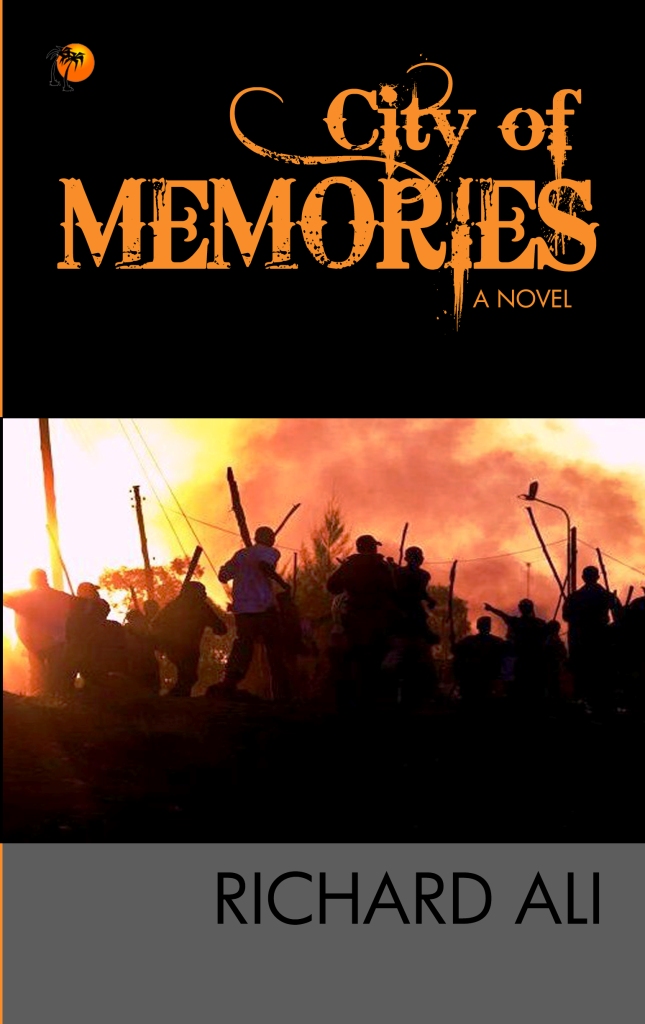
The writer Richard Ali has a debut novel out, City of Memories. A digital native and an Internet warrior, Ali is a leader of a pack of young Turks actively promoting African literature on the Internet. A renaissance man, armed with a law degree and a way with words, he is currently the editor of the online magazine Sentinel Literary Movement of Nigeria. He also recently teamed up with friends to establish a publishing house in Nigeria, Parrésia Publishers Limited, also the publisher of his book.  I love his poetry; it is new, different and politely divorced from the poetry of protest, anguish and despair that used to be the hallmark of postcolonial African poetry. Ali is also a passionate youth activist, most notably one of the leaders of the highly successful but short-lived #OccupyNigeria that in January confronted the Nigerian government over its decision to eliminate the fuel subsidy and raise fuel prices.

Ali is the face of a generation of feisty writers that I admire immensely. I applaud their ingenuity and can do industry. For they are doing for African literature what the West did for the older generation – they are building their craft and their own publishing industry. The older generation had Heinemann and Fontana publishing houses. These writers have nothing but themselves and that wild frontier called the Internet. They are insistent on a mission whose mystery is beyond their understanding, the need to tell a story. Overall, Nigerian writers in the Diaspora have been good for Nigerian literature, pushing our stories beyond frontiers that were once unassailable. However, Ali’s book reminds me why I enjoy reading Made-Inside-Nigeria Nigerian literature. The language is distinctly homegrown and you can almost taste and feel every page, there is nothing like a home-cooked story. The tenderness is indigenous, not contrived. Ali excels at dialogue the way you would imagine two people actually conversing; the conversations between the lovers Rahila and Faruk are sensual and convincing.

With City of Memories, Richard Ali has established himself as perhaps the most important Nigerian writer at home or in the Diaspora writing about Nigeria from a Northern perspective, bar none. We have not had a Nigerian write about the North with such passion and intellect as Ali. Not since Cyprian Ekwensi.  Ali demonstrates a good mastery of prose, employing nuanced turns of phrases.

“Long stretches of road were poorly maintained and every now and then the highway broke up into vague stretches that threw up geysers of dust the minute the tyres touched them. On both sides of the road, dry savannah bore the intense heat without bursting into flames. Yet there were nomads all along the way in the heat, herding more cattle than he had ever seen.” (p 10

The book is mostly pretty prose-poetry, time periods swapping themselves in and out of the reader’s consciousness. It is confusing at first but the reader gets used to it.  Ali is good when there is no fancy footwork with the dialogue, when the language does not get in the way. He endows the reader with prose so dreamy and lyrical you forget that no one thinks and talks like that in today’s Nigeria where the dollar is the only ideology and deity in a political climate of pretend opposition. Here are my favorite lines:

“It was the very worst time of the year: November. In Bolewa, it was a time of wailing harmattan winds, blowing dust and dryness from the Sahara, which lay not two hundred kilometres away. Everywhere, the sparse grassland was being set afire and bare-chested young boys made game of the scurrying grasscutters and rodents. It was very cold. In the old calendar, it was called the month of Flames. For fire ruled side-by-side with the dry, Northwestern winds. At night, there was a cold chill and you could find no one in the streets if they could help it. If you looked hard enough, you could see Mr. Cold raging personally, menacingly, towards you, bristling and blowing his disdain across the fields. It was at such a time that Usman left me.” (p 71)

So, what is City of Memories all about? The book’s blurb says it all:

“City of Memories follows four characters [the lovers Faruk Ibrahim Rahila Pam, and the political adversaries Ibrahim Dibarama and Eunice Pam] negotiating the effect of various traumas. Towering above them is the story of Ummi Al-Qassim, a princess of Bolewa, and the feud that attended her love – first for a nobleman, then for a poet – a feud that bequeaths her with madness and death. All four are bracketed by the modern city of Jos in Central Nigeria, where political supremacy and perverse parental love become motives for an ethno-religious eruption. A thwarted love affair forces Faruk to flee to the Northeastern village of Bolewa, from where his parents emigrated three decades earlier. There, he unearths his mother’s tragic past and discovers the key that just might keep his country one – if he can make it back to Central Nigeria alive.”

There is plenty to like about the book. Ali does not waste his (and our) time on a gazillion characters; he invests his energies on a few well-built characters. He makes the point now universally known that the North is not monolithic, and he dissects the ethnic tensions and flare-ups between the Hausa and the indigenes in the North Central region. The book, Chapter 3 in particular, is a very thoughtful treatise on individual and communal identity. There are nice sections on campus life as Ali records the hell that is university education. The letters between Faruk and Rahila are adorable; they alone are worth the price of the book.

Ali tries and mostly succeeds to impress the reader as well read and deeply introspective. The beauty of the book’s prose however is often ruined by Ali’s desire to be seen as cerebral. The striving to be erudite grates like nails on a blackboard. All these alien influences and the contrived grandiloquence of the language give the book a phony feel. Ali has had more than his fair fill of Khalil Gibran, Friedrich Nietzsche and he is eager to share. One almost wearies of all these moody intellectuals roaming Nigeria muttering to the beat of Miles Davis’ 1959 Kind of Blue album.

The weaving in and out of time periods is awkwardly executed but it keeps the story alive. Ali is too self-conscious of his otherness; italicizing indigenous words. It would have been more helpful to provide a glossary at the end of the book. Many African writers are incredibly well read and worldly. I do wonder if they ever read other African writers. They quote Western thinkers with glee. To Ali’s credit, in the book, at the tail end, Faruk the protagonist is reading Jude Dibia’s book Unbridled. It was amateurish, Faruk couldn’t have read the book since it was published in 2007 and the book is set in the eighties and nineties. The reflections on feminism were not convincing although it is a nice quantum leap from the near misogynic indifference of the Soyinka and Achebe era.

A professional editor would have helped the book immensely, like many books published in Nigeria, the book is plagued by some editorial issues. The book’s plot seemed elaborately contrived but inchoate; it is not as elegant as his prose, the conflict is forced and the resulting conflagration seems out of proportion to the alleged crime. Also the book suffers a problem in many contemporary Nigerian works: Over-wrought self-absorbed hand-wringing by idealistic protagonists. Whole sections appear to be long running personal opinions wrapped in the gele of fiction.

Ali demonstrates a good grasp of oral history but how reliable is the narrative? Given the range of the numerous subjects he touched on it would have been useful to include references and a glossary. On the whole, the research was sloppy. As far as I can tell, the book is set in the 80s and 90s. However, early in the book, on page 77, there is a “lemon colored” Apple iMac. This is highly improbable since the first iMac was released in 1998, in just one color – blue. On page 70, Bolewa’s population was 80,000; however on page 82, it was a hundred thousand.  There is a large LCD television in the book (p 184). That would be highly improbable in the 90s. These are all editorial issues that could have been addressed by a professional editor.

The main protagonists are idealistic to the point of irrationality, what some would call an unrealistic moral absolutism. In that sense, the book is hewn from the Soyinka and Achebe tradition, starry eyed idealists complaining about everything and proceeding to out-do their oppressors once it is their turn to be oppressors. It is plausible though; the 90s housed the last of these idealists. They fled the dictator Sani Abacha and now live abroad where they write angry essays excoriating Nigeria. Those left behind now suck Nigeria dry at the breast pumps. In them we are confronted with the hypocrisy of moral absolutism, the power of empty words.

The protagonist Ibrahim Dibarama a veteran officer of the Nigerian civil war is a walking bag of personal opinions. He is angry about the so-called Igbo coup of 1966 and ignores the equally bloody counter-coup organized by Northern soldiers. He lionizes the Northern leaders. And seems to rationalize what happened in 1966:

“There was a breakdown in communication across the north following the coup and before anyone could get anything together, the myth of the Igbo coup had spread. Ironsi lacked guts, lacked vision, lacked everything, alienated everybody, could not impose his authority – and his wife didn’t help matters, promenading like a victor all over the place. Most of the political leaders simply folded their arms and let the first killings happen. And of course, we had yet another supreme egotist in Enugu seeking a place in history with a capital H. Well you know what happened after that.”  (p 52)

[Tafawa] Balewa was a believer in the country. He saw the northern region as a company of complementary people who could come together for mutual benefit. And it was the same way he saw Nigeria. Of all the Northern leaders, he was the most unafraid of the Southerners.” (p 51)

The character Hassan Abba in charge of Murtala Mohammed’s troops that carried out the ethnic cleansing in Asaba tries to confront the massacre but appears to be offering apologies and excuses at the same time. However, Murtala Mohammed is accurately depicted as a deadly Don Quixote:

“When I arrived on the 22nd, all I met were vultures and Biafran corpses, civilians. Henry, my handpicked battalion leader, what was he doing? Shooting Mid-Western civilians! It was a mess. A mess! Corpses all over the place. It was criminal. I reimposed a curfew. That, that was Barbaria right in the centre of my country – Sir Tafawa Balewa’s dreamed of country. I imagined a race of evil djinns had run rampant. Ah Hassan, it was just a mess. Some of the finest soldiers – yet, war had turned them mad. Whatever the rhetoric, I damned Murtala; nothing, no revenge, was worth what I saw that day. But who would believe me? And yet some at Supreme HQ honoured me for that fiasco. I am a soldier all that was unnecessary.” (p 60)

This is interesting considering that the General Officer Commanding (GOC) Two Division of the Army during the civil war, Major General Ibrahim Haruna said recently that he had no regret for his troops’ massacre of over 500 males in Asaba.

We are different people, separated by the blasts of the muezzin and the relentless thumping of Pastor Joe’s bible. However, the turbulent 60s was a time of fixed physical boundaries and homogenous groups glaring at each other. That provided the context then for the divisions at the time. Today history repeats itself for different reasons. I look to Ali and others to continue the debate and to offer innovative ways forward. Finally, let me observe that what limits most African literature is the monotony of its range. The “fiction” is actually a collection of observations and strongly held opinions about certain social conditions. It is a convenient foil and cop out; an author accused of bias points out coyly that the book is, well, fiction. But then, is the reader fooled? As an aside, I do think Nigerian male writers take themselves way too seriously. Sex rarely happens in their books. They must have arrived this earth by Immaculate Conception. Well, I learned a new dish – balangu  Google it 😉

San Ysidro Windsong

for you, my friend, you who paid the ultimate price… for a dream deferred…

It is today in America. And it is tomorrow in Nigeria. The heart aches for Nigeria, for home. Africa comes calling and I must go touch the eaves of the ancient caves that guard my umbilical cord. I am fleeing the darkness of a dying winter, chasing the promise of spring. I am escaping darkness, racing, fluttering heart, to the sun where my ancestors sit waiting for me.  I am racing to the sun where my mother stands pretending to tend the cooking pot, eyes roving the skies for the white man’s bird that will drop me, restless son, onto her aching laps. The wandering disease attacks me violently and I must go. I must go bathe in the stream of the forbidden fish. I must drink deep from the palm wine of the palm tree that never dies, air-conditioned coven of witches and wizards. I must walk through the little path where my grand father is buried and go feed my mother’s people in the smoky pantheon where dignity fights a ferocious battle with poverty. My stomach, hostel of the white man’s food will collapse in peppery shock, my cells will protest the invasion of harsh peppers, but I will sit down in my mother’s smoke-drenched kitchen and eat everything that flows from the pot that sits on the tripod of firewood that cooks wonders. Izuma of the stout bush that cannot be felled, I come to you; your little boy in the blue suit, shivering in the summer sun is home, to you. Izuma of the endless savannah, hold me. Your little boy is back.

My friend, a thousand stories invade my aching head, a thousand stories collapse in my aching head, and in my aching head, a thousand stories morph into a giant lie.  And they call it fiction. There are no mysteries, only lies. Warriors and poets jump out of digital vinyl in pretty lock step, at ease with the white man’s digital 0s and 1s. Baba the prophet dressed in his underwear and marijuana smoke hangs laconically from the door of the overloaded molue bus, and wails his vision in a voice crisp and guttural, in the voice of the masquerade that just escaped the anthills of the playground of my childhood. And with Baba’s horn, you can taste Lagos heavy with the smell of sex, shit, blood and petrol. The poet leans on his solo horn wailing sad sorrow, soaking my cells with songs of promise and sadness. And you can taste Lagos heavy with the smell of sex, shit, blood and petrol. I close my eyes and the women of Africa arise from digital vinyl, they rise as one from the rivers of Africa and their dance tells the story that I know by heart. I close my eyes and my heart races to the playground where I performed dark sensuous experiments with Angelina:

If your eyes squint hard
 until the blood points the way to the anthill
  that houses the cheer leaders of the spirit world
   you will see them…
    dancing, dancing, dancing.
 
Hear the horns
 teasing the envious skies.
Hear the drums chasing the dancers’ feet.
Feel the dancers’ feet chasing the drums until
 the eyes get all confused.
 
And every night
 we will go to sleep with the dream that you handed us…
And suddenly things don’t hurt nearly as much.

Many moons have passed through the big river of this life and I have not spoken to you my friend. You are sad and I cannot help you. But you say it is well. Here, if you come close to me, sit by me, by this fireplace, home of the white man’s fake wood that burns at the flick of a switch, I shall tell you of my travels. And maybe, then, you’ll feel better. I have been to the white man’s planet. The white man lives in another planet. And he knows it. But he is not telling us. My mother, Izuma, conqueror of the stout bush told me that the white man knows where God is but he is not telling us black folks. The white man wants to protect God from us black folks because we may kill him in the rage of our condition. We are different from the white man and he knows it. But the white man humors us, assures us that we are the same; we are from the same planet. That, my friend, is a big lie. They are different people, from a different planet, white folks. They come from a planet where everything is different, even their rice is colored funny. We are not one with the white man; we are not of the same planet. But the not knowing keeps us apart from they that know. The white man is an alien nibbling delicately on what is called art in our planet.

And my friend, I shall die and come back, Phoenix, king of the ashes of exile and there shall be no nations, as we know it. There shall be no boundaries. Relationships will be strung tightly through lines that transport 0s and 1s to the conscience of liquid crystal displays. Relationships will pop at your monitor-mirror of a thousand uses, seeking warmth, seeking solace. There shall be no nations and no boundaries. And no moats, no waters will hold the flight of fear from the lands of shame and terror that bore us and tore us violently from our mothers’ umbilical cords. And you have not seen the flight of the fleet-footed from the cold and heat of evil lands. The worst is yet to come, my friend, the worst is yet to come.

And so, I am trapped in the white man’s capsule that flies a billion times faster than the angry catapult of my childhood. We are going west, chasing dawn, like a fool chases his shadow, I wonder if we’ll ever catch dawn. I just had breakfast in the east, now skinny little white women in uniform are offering me breakfast again. I gain a breakfast, gain three hours and I lose everything else. Deep in the bowels of the white man’s bird, I regale my fellow travelers with stories of exile in America’s Mississippi delta. I tell them of my days in the delta, trying to be a black student in a white school. I tell them of the white professor who literally patted me on the head and called me a handicapped child who needed special ramps into the highway of academic success. Because I am black. I tell them of the professor who would not talk to me in class even though class participation accounted for most of the grades. Because I am black. I tell them of the fear of soiling my pants as pot-bellied white men in white sheets and hoods gamboled merrily on the lawns of white fraternity houses at 2:00 a.m. while my ancient car threatened to sputter to a stop right before their salivating selves. I was afraid. Because I am black. Deep into the night, the scotch whiskey hissed through the rocks and raced through my arteries to calm my nerve cells and I held my fellow travelers hostage with tales of horror inflicted on me by their forefathers. The shame on their faces was enough reparations for me. There must be a God.

Dinner at the Gaslamp quarter in San Diego. Our dinner hosts have more money than they know what to do with. The prices on each of the appetizers will buy two month’s supply of egusi soup for my entire family. Our hosts push the menu in my face and they say order whatever you want. They show me the wines, with prices that drop my jaw to the floor and they say order what you want. It is a food lover’s heaven if you are from the West and love eating artwork. Me, I am dreaming of a big bowl of hot steaming pounded yam and ogbono soup choking in the wealth of stock fish, smoked fish, cowfoot, tripe, oxtail, and snail bigger than the ears of an elephant. But I am in San Diego, having dinner with wealthy attorneys who want to sell me what I don’t know and I must look sophisticated. I choose “pan-seared escargot and roasted fingerling potato” as my appetizer and “steak au poivre, pan seared 8 oz steak, cognac and white peppercorn sauce, pommes frites” as my entrée. For dessert, I ask for a glass of cognac. My friend, the African-American is moaning his displeasure; he doesn’t like the food and he wants to go to Burger King with me and wrap his gentle fingers around the biggest and juiciest burger that he can find. With French fries. And he wants to wash it down with fresh moonshine (American ogogoro), straight from the plains of St. Petersburg Florida. “Where are my fries?” he wails softly as the expensive artwork that passes for food is placed delicately before us. In the presence of expensive food that tastes like plastic credit cards, my thoughts race and I am thinking of my fate in my old age. Will my American children dump me in an old people’s home to die a slow death from eating alien meals? Will my “assisted living counselors” serve me pounded yam, with egusi and all the trimmings? Or will my meals come in the measured manner that lab rats are fed in biochemistry labs?

We are two Americans and we are going to do brunch and margaritas across the border in Tijuana, Mexico. We shall stop at the restaurant just across the border. They say we may cross the border without visas, without passports. We are Americans they say. All we need is our American driver’s license. I don’t believe it. I carry my American passport just in case my Nigerian accent mocks my claims of alien citizenship. My friend, the blonde one teases me about carrying my passport. She doesn’t have to worry, she is a pretty blonde American, she will travel the world naked and American marines will die defending her right to be naked. I am a different issue altogether. I am American on paper. And I am black.

The trolley takes us rolling past San Diego and gently coughs us up at the border in San Ysidro. I leave America behind just by the bridge where the one-man mariachi band trolls for dollars. My pretty blonde friend holds my hands as the taxi drivers hurl themselves at us hustling for fares. I hold her hand. She is afraid. I am afraid. We are both afraid for different reasons. We eat lunch in Tijuana, a meal that looks like the raw ingredients for rice and beans and stew. A mariachi band comes to our table and we request a song. The bandleader looks at us and asks if we want a song for lovers. We say no, our spouses would not like that. We want a happy song. And they sing for us a sad song.

We take the taxi back to the border. My friend has her driver’s license. I have my driver’s license and my American passport, just in case. When we get to customs, the American asks my friend, “Are you an American?” and she says, “Yes” and waves her driver’s license at him. He waves her into America. But she won’t go, she holds my hands still. She is afraid for me. I wave my driver’s license at the American and he ignores my license. My friend the pretty blonde is still holding my hand hostage when the American asks me, ‘Are you an American?” I hold on to my blonde friend’s hand and I say, “Yep!” and the American says, “Where were you born?” I say, “Lagos, Nigeria.” The American dons a wicked smirk and asks, “When did you get your U.S. citizenship?” and I say, “It has been a long time, I don’t remember, sometimes in the early nineties…” And he goes for what he thinks is the jugular and asks wickedly, “How many stripes are there in the American flag?” My rage wells up from within the bowels of my river of shame, I reach for my American passport in my back pocket and I fling it down on the idiot’s desk and I wail: “What a stupid question! I am not answering that! Here, I am an American, I am a dumb American, here is my passport, are you happy now? America is safer BECAUSE OF YOU! Are you happy now?” My friend the pretty blonde squeezes my hands tightly as if squeezing away my rage. They will arrest me if I don’t control myself. She mutters something about taking an anger management course. The stupid American grins even wider and waves me into America, with a smirk and says “Welcome home!” Welcome home! I am an American. I am a Nigerian. I am a human being. Let me in.

I am happy to leave Tijuana. In Tijuana I saw my past, my present and my future and my heart wept. My conscience died many times as little children, offspring of beggars tugged at my shirtsleeves and heart pleading for quarters. I reached out to hold one, just big enough to be my little boy and he scampered off, running from the alien intimacy and warmth of another human being. I think I shall go home and hug my boy.

So my friend, this is the season of the wandering disease. It has infected me and I must travel all over seeking solace in cold and hot places, looking for answers that elude me at home. Trapped in the grip of this disease that sends my restless soul shivering, I have been to places the beauty of which will haunt me forever. I have been to places, the sadness of which will haunt me forever. Be strong, my good friend. I must leave you again. I am going on this journey to where we came from. They have lampposts that have no lamps. They have telephones that have no voices, and roads with potholes that swallow cars the size of elephants. And everywhere marauders roam the land masquerading as policemen, soldiers, politicians, robbers, dinosaur-size mosquitoes and locusts, robbing and pillaging the sweat of our people. But it is still a beautiful place, the land of my birth. I shall eat simple meals, drink ogogoro from recycled soda bottles and if I am lucky I shall dance on the streets with Rex Lawson and Celestine Ukwu. Wait for me; I shall be back from this journey when my glands break free of the fever of the wandering disease. And I shall come back for you, lion cub. Farewell, lion cub, I shall miss you… And I wrote this song for you. I shall miss you, lion cub.

Now…
it is sun down at the ilo;
follow the dust storm
and you can’t miss the ilo…
the poetess with the flute
chases the masquerade
with her flute…
 
Now…
the flute taps a solo wail
points the masquerade’s feet
to the right address
on this tired, tired, earth.
Now…
Listen, listen to the air
the air is an orchestra
horns insistent
piercing the crisp silence
of an evening gone to bed.
 
Now…
hear the air wail…
the air… phoenix
is a talking drum
can you hear the air?
 
 Now…
listen to this…
the drummer’s insistent beat,
truth lands on concrete
bounces off nonchalant ears
but the truth has landed…
 
 Now…
close your eyes 1967
can you see him
masquerade…
breathing the fumes
of the anesthetic?
 
 Now…
hold this Fanta bottle
of ogogoro
to lips in shock
hold this last stick of Galleon
does the smoke shield your rage?
 
Now…
lean on this last wall
of dreams gone awry
belt out this last solo
song of the masquerade
music of our forefathers…
 
Now…
the trumpet must travel
burrowing through bridges
draped in the morning dew
of dawn… paying toll to no one…
 
And…
the children
they sat at your doorsteps
ears hoping for the footsteps
that will never walk this way again
 
 And…
the children
they sat at your doorsteps
ears hoping for the return
of the trumpet
that sells ogogoro
in Fanta bottles.


Wole Soyinka: You Must Set Forth at Dawn

A Reprint: First published April 2006 in various outlets.

“Far too many details in personal memoirs are not even slips of memory but self-serving fiction.”

       –Professor Wole Soyinka, You Must Set Forth at Dawn

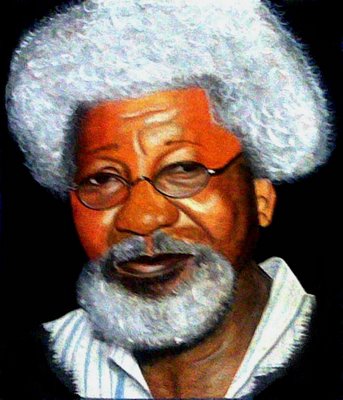
I have just finished reading Professor Wole Soyinka’s new book, You Must Set Forth at Dawn. My first thought is that it is an important book for various reasons and I would encourage those with an interest in learning about the struggle for the heart and soul of Nigeria, albeit from Soyinka’s perspective, to go buy the book and read it. Soyinka has a lot to say in this book and I suspect that he is not finished yet despite this hefty tome (exactly 500 pages, if you count the Acknowledgments page). Age has not slowed The Man down one bit.

You Must Set Forth at Dawn is a dizzying tour de force in many ways; Soyinka has led a very busy and charmed life. There is hardly any road he has not taken and his international passport must be an immigration officer’s nightmare. Soyinka is a renaissance man who comes across as extremely comfortable in the company of fine wines, fine women and generally the good life. Despite his travails and they are many, he has been treated well by an adoring world and deservedly so. And boy is he busy! Soyinka manages to situate himself in every major event in Nigeria’s troubled history. I mean, this man is everywhere. He was actually at Dodan Barracks the day Gideon Orkar’s coup rattled Nigeria; indeed he had met with Nigeria’s Dictator Du Jour, Ibrahim Babangida shortly before the coup started. For Soyinka, roads are everywhere and they open up for him and take him everywhere, sometimes to places he has no business being in the first place.

The book is a celebration of Soyinka’s indomitable spirit. This was an intimidating display of his power of mental recall from the deep recesses of his memory. Age has not slowed Soyinka’s brain cells one bit. Either that or Kongi keeps a detailed journal every day of his life. He seems to remember verbatim whole conversations that happened decades ago.  People would be interested in his re-telling of many escapades of his that have attained mythical status – the hijacking of Chief Samuel Ladoke Akintola’s speech in place of his at the radio station in Ibadan, his role as emissary in various seminal events in Nigeria, and I might add all over Africa. The book is a fascinating story told chapter after chapter. The language is not as dense as I am used to which is nice. Soyinka’s pen is getting gentler in the dusk of his life; one can actually be engaged in the book for the most part.

I liked Soyinka’s inclusion of maps of Nigeria that were really time stamps of her changes over time beginning with the regions and then the genesis of the states. There is also a useful chronology of important dates in our nation’s history. He also narrates his escape from Sani Abacha through Nigeria’s borders and there is a chapter on Kenule Saro-Wiwa’s murder. My favorite chapter is By the Waters of Babylon, where he tells with the deft use of robust prose and powerful imagery his final escape from Abacha’s Gulag (through Nigeria’s border with Benin). His description of his friendship with the late Femi Johnson was genuinely moving, a poetic ode to the strong bonds of friendship.

Those with an interest in Nigerian history should read this book. Those with an interest in the January 1966 coup and the ensuing civil war would be extremely interested in Soyinka’s narrative in the chapter titled Uncivil Wars: The Third Force and the Midwest Incursion (Strangely, Soyinka dispenses with the use of numbered chapters, making the book a challenge to follow as it wanders all over the roads, waterways and airways of the world).

Soyinka says of the January 15, 1966 coup. “Several of the killings, objectively considered, were not remotely essential to the success of the coup.” And then he goes on to say:

“In the West, however, the “wild, wild, West,” where the people had inhaled nothing but flames at close quarters for most of the preceding years, the coup was a hand of salvation, and they did not care by what means or how bloodstained it was. Mostly there was jubilation to the South – in the East, West, and Midwest – while the North was plunged into mourning and a deep, visceral distrust of the South, The Eastern Region earned the greatest loathing from the stricken North, since it soon became noticeable that the leadership of the coup was mostly Igbo, the dominant population of the East. In addition, the Eastern political leadership had been left untouched.”

 Of Biafra’s motive for secession he says:

 “The discovery of oil in huge reserves in the East, largely in the Niger estuary, played a role, unquestionably, in the propulsion of the Biafran leaders toward secession, but it would be a distortion of history and an attempt to trivialize the trauma that the Igbo had undergone to suggest, as some commentators have tried to do – that it was the lure of the oil wealth that drove them to seek a separate existence. When a people have been subjected to a degree of inhuman violation for which there is no other word but genocide, they have the right to seek an identity apart from their aggressors’.”

 He talks about his trip to the heart of Biafra and his subsequent arrest and imprisonment. He talks about meeting Christopher Okigbo in Enugu for the last time before Okigbo perished in the war. He talks of meeting Odumegwu Ojukwu and Victor Banjo. And he talks of Banjo sending him back to the Federal side with a message the crux of which was this:

 “Let them understand in the West that I am leading not a Biafran army but an army of liberation, made up not only of Biafrans but of other ethnic groups. Make the governor of the West and other Western leaders understand this. Urge them not to be taken in by any propaganda by the federal government about a Biafran plan to subjugate the rest of the nation, especially the West.”

This is heady stuff. It gets even more intriguing. Soyinka talks of his role in the war, his relationship with Banjo, his serving as an emissary between Banjo and Olusegun Obasanjo asking Obasanjo for easy passage for Banjo’s troops through his command and into Lagos. He talks about the existence of a “Third Force” of populists and he asserts a solemn pledge in stating Banjo’s true motive for his role in the civil war:

 “I owe it to the memory of Victor Banjo to contest such dishonorable, even unsoldierly, distortions of his motives and conduct; to testify, above all, that he had not acted to promote Biafran secession or aid Ojukwu’s takeover of power in Lagos. If anything, Banjo felt that he himself should take over power, and, confronted with the two discredited combatants who were propelling the nation toward a bloodbath, those of us who were self-described as the Third Force had no doubt whatsoever that Banjo represented the most viable corrective.”

 In summary Soyinka provides some important and new insights about his relationships with almost every key player (civilian and military) in the experience that has been Nigeria to date. For example, he reveals that after the death of Sani Abacha, the Abubakar Abdulsalami administration wanted him to run for President (yes, of Nigeria, not of a theatre company!). He wisely declined after thinking it over (Soyinka as President! That would have been something!).

Unfortunately, from my perspective, there are whole chapters missing from Soyinka’s story. There are key players missing who do not feature even in Soyinka’s shadows as he tells his version of the struggle for Nigeria. They will have to write their own books. One key player missing in Soyinka’s book is the Internet. Too bad. Whatever were the strengths of the pro-democracy movement, the Internet amplified them with startling force. The Internet was a leveler; you did not need a boatload of money to “fight” the enemy. Suddenly one could create a one-man army and suddenly Nigeria’s conventional forces of evil found that they had no choice but to fight these new rag-tag armies of strong-willed individuals.  And the term “Internet warriors” was born. Unfortunately, whatever were the weaknesses of the prodemocracy movement, the Internet also amplified with startling clarity. The prodemocracy movement did fritter away its energies in high decibel bickering while Nigeria burned. Meanwhile its numerous and frequent communiqués confidently proclaimed to the world the coming end of Abacha’s dictatorship. I used to half-joke that Sani Abacha would die of old age and the prodemocracy movement would claim credit for his demise. Regardless, the Internet does not get credit in Soyinka’s book for a lot of the work that went into fighting the dictatorship. A lot of people did not get credit for their contribution to any attempts to free Nigeria from her harvest of locusts.  Rather Soyinka treats them as if they were mere props in a badly written play or if they were unlucky, hapless sidekicks in Soyinka’s restless quest for what seems to elude him each time he charges out on yet another journey of search and rescue.

 I will say this about Professor Wole Soyinka: In his own inimitable way, Soyinka has put a lot of his own time and resources into the struggle for the heart and soul of Nigeria, most especially in terms of the pro-democracy struggle of the nineties. And in his own inimitable way. All of Nigeria ought to be forever grateful to this giant of giants. However, his book comes across as mostly all about his exploits in the struggle for Nigeria and oh there was a supporting cast of hangers -on and side-kicks. Even by his own admission, he is not a team player, Kongi. There is a quixotic streak to his adventures and he unwittingly reveals himself as a brilliant, perhaps eccentric loner with little patience for disciplined processes. In a revealing part of the book he derides Chief Anthony Enahoro as fixated on processes and procedures and so on:

 “Chief Tony Enahoro… thrived on endless meetings, copious minutes, points of order, standing orders, and the moving and seconding of motions, counter-motions, and amendments to motions…. I began to avoid meetings that should normally have enhanced our collective efforts, since they led nowhere and only ate up scant time and resources – flying across the Atlantic Ocean or the American landmass deserved some concrete justification in planning and results!”

 Chief Enahoro will not be amused at Soyinka’s unnecessary roughness but it is hilarious and when you stop laughing you go, this is one cat that doesn’t like a leash! My own analysis is this: Soyinka’s strength, Soyinka’s allure lies primarily in his stature as an international figure and in the eloquence of his powerful voice. He also has access to powerful people and places. All these attributes were precious money in the bank for the pro-democracy movement. But when it came to organization, even in his book, you come away dizzy wondering what all that drama was all about. Everything is long on high drama and poetic license but short on follow through. There was a lot of thunder but rain hardly came.

 Soyinka is brutal in his treatment of those who accepted assignments with military dictators but attempts rather unconvincingly and awkwardly to rationalize his controversial relationship with Ibrahim Babangida, arguably Nigeria’s most evil dictator; a man Soyinka once termed the listening president. Babangida gets a good, well-deserved dose of abuse from Soyinka’s pen but the uninitiated reader would not know the full extent of his relationship with Babangida. Similarly, the late Chief M.K.O. Abiola was no angel. However, Soyinka’s treatment of him in the book was basically a hagiography. It would have been useful to briefly explain the context in which Nigerians decided to support en masse this generous-hearted but flawed leader.

 His description of the disarray within the prodemocracy movement in the Diaspora is spot on. The pro-democracy movement did great things with whatever limited resources were at its disposal. But it was certainly an odd gathering of odd fellows who seemed to relish the fine art of bickering while Nigeria burned. The bickering was high decibel and largely unnecessary. Sadly Soyinka clutters his analysis when he resorts to personal attacks and ridicule against those who disagreed vehemently with him and the movement.  A lot of people, some very young folks who incurred Soyinka’s wrath have now paid for it by having their names immortalized in unflattering ways in his book. Sadly, in at least one instance, in Soyinka’s re-telling of the incidents that earned his  detractors his fiery wrath, some facts got lost in the translation. The personal attacks did not belong in Soyinka’s book. He should have stuck to issues and left these folks alone.

 The book could have used several edits by other people who were in the thick of things with Soyinka, people he rarely mentions in the book. In talking about the book with my friend Professor Bolaji Aluko, he vigorously disputed Soyinka’s version of many events that happened during the pro-democracy period, as well as much earlier in his father Professor Sam Aluko’s house on at least two occasions in Ibadan and Nsukka. Bolaji would know; he was there at the time. Indeed, Bolaji points out that Soyinka’s latest version of the stories have changed remarkably from the first narration in Soyinka’s Ibadan: The Penkelemesi Years. Bolaji intends to fully read the book and respond in his own memoirs. One thing is for sure, Soyinka’s new book is going to get him a lot of attention from his friends and detractors – which is probably his intention in the first instance.

 Yes, the book could have used a different set of critical eyes. For one thing, a book of this size and complexity should have been indexed. There are some errors that should have been caught. For example, he locates the making of the brew pito in Sapele (not true – every Nigerian worshipper of Bacchus should know that. He does footnote it correctly as beer made from millet. Millet and Sapele, an unpardonable contradiction in terms!). In his telling of it, gwon gwon, that delectable dish of the gods made of animal intestines becomes “ngwam-ngwam” and he footnotes it as “an Eastern Nigerian delicacy made from the chopped up head of a sheep or goat.” Our revered Soyinka was probably referring to isi-ewu.  During the war, the name Gowon was turned into an acronym for “Go On With One Nigeria”; Soyinka remembers it as “Go On With One GoWon.” Finally, I cannot resist but comment on his awkward use of Pidgin English; it is cutely atrocious, as if written by a white man and it exposes Soyinka’s privileged upbringing. A pet peeve of mine: Soyinka faithfully footnotes every Nigerian word with detailed explanations but neglects to footnote his lavish use of French words and obscure English terminologies that tend to show off his erudition and worldly sophistication (those French wines!). I guess when it comes to Western culture the Nigerian reader has to do his research!

 Taken together, these errors as sloppy as they are are not fatal and they do not diminish the book. In my estimation, what diminishes the book, and Professor Soyinka, are the relentless personal attacks on those he happens to disagree with. And they are legion in the book. The tyranny of the pen is just as devastating as that of the gun. As Soyinka would probably say, it concedes power to no one but the owner of the pen; it assigns wrongs to everyone except the wielder of the pen.  Also, Soyinka’s tendency to employ unflattering character sketches and caricatures on the unsuspecting (for example on Professor Sam Aluko) is unnecessary, rude, and mean-spirited. Most of these people are still alive and I suspect he will be hearing from them. Soyinka is a brave man.

The legacy of our dysfunctional society has introduced a cultural pathology – a perverse culture of abuse which manifests itself in a debilitating inability to engage in civil discourse. That is a serious problem that needs to be fixed before we engage in any serious talk of nation-building. The book is an unsettling reminder of the complexity of the Nigerian problem, of constantly changing relationships among powerful brokers, relationships that are at once mutually parasitic and symbiotic, each one seeking the ultimate prize – power. It is a soupy, sweaty mess – of greedy, thieving, conniving self-serving agbada-clad politicians, academicians and soldiers, all aided and abetted by a populace long accustomed to the art of survival by apathy. And the beat goes on.

Eghosa Imasuen: On Fine Boys and Yellow Girls

“In mid-1992, CNN reported that sixteen year-old Amy Fisher had just shot Mary Jo Buttafuoco, something about wanting the older woman dead so Joey – the bloody cradle snatcher – Buttafuoco could be free, I remember Amy was my age. Germany was unified, and British MPs had just elected a woman as speaker. The Soviet Union had been over for about two years, and the Russian-speaking part of Ukraine was threatening secession. The police officers who kicked Rodney King’s head in were getting acquitted for the first time. Grunge rockers were breaking their necks to that song, “smells like Teen Spirit” – inspired by the smell of latrines, I think – and African reggae singers were in a panic, rewriting songs, rearranging LPs and pushing back release dates now that Mandela was really free. Fuel prices here increased for the first time past the one naira mark. We had civilian governors and a military president. I was awaiting my matriculation exam results, hoping to make it into the University of Benin to study medicine. I was learning to drive on the busy Warri Streets. I was being a good son.”

                   –       Fine Boys by Eghosa Imasuen

Digital technology is poised to save Africa’s stories from the comatose printing presses of Africa’s “publishers.” Good writers still languish in Africa, staring at lovely stories trapped in the mediocrity of imitation books but all that is changing. E-books are here for African writers who are savvy enough to port their books to the Kindle or the Nook and share with the world.  It is a good thing. I have been buying and downloading books by writers living the living in Nigeria, warts and all. I am happy because now I can read many more of our stories than ever before. The Internet has been a boon to our literature. Why do I like reading books by writers “on the ground” in Nigeria as they say? I pine for the stories of our people unvarnished.

One of those books is Fine Boys by Eghosa Imasuen. I heartily recommend this book. There are many reasons why you should read this coming of age story. It is an important book on many levels. I do not know of any Nigerian novel that has taken the time to record history in the 90’s through university campus life as this novel has done. In this book, we follow the protagonist Ewaen and his siblings as they endure life under constantly feuding middle class parents, grow up amidst the drama that is Nigeria. We accompany Ewaen to the University of Benin and through his eyes we witness several issues that occurred in Nigeria in the 90s. There are so many issues: Campus cults took youth peer pressure to violent and deadly lows, there were brutal military regimes, a thwarted attempt at democracy (June 12th 1993), deteriorating educational and social infrastructure, etc. All through the dysfunction, the reader is taken through a tour of numerous relationships, some touching, some banal, and many quite dysfunctional. Marital abuse in the protagonist’s home is a sobering reminder of the war that young children endure in many homes. I admire how Ewaen, the protagonist’s spirit remained unbroken; he continued to weave joy and adventure out of situations that should have broken him irreparably. The book is a fine reminder that every day children trudge bravely through wars that they did not ask for, many of them in their homes.

Imasuen does a great job of painting the colorful atmosphere of campus life at the University of Benin, my alma mater.  Interestingly enough, In my time, in the late 70’s the decay had already begun, university staff quarters (the Junior Staff Quarters aka JSQ) were turning into sprawling slums selling food, booze, cigarettes and sex. The reader will find Imasuen’s palette a colorful world in which light-skinned women are described as “yellow” and only the initiated would understand what would be a slur in the West because Imasuen dispenses with the convenience of a glossary. Let the reader do the research. I like that even though as a result the book comes across as parochial. But then, we would never say that of a book written by a Westerner, would we? It is time for us to stand up for our self-loathing selves.

Imasuen has come a long way since his debut novel To St. Patrick. Fine Boys is chockfull of remarkable prose like this:

“The light that seeped in through the sheer curtains bathed everything in a blue translucence that made the room look like one of those Igbo market shops where the most awful pair of jeans miraculously became a pair of Versace specials.”

And this one is one of my favorites:

“Mesiri’s room was too tidy to keep anything in – your stuff could get contaminated by the hygiene.”

It is not a perfect book; it does get occasionally sloppy and tedious and I don’t like that the e-book’s pages are not numbered. It is as if Imasuen thought about a lot about the issues of that decade and threw them all slaphappy into the book, Imasuen struggles mightily between personal narrative and fiction. This is a fat novel that should have been pruned a bit. No detail escapes Imasuen, no matter how banal. It is a problem. Imasuen devotes the bulk of the novel to obsessing about campus cults; the Black Axe, Costra Nostra, Maphite, Neo-Black Movement. However, he did not penetrate the inner circle of the cults, the analysis was superficial. The reader wonders: How were these cults different from each other? Why did they mushroom in the 80’s and ‘90’s? What made them attractive to the teeming teens that joined them in droves? Why did hundreds of teens endure violent and reprehensible rites of passage in these cults? Was part of the reason because military regimes had become more draconian, brutal and corrupt and children grew up in these circumstances becoming cold, calculating and Machiavellian like their adults?

The book touches on the turbulent ‘90’s in Nigeria, brutal democracy and the work of the prodemocracy movement, with Western culture and democracy as asymptotes. There are identity issues, Wilhelm the half-caste or biracial is called oyinbo or white man. Lighter colored people are up on the totem pole of the caste system. People go to “summer vacation” abroad.  Gang members or “confra boys” man violent gangs, in the hostels smelly toilets are filled to the brim, classes are held in stadium sized lecture halls, with lecturers hollering without microphones, the cost of living is abominably high (it seems students are forever buying food, booze, cigarettes and lecture notes or “handouts” at extortionist prices).

The analysis focuses on the dysfunction of organized gangs or cults but invariably ignores the fact that teens tend to move in gangs, benign or otherwise. It is hard for the reader to ignore the protagonist’s own gang with its own rules, youths with names like Odegua, Mesiri, Wilhelm, Tuoyo, Oliver Tambo, Fram Oluchi, Preppa, K.O.,and  the girls, Tseye, Amide and Weyinmi (Minor correction: Odegua is never a male name). It makes for an interesting albeit rambling stew of a story. Much of it could be seen as banal prattle. As an aside, properly edited and adapted it would make for a good Nollywood movie about life on campus in the ‘90s.  In Fine Boys, we witness consumerism at its worst. There is no purpose to these lives. This is the beginning of the end, the middle class fleeing a looming war zone, a great story sloppily told. But then if you love ogbono soup, you will not mind this story dribbling down your memory’s chin. One perhaps unintended outcome is that Imasuen paints the university students of the 90’s as not meeting their potential, as perhaps not too bright. Indeed much of their dialogue is banal self-absorbed prattle. Regardless, it is a very colorful life told in colorful language and with great drama. There is even a “thief catching ceremony” organized by “native doctors.”

The book is mostly well edited, an incredible feat in a society that is indifferent to quality control. Imasuen shows off some good prose; enthusiastic passionate honest writing when he is good he deftly employs luscious turns of phrases. He is definitely original. I do not know of many African writers who would have enough self-confidence to design a character like Ewaen’s girlfriend Amide who says she is waiting “for the rice to done…”

This is not a tidy book. Some would say convincingly that this book is not serious literature; it comes across as too autobiographical and parochial, with little attempt to make it less so. It was like Imasuen kept a detailed rambling diary of his activities growing up. The story meanders and some of the characters are not well developed, it is hard to tell them apart. The protagonist is too busy talking. It would have been more helpful perhaps to devote chapters to a few main characters narrating their tales in the first person.

I must applaud Imasuen for documenting an important era in a way no one has done in recent times. In the “Chair dance” I basked in the lush delicacy of a halcyon past, of teenage angst, fighting alienation. In Fine Boys, one comes across familiar themes present in African literature, but new and contemporary themes emerged also: Attempted suicide, alcohol and drug abuse, the new Christianity and he prodemocracy movement that swept much of Black Africa in the 90s. The novel was also in a way a detailed commentary on identity issues, One of the characters, Wilhelm the half-caste (biracial) is called oyinbo. Lighter colored people are up on the totem pole of the caste system. Summer vacation in London marks you out as part of the elite. Then there were the “Confra boys” seeking to belong by manning violent gangs.  Youths in search of the golden fleece endure campuses with smelly toilets filled to the brim, classes in stadium sized lecture halls, lecturers hollering without microphones and an abominable cost of living (it seems students are forever buying food, booze, cigarettes and handouts at extortionist prices). This is consumerism at its worst. For these youths, there were so many rites of passage, there seemed to be no purpose to their lives. From the vantage point of today’s Nigeria, Fine Boys seems to chronicle the beginning of the end, the middle class fleeing a looming war zone, a great story sloppily told. But then if you love ogbono soup, you will not mind this story dribbling down your memory’s chin. As an aside, it would be an interesting scholarly activity to compare Imasuen’s approach to semi-autobiographical fiction in Fine Boys, to the Kenyan writer Binyavanga Wainaina in his rollicking memoir One Day I Will Write About This Place.

In the end, Imasuen’s vision is apocalyptic as the characters muse thus:

“Pure water don reach Fifty Kobo? Things are getting costlier,” Oluchi said.

”And making change is getting even more difficult for the sellers,” I added. “Remember in year one when a Five Naira note could get you a cigarette and a Fanta?”

“Yea, round figure,” Fra said. “Now that combination is seven Naira.”

Preppa nooded, “Maybe by the time that medical student comes back to Uniben, a bottle of beer will be one hundred Naira.:

“Impossible,” we shouted. “Never.”

Those were halcyon days.

Chioma Okereke: Sweet Leaf, Bitter Taste

Dear reader, you should read this enigmatic book, Bitter Leaf written by the poet Chioma Okereke. It is a lovely book. And a frustrating book, more on that later. I fell in love with this spunky book and Okereke’s rich mind. The book also broke my heart because like most ambitious projects, it fell apart smack in the middle of its journey and nothing the author did could bring back this derailed story. Okereke is a very good writer, with a quirky utterly different and refreshing way of looking at our world. Sadly, the book proved to be a miserable vehicle for transporting Okereke’s ideas and let her down. The book had a lot of promise but it was too ambitious for her editor and publishers. But man, can she write.

I hope Okereke returns to titillate our senses again. For one thing, she sure can write sensual stories that stir things in in strange places of the anatomy. Okereke can describe a romantic encounter and make your breathing stop without the characters as much as touching each other. Yes, she is that good. But in the end, the book goes nowhere, absolutely nowhere. Her editors and Virago Press, her publisher should hang their heads in shame. That book should have been stopped exactly half-way. And it would have been a great production without the babbling bumbling filler that the other half represented.

Still, you must read this book and watch out for Okereke, she is going to be an important thinker if she doesn’t allow this book to discourage her ambitions. I loved the book’s atmosphere, vibrant, noisy, full of life. The books pages fairly tremble with nervous energy; markets and communities come alive and the reader wants to be part of the experience. For the most part, Bitter Leaf is a feast of lovely prose starting with its very first lines:

 ”Many things distinguish a place, its rolling hills or turquoise waters. There are civilisations that wear plates in their ears and others that wear hoops of gold. There are even cultures that kill their old before they become burdens on those that remain. Rituals are carried out all over the world at any given moment; some that everyone can relate to and some as foreign as a fire-walk in lands surrounded by snow. But many things unite people universally: births and deaths, gains and losses, departures and arrivals.” (p 1)

Okereke would be a complex dinner companion; she comes across as erudite, well read and willing to bend intellectual boundaries. Reading Bitter Leaf is like reading Okri’s Famished Road with a fresh set of eyes:

“Once the traveller was knocked to the ground by the force of a parent’s embrace, their dirt was removed with the tears and saliva of all well-wishers. Immediate sustenance would have to wait, as fresh animals were killed, cleaned and cooked in a feast that would draw even those unconnected to the returnee to the compound with watering mouths. The party would carry on well into the days to come, with more and more food being cooked and consumed. People dropped in to witness a reunited family’s joy and the returnee would regale all those present with stories from their journey, embellishing achievements or making light of troubles that had befallen them.” (p 2)

It is as if Bitter Leaf is written by a spirit disembodied from the world, from the outside, looking in, touching this, touching that, oohing and aahing. Delectable prose-poetry swims in the pages, walking and weaving in and out of strangely familiar markets. Like Okri, Okereke has a thing for roads:

“The straight, planned roads from nearby towns either dwindled or came to a complete halt once they met the copper-coloured earth of Mannobe, but every local knew where they were going. Once upon a time, directions were given by a series of orders: follow the bumpy road until you see the bush with yellow flowers – not the red, spiky ones, that’s right – then turn left and walk as far as the three gigantic potholes in a row, take a left after the burnt tree stump, and the Harbens’ compound is to the east…” (p 13)

What is this book all about? I have no idea. I don’t know of anyone that could give you a definitive answer, not even Okereke. The blurb says of the book rather unhelpfully:

“Bitter Leaf is a richly textured, poetic and evocatively imagined tale about love and loss, parental and filial bonds, and everything in between that makes life bittersweet.”

I tried hard but could not identify a plot in this book. This is an unusual book of interesting names; the setting is nowhere, it is as if there is a deliberate emphasis on mapping a shared humanity on the pages of today’s memory. There is a dog named Dungu, a place called Angel. There is a man named Babylon who lives in a place called Mannobe In the village lives a colorful cast of characters, people with names like Babylon the musician who is in love with Jericho, returned to the village from the city. There are also the twin sisters Mabel and M’elle Codon and there is an old man named Allegory.

Even as the book defies definition, it is quite simply the best love story I have read in a long time, a lovely romance story that stirred my insides like an adolescent’s:

 “He gawped at the smoothness of her skin and the gentle swell of her breasts that peeked out of the top of the dress’s neckline. Honing his gaze, he saw minuscule beads of sweat that made her body glow and he felt as if someone had dropped a plate of Mabel’s fiery red beans down his shorts. His previous comment had been entirely innocent but inexplicably her eyes had dropped downwards. She noticed the telltale swelling and kicked the back of his wagon sharply with the heel of her sandal. ‘Disgusting,’ she hissed, moving away from him. ‘Sorry,’ he offered, covering himself quickly. Can I help it if I am a man?’”

There is more where that came from. Bitter Leaf is tightly packed prose brimming with energy, a rich, sumptuous festival chockfull of everything enchanting: ambiance, environment, rich colors and throbbing sensuality:

 “He didn’t even wait for her to retreat before dipping back into his tent and ripping a leg off her chicken like a starving animal.” (p 72)

Aspiring romance writers would do well to read this book; Okereke is a master at documenting the chase:

“His eyes focused on her and her entire being began to pulse, She pictured those very same hands moving at lightning speed across her body. Imagining the feeling of his warm palms and the determined pressure of his fingers as they subtly responded to her movements, she fought to keep her spirit within the confines of her earthly body.” (p 53)

In Bitter Leaf there is an abundance of fresh prose – ordinary words arranged in new patterns by a brilliant diviner displaying crystal clear vision and lush vivid imagery.  Okereke rarely editorializes but when she does it is sometimes provocative, if problematic. This is because Okereke sees her world from a unique perspective and defines it with uncommon literary courage. The setting for her book is not Africa but the sum total of her experience. It is a new and refreshing way of bearing witness to the world’s madness. She rejects these savageries as belonging to, or unique to Africa. She makes a compelling case that this is one world and we all own her joys and tribulations. Everyone can see his or her hut in the pages of this beautiful but complex story. She paints our world with broad, vibrant, intense colorful strokes and forces us to look at the world in a different way, perhaps the right way. Startling is her brilliance. She pulls off this neat trick and lays bare the ugly slips of our prejudices. The mind reels in confusion; this should be an African story. It is. It is not. We are all one.

Bitter Leaf is a lush aquarium breathing deeply colorful rich loamy prose, phrases turning and ambushing themselves merrily and delighting the reader..

“Although Penny sucked greedily on the ice as it expired in the scorching heat, Jericho ran hers down the back of her neck, allowing rivulets of cool water to run down her dark skin. She sighed then bent down to grab the bottom of her dress. Lifting up the hem, she rubbed the ice up her legs. She caught Penny looking at the boy, whose eyes were now the size of small planets, then back at her. It was only then that she became aware of the people around her and the effect she was having. Almost immediately, the chunk of ice between her fingers evaporated. The small boy immediately handed her another piece, trying to initiate an encore. Jericho pulled Penny away, laughing, oblivious to the slap the boy received from his returning mother for the unwise sale.” (p 98)

Bitter Leaf is not a perfect book. When I think of the book, I imagine an intricate food web, no, I  imagine an aquarium. This is a work of considerable prodigy. Its strength is its tragic weakness, all these character flaws. Restlessness births these constant walks, these comings and goings in and out of village catacombs. Who are all these people? There are so many comings and goings, the reader’s head hurts. Bitter Leaf is an inspired story with a disastrous design. This is one instance where I would say a classroom education in how to write a novel would have helped. Where are the MFA programs when you need them?

Okereke is here to stay.  If she keeps up her craft (I pray she does), she would be a Ben Okri protégé uniting all civilizations with evidence of their shared savagery making a compelling case that sadness and joy are universal. Teju Cole and Okereke might be the dispatch riders of a coming crop of writers fascinated but not intimidated by physical boundaries. Where Cole is bold and brilliant, Okereke is mostly bold, with luscious flashes of brilliance. I love this passage, warts and all:

“As a child she liked to break off small sections of her pounded yam and rolled (sic) them into small balls. She loved the sensation of the cooling dome against her fingertips, the tug of the yam as it threatened to stick to them for ever like glue. She would assemble the little balls around the edge of her bowl. The first ball would be dunked into the soup until her knuckles almost disappeared into the broth her mother had prepared, the heat of the soup searing her skin and softening the yam ball so that she could barely grip it. Chewing was entirely optional, depending on what the soup contained. Her favourite then had been bitter leaf soup, which was curiously the opposite of what its name suggested. The yam would slide down her throat easily like an oyster; all that remained to bite on was the meat or pieces of dried fish in the soup.” (p 48)

I can imagine Okereke at a book reading failing miserably to account for her vision – to the guffaws of her audience. It bears repeating ad nauseam, very few people will get this book. It is boundary bending and original in its conception. I can only guess at the book’s main point: Civilization is a universal curse, savagery is everywhere. I agree. But first she must fire her editor. As an itty bitty aside, the experimentation with pidgin was a spectacular failure. Okereke is here to stay. Unfortunately, the book lost its plot exactly half-way. It was virtually impossible to move past the page where the book died a sudden death. I wanted to be patient with this book. But then, I kept asking: Where is this book going? This intense book was written with everything Okereke had in her power. Too bad she ran out of steam. After this book, bitter leaf soup will never taste the same again for me. I am in mourning for an aborted dream. I should sue Okereke.

Noo Saro-Wiwa: Peering into Nigeria ever so darkly

I enjoyed reading Noo Saro-Wiwa’s book Looking for Transwonderland: Travels in Nigeria, a slim travelogue (272 pages) published by Granta books. I also hated reading it. Be warned, O gentle reader, it starts and ends with an attitude. Right from the airport. Saro-Wiwa on a few months visit to Nigeria seems determined to be miserable:

 “The plane broke through the clouds and swung low over a sea of palm trees that abruptly became endless tracts of metal rooftops. That vista still choked my heart with dread. I made my way through the airport’s mustiness and out through the exit, where I was ambushed by the clammy aroma of gasoline, so familiar and potent.”

Saro-Wiwa lives in England but has ancestral roots in Nigeria She was born in Nigeria in the mid 70’s and raised in England. Her father is the late Ken Saro-Wiwa, the Nigerian writer and activist who was executed by the brutal military regime of General Sani Abacha.

Saro-Wiwa is a good travel writer with a questioning, inquisitive eye for detail. Her prose is accessible and fresh and even though you may not agree with her, it is hard to put down this entertaining and engaging account of her travels all over Nigeria, North South, East and West. I would highly recommend it to anyone who wants to be entertained by biting prose and interesting observations about the drama that is Nigeria, albeit from a Western point of view. Yes, I view Saro-Wiwa as a Westerner despite her strong roots in Nigeria, certainly, I see her as someone looking into Nigeria from the Diaspora. Saro-Wiwa’s book may yet be the last straw, that marker that separates Diaspora writing from what I call truly indigenous on-the ground writing. Nonetheless when she deploys her razor-blade mouth to taunt the prayer-warrior zombies, willing victims of the carcinogenic plague that is Nigeria’s new Christianity, you don’t know whether to laugh or cry:

“Janice was pacing around the living room and praying for the ‘evil spirits’ and ‘witches’ to ‘Die, die, die, die, die, die, die, die, die, die, die, die, die, die, die, die!’ A verbal machine-gun attack. I watched from the sofa, groggy but compelled, as she squeezed shut her eyes and pummelled the air with an imploring fist.”

Despite Saro-Wiwa’s muscular literary skills, this book hardly improves upon the silence. Instead several chapters are devoted to narrating what the alert reader already knows about Nigeria, very little of which is good. The analysis is rushed and the condescension is cutting, with little compassion and reflection on why things are the way they are. Those who write from the vantage point of the West tend to look at Africa using Western civilization as an asymptote. Black Africa compares very unfavorably with the West for many reasons, including the rank ineptitude and thievery of many of the leaders that sent many of us, their children, abroad away from the unnecessary roughness that they have turned Black Africa into. Who speaks for Black Africa, the children of the privileged separated from Nigeria’s pitiful educational and social infrastructure returning to taunt the victims of their parents (in)actions? Sadly, these are the supercilious voices of literature that the West recognizes and uses to view Nigeria. The victim is doubly victimized. That analysis is usually absent once you are through enjoying the chapters and chapters of self-righteous indignation directed at the nation states within that geographic space called Sub-Saharan Africa. There is this neediness, a certain desperation to link us to a preferred civilization, to assert our humanity, in a way that pleases the preferred civilization. It is an asymptote.

So, without reading the book, you can imagine what Saro-Wiwa has to say about Nigeria: The dysfunction, the incompetence, the comedy of errors, the corruption, the violence, the patriarchy, the misogyny, the pathetic mimicry of everything Western, the new Christianity, the spiritual and physical decay, she records all in painstaking detail. At some point, the unrelenting despair overwhelms you and you want to beg her to stop the torture. She unwittingly sums up the largely banal burden of the book in her tired recital of Nigeria’s woes as she describes the portraits of Nigeria’s rulers in a decrepit museum thus:

“A novice would have no idea that during its forty-seven years of independence Nigeria has lurched from one kleptocracy to the next. The leaders’ photographs resembled a series of criminal mugshots, a line-up of chief suspects in the ruination of Nigeria. The sight of them soured my tourist’s jaunt. For all their talk and intentions, most of these men pocketed billions of the country’s wealth, ruined the infrastructure, devalued the education system and obliterated Nigerians’ trust in one another, cultivating a dog-eat-dog attitude in all corners of life.”

Still, the frustrated reader cannot stop reading, this unctuous book is a page turner, Saro-Wiwa can write, I won’t lie. She is funny, even when she is laughing at her own insecurities:

“Sam gallantly lifted me up in his arms and carried me onto the beach. I felt his knees buckle briefly. ‘Ai, I didn’t think you were so heavy,’ he said as he tipped me onto my feet. ‘I weigh nine and a quarter stone. How heavy should I be?’ ‘You’ve been eating too much yam,’ he informed me, examining my frame at arm’s length.”

Like many Diaspora writers, Saro-Wiwa’s energies are devoted almost solely to whining about Africa’s numerous failings and offering very little in terms of substantive analysis and solutions. When she does, her solutions are alarmingly simplistic. As an aside, Nigerian writers have to decide whether they want to be writers or armchair social activists.  They have been saying the same things for too long, it gets old and exhausting.

I honestly admire Saro-Wiwa’s writing skills. Her sense of pacing is exquisite. When she writes about her experience in a speeding danfo bus, it is as if you are in the bus with her, your black knuckles whitened by fear. Saro-Wiwa can write. She’s got attitude and she flaunts it. The prose catches you unawares, like pissed off spouse lobbing accurate missiles. You are entertained by delicious reams of snarky prose even when she’s complaining about men issues:

“By now, Sam’s eyes were caressing my face, and his voice had lowered to a pre-coital purr.”

Her street interventions and escapades in danfo buses and perched on okada motorcycles are hilarious and priceless, worth the price of the book many times over.

“Okadas are the scourge of Nigeria’s roads. These Chinese-made, 100cc motorcycles buzz around the streets in their thousands, like a plague of giant flies. They’re popular because they’re cheap and fast and can weave through the traffic go-slows that consume such a huge proportion of people’s days.”

Saro-Wiwa is Teju Cole prowling Lagos in pumps and a wicked wit. Her visit to the “museums” is hilarious and sad. Hear her about Nigerians’ penchant to hustle anything and anyone for a buck:

“If Nigeria conducted a space exploration programme… women would be offering bananas to the astronauts as they climbed aboard the shuttle.”

The first half of the book reads like a Karaoke redux of Teju Cole’s Every day is for the Thief. I wonder if she read Cole’s book; reading her book reminded me of Cole’s book. There is the same consistent approach and attitude to the hapless subject – Nigeria.  Don’t get me wrong, it is hard to blame Saro-Wiwa entirely for the seeming self-loathing and the condescension in her travelogue. Nigeria presents as a caricature nation, many thanks to her thieving incompetent rulers.

Saro-Wiwa’s narrative style is breezy, employing imprecise mostly superficial historical analysis. It makes for easy, engaging reading though. However, one comes away with the feeling that she relied heavily on Wikipedia for her research. From the first page of Noo Saro-Wiwa’s book, self-loathing dashes out of the gates of spiritual neglect neighing like a diseased stallion. The cynicism is relentless and unrelenting, she has very little to say about Nigeria that is positive. Lagos is goat shit and mud puddles, sweat and man-eat-man savagery always prowling around the corner looking for a victim to maul:

“If Lagos were a person, she would wear a Gucci jacket and a cheap hair weave, with a mobile phone in one hand, a second set in her back pocket, and the mother of all scowls on her face. She would usher you impatiently through her front door at an extortionate price before smacking you to the floor for taking too long about it. ‘This,’ she would growl while searching your pockets for more cash, ‘is Lagos.”

I kept reading and hoping that her mood would improve as I read. Alas it only got worse, nothing Nigeria offered her would console her. Saro-Wiwa was miserable. She has harsh words for her father’s tormentors and killers. Sample: “Abacha’s “face… emanated ruthlessness: tribal marks stretched vertically between reptilian eyes and a sour pout; a brooding assassin.”  She is not enamored of former president Olusegun Obasanjo either: “There was a photo of Olusegun Obasanjo… with his characteristically small eyes and flared nostrils.” The more I think about it, she is decidedly hostile to Nigerian men, virtually everyone seems to be a caricature of the real thing:

“I paid for two seats at the back of the car to give my thighs breathing space. The gangly man sitting next to me used the extra space to spread his legs as widely as possible, leaving me squeezed once again against the window. I was livid. Months of travelling cheek-by-jowl in cars had instilled in me a new-found loathing of men’s legs, which, like air, seem constantly to expand to fill the space available. I’m amazed they’re not all buried in Y-shaped coffins.”

Saro-Wiwa has a complicated personal view of her father Kenule  but lionizes his role in Nigeria’s fortunes in what is largely a hagiography. Kenule Saro-Wiwa was not without his share of responsibilities in the Nigeria project:

“My father never bought into the Nigerian system of corruption. I was blind to the virtue behind our modest home and few holidays, and I resented his frugality and non-materialism. I craved a luxurious lifestyle. But he held an intense disdain for such things.”

Saro-Wiwa’s tender side is more evident when she visits parts of the North. Her compassion shows and even though some of her observations and view come across as patronizing, it is clear that she spent considerable time researching the places and thinking about their uniqueness compared to the South of her parents upbringing. I imagine that familiarity breeds contempt. As an aside, Granta could have used a more careful editor; the book is dotted with a few grammatical and editorial issues.

The mango does not fall from the tree: Noo Saro-Wiwa has the opinionated streak of her dad Ken Saro-Wiwa. Not many Igbo will care for her opinions about Biafra. Many Nigerians will take offense at her views:

“My people, the Ogonis, had been bit-players in the drama of Nigerian history in which the Binis, Yorubas, Hausas and Igbos played a leading role. Mocked as simpletons and cannibals, Ogonis were barely known outside the Delta region until my father made our presence felt… The economic and numerical dominance of the Igbo people engulfed us, their commercially savvy tentacles spreading as far as Bori, the tiny Ogoni town where my father was born. By the start of the Biafran civil war, Igbos owned about 80 per cent of Bori’s businesses, my mother told me. Only when the Biafran Republic was declared did most of them vacate the town to join their new republic. These ethnic disparities were significant at national level.”

All in all however, like her father’s generation, the rejection of her ancestral land for the West is complete and final, no looking back:

“Yet Nigeria, for all its sapphire rivers and weddings and apes, couldn’t seduce me fully when all roads snaked back to corruption, the rottenness my father fought against and the cause he died for.”

“Now I understood why my father never once spent the night here during our childhood stays. He luxuriated in the air-conditioned solitude of his Port Harcourt study while dispatching us to the village. As much as he loved Bane, his attachment to the place was an emotional one that didn’t require his physical presence.”

All the reviews of Saro-Wiwa’s books that I have read have been positive and deservedly so. They include reviews in The Economist, The Guardian and The Telegraph. However, these mostly Western reviews seem focused on the book’s entertainment value and can barely hide their glee at another objectification of Black Africa as (the other) exotica. If it is any comfort, Adewale Maja-Pearce has a very good review of the book in The Guardian here that makes the compelling case that the reader must not always rely on Western reviewers for decent opinions about books on Nigeria and Black Africa. Read it. Memo to the Nigerian Diaspora writer: We should probably all leave Nigeria alone, we no longer live there. I should go write my own travelogue – about America’s seamy side. America’s got issues too.