The book is waving us a long goodbye…

Reproduced here for archival purposes only. First published in November 2005.

For Molara Wood…  Listen, the book, the book is waving us a long goodbye… but our ancestors’ songs live on…

I don’t read books much because my frenetic lifestyle does not permit me the luxury of cradling books in my hands. I honestly believe that books are struggling mightily with digital media for relevance. My first preference is to read ideas online; I will go to a book if I am made to.  I enjoy being on the World Wide Web. During my waking hours, my laptop Cecilia is perched securely on my laps and I troll the Internet at every opportunity in search of ideas. And so there’ll soon come a time when I can tell you about ideas I have read about, rather than what medium I read them in. It won’t matter; ideas are ideas.

Something interesting happened to me this year. I found myself searching the Internet, looking for, and acquiring several books by authors that nurtured me in my youth growing up in Nigeria. And I have been reading some of them along with a couple of fairly recent books. Some samples:

 Chinua Achebe: Home and Exile

This ought to be required reading for all those who care about and have a passion for telling our story. It is clear that Achebe has thought long and hard about our story. My favorite line: “Until the lions produce their own historian, the story of the hunt will glorify only the hunter.”

 Ogali A. Ogali: Veronica My Daughter and Other Onitsha Plays and Stories

This one is a hoot. Ogali A. Ogali is in my mind one of the deans, if not the dean of that robust body of work called Onitsha Market Literature. And the play Veronica My Daughter is over the top in terms of entertainment. In a number of online forums, I have alluded to my fondness for Bomber Billy, a character in that play by slightly paraphrasing his use of bombast:

“Your statements must not indicate psychological defeatism in my cerebrum and cerebellum. You must not be a radio that utters useless words. Instead, let your conversational communication possess a cherified consciousness and cogency. Let your entamporaness, discernment and unpremitted expectation have intangibility, veroness and versity. Beware of platitudeness and ponderosity and learn to respect people’s integrity. Above all, avoid pomposity, proticity, verobosity and rapacity!”

 Peter Enahoro: How To Be A Nigerian

I read Peter Pan’s book again, with much sadness. The caricature of the “Nigerian” still lives. In many ways, things have gotten worse.  Every page of this pamphlet is a must read.

Chukwuemeka Ike: The Potter’s Wheel

Ah I love this book, I really do. It is a tale about Obuechina Maduabuchi a, spoilt rotten but highly precocious youngster who was sent off to be “trained” in the home of a teacher and his wife from hell. My favorite lines occur when young Obuechina ends up in class in Standard 2 and the teacher aka “We Shall See” is convinced that this is a big mistake because Obu is too young to be in the class. To prove this, he subjects young Obuechina to a rigorous spelling exercise starting with his full name:

“Obu spelt his name slowly and correctly. The teacher was satisfied. “Now, we shall see.” He switched over to English. “Spell me em – em – tintinnabulation”. The whole class shouted as the jaw breaker rolled out of the teacher’s mouth like bombs from the hatch of a bomber. No one in the class had heard a word so bombastic before. Obu rolled his big head from one side to the other and accepted the challenge. ‘We shall see’ was at the blackboard with a piece of chalk waiting to write the letters down as Obu spelt them. “T…i…n…” The teacher wrote the letters down.”t …i… n … n …” Obu bit his lips, held his chin with his left hand, looked at the seven letters on the board and saw the rest of the word clearly in his mind’s eye: “a…b…u…1…a… t… i…o…n” The teacher dropped the chalk without writing the last letter on the board, and rushed to shake the small hand of his new-found genius. “Wonderful Terrifious! Marvellous! We shall see this year.” Obu was the kind of boy every teacher wanted in his class – young, full of brain rather than brawn, the type who was destined to enterGovernmentCollege, Umuahia if it reopened after the war.”

One fairly new book I just finished reading is Thomas L. Friedman’s hefty tome, The World Is Flat. I read it because it was required (well strongly suggested) reading. The author was a guest at a function I was part of and it was suggested that we should read the book in order to engage in meaningful dialogue with him. I skipped the function but I read the book. The book was a very frustrating read, all 473 pages; it came across as an essay on steroids. Mr. Friedman didn’t really need to make a book out of ideas that could have easily fit into a few pages of a well-reasoned essay. He was basically saying that which ought to be fairly obvious; that the Internet and related technologies are redefining traditional relationships and in essence “flattening” the world. For example,America, indeed the West can reach out to human resources inIndia andChina and produce goods and services in a cost-effective manner. All this thanks to the Internet. According to Mr. Friedman, the world is getting smaller, “flatter”, relationships are traversing geographic boundaries and today’s world is a far cry from the way things were before the coming of the Internet. He believes that the best is yet to come as companies, institutions and nations take advantage of technology to improve our quality of life by producing goods and services cheaply and efficiently.  I recommend this book to African thinkers for one reason: The book’s treatment of Africa speaks volumes for how the West seesAfrica – not as a land of opportunity but as a vast wasteland of disease and war with little redeeming value. Mr. Friedman is well connected in the hallowed corridors of Western powers and he has the ears of the most powerful men and women of this world. In Mr. Friedman’s flat world, Africa is a little more than a footnote on life support.

I miss the writers of my youth. It is amazing; as we use powerful tools like the Internet to spawn banalities, I sometimes wonder what would have happened if those writers and thinkers that taught my generation had been blest with the Internet: I am thinking of griots like Nnamdi Azikiwe, Obafemi Awolowo, Chinua Achebe, Cyprian Ekwensi, Elechi Amadi, Flora Nwapa, Ola Rotimi, Buchi Emecheta, Tai Solarin, Okot Pit O’Bitek, Christopher Okigbo, Kofi Awoonor, Ngugi Wa Thiongo, Gabriel Okara, Camara Laye, Peter Abrahams, T.M. Aluko, Amos Tutuola, Chukwuemeka Ike, all the writers of Onitsha Market Literature, all of them… My generation would have died and gone to heaven. It certainly would have made for a more eclectic generation. And I understand now why I have a reverence for the writers of that generation that nurtured my youth. There was and there still remains a sonorous robustness and coherence to their collective voice, a purpose to their gift. That voice sings to me comforts me in those books that were written in long hand in the long shadows of kerosene lanterns, gifts handed to us before the coming of the computer. I will also say that the same is true of the Western writers that I read daily. As much as I resent their narcissism, they have a voice that one can respond to.

I have been quietly collecting books written by young Nigerian writers and I shall have more to say about those books once I am finished reading them. As I said earlier, I do read a lot of them on the Internet. There is a lot of creative energy, especially in the Diaspora. I must say that I am comforted, awed by the prolific works of the writers that I have been reading on the Internet. I see flashes of brilliance, I see oodles of passion, and I see hints of the love of the land that gave them birth. What I am having trouble detecting is a coherent voice.

We need a coherent voice. We need a return of a powerful voice to fight the shame that has blanketed our land. It is true that every generation must find its own voice. I will add that every generation must have the self confidence and vision to seek to shape the direction of the society that houses its muse. Our generation has not failed yet. Because we are not dead yet. It is just that I cannot say that as writers of Nigerian extraction we have a coherent voice. If it is coherent, its priorities are not really in alignment with our society’s glaring needs. I think that this is one of the unintended consequences of the new globalization that Thomas Friedman talks about: The West can with its electronic catapults pluck off the best and brightest of Africa andIndiaand use their brains to meet its own needs. And all the time, these brains are sitting inLagos, inAbuja, inAccra, inBangalore. The flesh remains in Africa andIndiabut our hearts, minds and brains are here inAmerica. It certainly gives a new meaning to the term brain drain.

We need to engage in courageous conversations about the state of the creative arts and its relevance to our society. How is this generation of writers different from the previous generation? Have we built on the past? Have we rejected the past and created a totally new genre of work? How does our work speak to our people? Or does it? I read a lot of our work, especially poetry that suggests that writers are desperately trying to be obtuse in Soyinka’s fashion.  And I ask, why? I say today’s writer needs more than ever to connect with the people – with our traders, students, everyone. Wherever we are, we should turnNigeriainto one great theatre that fosters audience participation. Instead, I detect an unnerving disconnect; even more troubling, sometimes this disconnect is worn as a badge of courage.

It is not too late for us to find our voices. I propose that more than ever, now is the time for Nigerian writers to marshal their formidable gifts to speak up against the mayhem that is unfolding inNigeriaas we speak. When I think of the shame unfolding inNigeria, I can honestly say that we replaced one form of tyranny with another. I am alarmed that I find myself trying unsuccessfully to justify the overthrow of that father of all despots Sani Abacha. For our friends are now the new locusts looting the land bare. Where are our voices? Somebody stop the looting. We should not be writing books. We should be wailing. We should not be reading books. We should be wailing. Our friends are raping the land. Where are our voices? Where is the outrage? Somebody stop the looting.

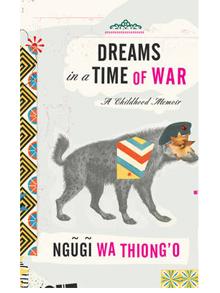
Ngugi wa Thiong’o: Dreams in a time of war

Reproduced for archival purposes. First published in 2010

Ngugi wa Thiong’o’s newly minted childhood memoir, Dreams in a Time of War is quite simply brilliant and enchanting. Every thinking human being should have a copy of this wondrous memoir. Ngugi returns with full force to the playground of ideas and shames those who suspect he is a spent force. He puts together many ingredients of a lived experience and serves the world a delightful stew of recollections. It is impossible to put this book down. The man can tell a story.

Dreams in a Time of War is a graceful, moving, freshly minted ode to the relentless pursuit of enlightenment by a child born into the war that passes for life in sub-Saharan Africa. The writers Barack Hussein Obama, Chinua Achebe, Toyin Falola and Wole Soyinka have explored the same theme with uncommon eloquence and pathos in their memoirs and novels. Ngugi simply adds a stunning, powerful salvo to that repertoire of musings.

This is a memoir narrated simply, prose shorn of gimmickry and most importantly, bitterness. Ngugi has mellowed and this attitude provides graceful wings to a soaring delivery. He also performs the very sly trick of making the reader bear the burden of becoming really angry about all of the unnecessary roughness that Africans of Ngugi’s generation had to bear just to live through the day. Brilliant. Even the title says a lot about Ngugi’s generosity of spirit. Upon reading the memoir, a mere mortal would be forgiven for calling it Nightmares in a Time of War.

Born in 1938 into World War II and precolonial Kenya, there were so many anxieties hovering around Ngugi as a child: The descent of his father into despair and decrepitude, the resulting marital abuse and separation and the rejection of Ngugi and his siblings on his mother’s side; the brothers’ struggles for survival during World War II and the Mau Mau uprising; and the challenge of holding on to family bonds as Ngugi and his mother coped with tragedies and trauma. These stresses shaped Ngugi’s childhood and his world view. And yet by all accounts he proved to be a star student, excelling under conditions that would be considered appalling in the West

This is a highly disciplined documentary of Ngugi’s early childhood. We see a precocious child, a student of the Old Testament, weaving tales of his childhood experiences and the tortured history of his ancestral clan with similar tales from the bible. The sense of wonder his ancestors must have felt upon stumbling into a modern city like Nairobi makes the reader gasp with the same emotion. “Before their eyes were stone buildings of various heights, paths crowded with carriages of different shapes and people of various colors from black to white. Some of the people sat in carriages pulled and pushed by black men. These must be the white spirits, the mizungu, and this, the Nairobi they had heard about as having sprung from the bowels of the earth. But nothing had prepared them for the railway lines and the terrifying monster that vomited fire and occasionally made a blood curdling cry.”

Ngugi fashions a gorgeous tapestry of stories that pulls together all the racial and ethnic relationships and tensions in pre-colonial Kenya, the result is a carefully scripted documentation of oral history fused with the written. Clear-eyed observations of the human condition politely but insistently brush aside subversive symptoms to hammer home crystal clear conclusions. This is not only about Kenya; it connects the dots of our shared humanity everywhere in the globe. There are few books that I have read in my lifetime that radiated from a single locus and connected all these dots everywhere without losing their focus.

His relationship with his mother Wanjiku wa Ngugi is exceedingly moving. It hearkened to Obama’s narrative about his mother Stanley Ann Dunham Soetero (Dreams From My Father). They shared the same traits: that gentle push for excellence and a fierce nurturing spirit. Throughout the book, Ngugi’s mother is the guiding spiritual force holding the book together. This is motherhood at its best peeping fiercely through the mean legs of patriarchy. In return, Ngugi doted on his mother and loved and lived to please her. We also see strong similarities in temperament between Ngugi’s father and Obama’s Kenyan father.

The book’s editing is a delight, kudos to the publishers, Pantheon Books of New York. There are minor quibbles: the chapters are strangely not numbered and it was tough keeping up with the cast of characters in Ngugi’s clan. A genealogical chart would have been helpful. Regardless, this is an important book, full of authentic history. It reminds us that we should not take for granted the valiant struggles of our warriors of old. They fought the good fight, for us and the land. They were not perfect people, but they had heart. Let it not be said of Ngugi’s generation and mine that we failed to lead and fight. May the birth of this pretty book inspire us to pursue anew the dream that our ancestors fought and died for.

Helon Habila: Measuring Time Slowly

Reproduced here for archival purposes. First published in 2007

Helon Habila is one formidable writer – of short stories. With the short story as a canvas, he takes his work ethic, mixes it up with his excellent powers of observation of the human condition and finishes up his patented recipe with a delicious dollop of prose poetry. With the short story Habila struts his stuff, gently telling complex truths with the aid of simple enchanting prose. The reader comes away comforted by this gentle storyteller who weaves evocative tales of mean giants who trample upon the innocent as they build monstrous edifices to tyranny. Habila’s short stories leave you pining for more. Unfortunately, more is not necessarily a novel. The novel as a medium of expression undermines Habila’s strengths and exaggerates his weaknesses. Too bad, because on reading his latest offering Measuring Time, it is easy to forget that Habila is a celebrated writer with formidable literary skills. After all Habila has won both the Commonwealth Writers’ Prize and the Caine Prize for African Writing. You don’t get those accolades from tepid writing. I personally regard Helon Habila as one of Nigeria’s important writers.

Clearly making the transition from the short story to the novel, in my view, has been problematic for Habila. I have bought both books that he has written – Waiting for an Angel, and Measuring Time. I am yet to finish reading Waiting for an Angel; instead of chapters, it is organized in chunky sections and each section reads like a good short story that yearns to be completed. The book in sum reads like a short story stretched too far. In Habila’s novels, truths that seemed profound in his short stories morph into overwrought banalities buried in way too many words. The analogy that comes to mind when thinking of Habila’s two books is that of an ungainly stretch limousine populated with soulless characters. Some vehicles should not be stretch limousines.

 In Measuring Time, we follow the fortunes and misfortunes of a set of twins – the scholarly but sickly Mamo and the soldier of fortune LaMamo and in so doing we peek through the window of Nigeria’s dwindling lights. Their mother dies during their birth and their father Lamang turns out to be one emotionally absent father. The twins are left to fend for themselves with the aid of extended family members. LaMamo and Mamo are separated early in the book as LaMamo sets forth to join a mercenary group. Mamo stays behind in the village to ruminate on the meaning of history and to write autobiographies, most notably of the Mai or chief of the village of Keti (the Mai is expecting a hagiography but the idealist in Mamo would not oblige). LaMamo and Mamo connect through the distance with long letters from LaMamo. The writing in the letters reminds the reader of the contrived English that seems to be the rage these days thanks to Uzodinma Iweala’s relentless (exasperating, I might add) use of that technique in his books. My humble opinion is that the technique fails to deliver in Habila’s book.

 So why read the book? I must say in Habila’s defense that Measuring Time does grow on the reader, slowly but surely. Reading the book was a worthwhile, albeit frustrating exercise. The book does dip its many toes into too many issues and flees without any serious attempt at in-depth analysis. Habila’s technique seems to be to slyly force the reader to think about these things, and in the process, force the reader to do the research. If that succeeds in awakening a consciousness in the reader, then Habila’s experiment has been successful. This reader will never know. For me, it is hard to focus on the myriad issues in the book, thanks to an avalanche of clichéd, uneven prose and dialogue that zigzags between American conversational English and English as is spoken in Nigeria. Surprisingly, I found the book’s editing to be mediocre, with the occasional word used inappropriately. The wooden prose may have been as a result of over-editing, I’ll never know. My first experience with chapters that are not numbered was with Wole Soyinka’s You Must Set Forth at Dawn. I did not like it then and I don’t like it that Habila adopts the same technique in his books. Annoying, especially since each chapter reminds me of an unfinished short story.

The reader plodding through Measuring Time feels like a ravished diner picking through a crab for crab meat. Hard work, but there is at least the promise of meat. Every now and then, the crab offers some meat but one wonders if it was worth the effort. My verdict is that the reading was well worth my time. There were gems. My favorite chapter (or section?) is the one named after the book, Measuring Time (p 138) the one that houses my favorite lines: “… and as he waited he measured time in the shadows cast by trees and walls, in the silence between one breath and the next, in the seconds and minutes and hours and days and weeks and months that add up to form the seasons “ (p 139) Scrumptious. My favorite sentence: “Lamang died in degrees.” (p 215) Neat. There are more gems like that but you really have to plod through the book page by page to enjoy them.

All in all, reading Measuring Time was comforting for this reader who escaped Nigeria many, many moons ago. Where the book was good, one could almost taste Nigeria. My pre-teen daughter Ominira asked me if I liked the book and I said yes. She has the book now and she seems engaged in it; she comes out of nowhere every so often and asks me questions about meanings buried inside the book. She seemed traumatized by a section in the book where the twins kill a dog and rub the dog’s rheum in their eyes. American kids don’t like dog murderers; I’ll have to find Habila and make him pay for my daughter’s psychological counseling. Ominira has been dragging the book all over the place along with her ipod and other accoutrements of American youth. It is a good thing. Our children should read these books. Would I read Habila’s books again? Absolutely, once I find my copy of Waiting for an Angel.

Dark Journey: A squatter’s tale

Reproduced here for archival purposes only. First published in August 2006.

The other day I stumbled upon a Nigerian’s blog and it offered me a gem – a great reading list of contemporary Nigerian writing. It is not an exhaustive list but it includes Sefi Atta’s Everything Good Will Come, Chimamanda Adichie’s Purple Hibiscus, Chris Abani’s Graceland, Helon Habila’s Waiting for An Angel, Okey Ndibe’s Arrows of Rain, Ike Oguine’s A Squatter’s Tale, Unoma Azuah’s Sky High Flames, Uzodinma Iweala’s Beast of No Nation, Diane Evans’ 26A, Helen Oyeyemi’s The Icarus Girl and so on. I have since put several of these books on American “layaway” out of respect for my hopelessly wretched wallet. I have since managed to retrieve Oguine’s A Squatter’s Tale out of this “hire-purchase” plan and all I can say is what a trip this novel is. I have not laughed this hard since reading Peter Pan Enahoro’s How To Be A Nigerian.  A Squatter’s Tale had me in stitches; I laughed so hard, my trembling hands could not hold the book. My spouse decreed that I was now officially a lunatic because I was still up at dawn reading and laughing in the dark. It was literally impossible to put the book down and do something else. I no longer have the book in my possession; I loaned it to a friend and he can’t bring himself to return it to me – he says he needs it nearby to keep him laughing. I have ordered another copy and this time I am not sharing.

A Squatter’s Tale ought to be required reading for anyone interested in the immigrant experience. In terms of importance, I rate this book very highly. Which is a shame. Because it doesn’t appear to me that Heinemann, the book’s publisher did much in terms of advertising and marketing the book. Lesser books have sold for buckets of money, thanks to the wonders of marketing hype. Scouring the Internet, I could only find one review of the book by Tony Kan Onwordi (Between Dreams and Nightmares, ThisDay Online, November 16, 2004). It would be a crime if this book was not re-packaged and re-issued by a more aggressive publisher. The story has been told; it should be made available to the willing reader. And there are legions out there. Even the blurb at the back of the book in describing the book does a great disservice to a most complex story:

“Young financier Obi enjoys life in the fast lane in 1990’s Lagos. He walks tall in designer suits with his girlfriend at his side, enjoying the envy of those with empty purses. When his finance company collapses, Obi’s decadent lifestyle comes to an abrupt end, and he is forced to flee to the United States. There he has to live on the margins of society. Obi wants money, he wants a woman, and he wants to live the good life. This fast-paced novel, by turns comic and moving, reveals what success and failure mean for the young Nigerian at home and in exile.”

The plot is more complex than the blurb’s telling of it. And a thousand times darker. This is a work of dark genius that manages to cobble together a riotous story that gets your heart pumping every step of the way. A Squatter’s Tale is a fast-paced roller-coaster of a little book that takes your emotions for an unforgettable ride. I am not one for roller-coasters but boy am I glad that I clambered aboard this one.  The main character Obi is a cynical jerk, and narcissistic in the worst possible way. An unrepentant asshole with few redeeming values, Obi leads a riotous cast of pure-bred assholes in weaving a story that would have been improbable if not that we all to varying degrees live it daily. Obi comes across as a sneering, snide, snickering genius of a beast too self-absorbed and jaded to see joy in anything. He is also cursed with a heart that is allergic to affections except maybe for those of his girlfriend Robo. He rejects meaningful friendships with the same fervor that a born again Christian rejects the devil. Obi shuttles from wide-eyed wonder to a clinical detachment that borders on the cynical and jaded as he confronts the mistake that is his world.

Obi’s odyssey starts with the visit of his American-based Uncle Happiness to Nigeria. Uncle Happiness is a jolly uncle of many dreams and schemes, all of them unrealistic and unattainable. But he keeps on dreaming and scheming. When Happiness arrives in Nigeria from California, on a short visit, for young Obi, it is an enchanting time of joy, lovely stories and gifts. Uncle Happiness is a one-man joy minting press. He regales Obi, and whomever else is listening, with tales of America – that land flowing with an abundance of everything from milk, to useful US dollars, and as it turns out, oodles of lies. He showers attention and gifts on young Obi and in between mouthfuls of made-in-America roasted turkey and chicken, Obi dreams of someday landing in that nirvana called America. Fast forward to eighteen years later. Be careful what you dream of; you might just get it. Obi ends up in America alright, but it is not the America of his dreams. It is the America of his nightmares. And that of every Nigerian immigrant, it appears. America is harsh on Obi and every immigrant of color that Obi encounters. This book is a deeply disturbing look into the journey called exile and Oguine mines his own anxieties and neuroses with the precision of a well trained neurosurgeon.

Obi soon finds out that choosing between America and Nigeria is like choosing between a rock and a hard place. What comes across as unalloyed cynicism is hard reality. For Obi, America is Bleak House redux. He lands in Uncle Happiness’s apartment in California and is dismayed by the lies, hopelessness and despair that taunt his uncle’s wretched existence.  Here is how Obi describes Happiness’s wretched apartment:

“The brown sofa on which I sat was a massive semi-circle; it took up more than two-thirds of the living room, but each thread on it sagged as though someone had painstakingly pulled on every one of them.  The sofa faced a huge cabinet that rose nearly to the ceiling. Someone had taken a sharp object and made marks all over the carpet. Rusted cassette decks, amplifiers and turntables were piled on it in no particular order, like junk. In the centre was an ancient 26-inch TV which surprisingly showed bright pictures, but you couldn’t hear what was being said because of a constant vicious hiss that came from the back of it. The walls of the living room, originally painted white, suffered from a spreading spotted grey eczema. On the floor was a carpet long trampled to a dusty-milk death; its farthest edges showed that, while alive, it has green and yellow designs. A fierce smell, an oppressive compound of cigarette smoke and frying oil, sweat and damp, decay and despair ruled the room. “(p 10)

Oguine offers an exquisite analysis of acute, painfully felt dislocation from one’s own culture in an alien dispensation. The result is a character-fest of sad caricatures furtively living a lie either in Lagos or in Oakland, California. Obi went to America, in his own words, to seek success, not to keep company with failure. In the end he kept a lot of company with failure.

The book’s enduring appeal is how it seamlessly showcases the universality of the lies that people perpetuate just to live a lie on either side of the Atlantic. Obi’s uncle Happiness says of America, “T]his country turns you into a liar and a thief, or maybe we are all already liars and thieves and this country just provides you with many opportunities to do those things.” (p 199). He might as well have been talking about Nigeria.

And there is fraud everywhere. In Nigeria and in America fraud is perpetuated at multiple levels and the beginning of a transaction is almost always fraudulent. Example: Once in America, Obi needs fake papers in order to work (he is on a visiting visa and cannot legally work). Uncle Happiness procures the necessary fake papers for him in exchange for five hundred dollars. Obi finds out later that the documents only cost his uncle three hundred dollars – the difference being illegal profit. Obi is furious at Uncle Happiness’s’ dishonesty. He cannot understand why another human being would seek to defraud him in a fraudulent transaction and the dark beauty of Oguine’s prose shines through as Obi describes his angst against his thieving uncle. Happiness “shrunk even further in my eyes, became a bald headed wrinkled worm; not just a failure who filled his head with childish fantasies but also a small time crook who would steal from his own blood.”(p 28).  A thief stealing from a thief. Brilliant, absolutely brilliant.

The common denominator that strafes the book’s pages is an eviscerating alienation of the soul and of a people, one that is most painful to read about. Obi sees all this sense of alienation and subsequent denial in his uncle Happiness and he marvels “at this fifty-year old child who hid away from the world that had beaten him in fantasy houses of his own construction.” Oguine also captures the self-hatred that some in the Diaspora unconsciously express in their thoughts and attitudes through Ego, the surgeon’s wife. Here is Ego proudly describing the “white” neighborhood that they live in: “There is only one other black family living here. The man is the Vice President of a big company in San Francisco and there are two or three Indians and some Chinese and Koreans. Apart from that, the rest are white.”

I am blown away by the book’s honesty and fearlessness. For instance, Oguine touches upon a seldom discussed topic – prejudice against African Americans by African immigrants. Obi observes that the African immigrant sometimes exhibits as much prejudice towards his African American cousin as the worst white racist and he offers several anecdotes that the reader would readily recognize. The prejudice that Obi sees cuts both ways; African Americans have been known to exhibit similar prejudices towards immigrants. But Obi has no interest in being balanced and objective; he simply wants to tell his own story, political correctness be damned. Let the aggrieved tell their own version. I find that attitude refreshing.

Obi observes that Nigerians in the Diaspora tend to exhibit naiveté in their discussions of Nigeria’s politics by ascribing most of Nigeria’s failures to the evil of ethnicity. He posits that the reality is much simpler:  “A few so-called leaders, waving the ethnic banner, struck deals all the time with whoever happened to hold or want political power and they were handsomely paid for their trouble. Ethnic politics was good business; the ethnic groups were political commodities whose prices changed seasonally, like farm produce. A shrewd politician was one who knew how to hoard and when to sell.”  (p 129)

Like most Nigerian immigrants, Obi feels the pain of exile acutely and expresses his home-sickness in lovelorn prose:

”… I missed home more than I thought possible. Robo’s thin-fingered touch, her unhurried, meandering laugh, her bra-free jiggling breasts. Lagos – the Lagoon, blue and wonderful, the city free of chaos, bad temper and violence, filth and evil smells, the nightclubs filled to the brim with beautiful people, energy and good cheer at full throttle – a Lagos that existed only in my cold homesick mind. My ageless mother, rippling with strength, leading the women in church in an almost erotic, buttock-shaking dance of thanksgiving to the Lord at the services I attended once in a while. My gorgeous sister, Nwaka, going through some of the most confusing years of her life without the counsel of her big bro. Over and over I asked myself: What are you doing here for God’s sake? Why can’t you just go home and get any kind of job? As if jobs littered the streets of Lagos.” (p 140)

As cynical as the book comes across, it is not too far from reality. In Oguine’s book, we see what happens when what passes for free enterprise is layered on a rickety structure of governance. The result is capitalism of the worst sort, of a swarm of locusts engaged in self immolation – a relentless march of self destruction ravaging and raping the heart and soul of a once proud people. We see this in Oguine’s Nigeria and in his Republican-run America (Newt Gingrich and that Contract With America! Ha!). In the end, only the weak are left standing, shivering under the weight of a merciless hurricane.  The strong are sheltered in the warmth of their big houses, snickering in their white neighborhoods, sleeping off the tsunami. For them, this too shall pass. Not so for the poor and truly dispossessed.

A Squatter’s Tale is a veritable repository of exquisite prose. Obi describes a white lady straining to understand his thick accent by the condescending habit of slowly repeating his words, “speaking the words slowly, pronouncing each of them carefully in her American accent, rescuing them, like abused children, from the violence my accent had done to them.” (p 47).  While driving along down the freeway in California, Obi marvels: “And the lights of a town at the bottom of a valley would hang in the air for seconds, an endless blanket of distant fireflies, and then vanish, only to re-appear at the other side of a hill.” (p 25) This book is sheer delight.

This book is a must read. It is an important book – a powerful time-stamp of a never-ending period of loss and despair, not only in Nigeria, but in the Diaspora. Oguine captures with startling effectiveness the hollowness, the lack of an ideology, the me-ism , the hollow yearning for materialism that never seems to satisfy, and the tragicomedy of timid attempts at mainstreaming and social integration in an alien land. Oguine captures all of this so brilliantly, it is hard to believe that this is his first novel.  Oguine steps out smartly, out of the shadows of nowhere to deliver a stinging indictment of the state of our being in Nigeria and in the Diaspora. And then he steps back into the shadows as swiftly as he came. May this brilliant comet return to taunt our conscience with the truth.

Homecoming for Dr. Patrick Wilmot’s Demons

Reproduced for archival purposes only. First published June 2008.

Interventions VI: Nigeria: The Nightmare Scenario by Dr. Patrick Wilmot, jointly published by Bookcraft and Farafina is an elegant little red book, very pretty, and MADE IN NIGERIA (yes!), wearing a quality and pride of production that can compete with any book anywhere else in the world (yes!). It is a gorgeous little book; you hold the book gingerly and look around for a coffee table to display it on. You beam with pride and you crow to imaginary Westerners loitering around your hut: “You see this pretty little book? It came from my country Nigeria, yes! We have publishers there also, good publishers! We produce good things also, please write that down! Tell the world we are not just a nation of crass consumers! We are producers! Of books, no less!”  And Professor Wole Soyinka the Great even wrote the foreword. Ah, to read a home-grown book. This reader settles down to read and swells with eager anticipation at Professor Wole Soyinka’s foreword to Wilmot’s book. The foreword is titled with Soyinka’s signature flourish – FLESHING OUT SKELETONS IN THE CUPBOARD OF HISTORY. Ah, the first sentence that hits your eyes is Soyinka-esque – long, tipsy, dense to almost unreadable and self-indignant in all its glory:

“Bit by bit, the pieces are coming in, to be fitted together like a jig-saw puzzle whose overall diabolical design has not been apparent to many, lacking only those segments  that detail the twists and turns, the vertiginous cliffs and deadly slopes of a nation’s hidden geography, often without hand or footholds, the man-made obstacles and mined pathways along which citizens daily negotiate their lives, sometimes overcoming inhuman odds, more often sucked into marshlands, vanishing without a trace”. (p x)

Soyinka must be talking about Nigeria again. Oh Kongi! What have you done? Seventy eight words! In ONE sentence! Seventy eight words lurching about, drunken little warriors, pointing everywhere, and then clattering to an exhausting full stop. This reader groans aching all over from a literary hangover, reaches for a handful of analgesics, grabs a drink and settles down to a journey – this is going to be good.

So what is this pretty book all about? Who is Dr. Patrick Wilmot and why is he writing about Nigeria? Why should we care? Well, Wilmot is a Jamaican national who attended Yale (as he reminds us at every turn in the book, sigh!) where he got a bachelor’s degree, and Vanderbilt where he obtained an MA and PhD in philosophy. He was a lecturer at Ahmadu Bello University, Nigeria for 18 years (from 1970 to 1988) where he developed a reputation for radical politics and being a thorn on the side of the military.  In 1988, the then Dictator du jour, General Ibrahim Babangida decided he’d had enough of Wilmot and deported him under disgraceful circumstances “for teaching what he was not paid to teach.” He was supposed to have been deported to Jamaica via London, but he ended up staying in London where he now lives. Apparently in 2006, he returned to visit Nigeria (and the scene of the crime) where he was treated to a tumultuous red-carpet welcome and accolades by his legions of admirers and ex-students (he alleges in his book and there are several fawning interviews of him by presumably his former students in the Nigerian press to confirm this).

This book Interventions VI: Nigeria: The Nightmare Scenario is inspired by, his treatment in the hands of the Nigerian military and that return trip to Nigeria almost two decades later. With the book, Wilmot attempts to come to closure on his adventurous 18-year stay in Nigeria, what happened to him in the hands of the military and what has happened to Nigeria since the nearly two decades that he has been gone And oh, what a book. What a god-awful book.

Wilmot’s book is divided into three sessions:  Part One, Patrick Wilmot Returns, takes up half the book; Part Two, Murtala Muhammed, is a series of essays he delivered in February 2006 to mark the 30th anniversary of the assassination of General Murtala Muhammed; and Part Three, Planning for the Future is a series of forgettable essays on post-military Nigeria. The book starts with a startling and shameless admission by Wilmot that he was actively complicit in ensuring that the Nigerian civil war was a merciless turkey shoot by the Federal army against the Biafran citizenry thanks to the West seeing to it that Biafra was virtually unarmed against the Federal side. Listen to him brag about this anti-Biafra credentials while establishing his bona fides as a willing pawn in the hands of the royal scions of Northern Nigeria:

“I was invited to Nigeria by M.D. Yusuf and Mallam Aminu Kano after a group I worked with in Paris used contacts with intellectuals such as Jean Paul Sartre and leaders of the student revolutionary movement, to prevent France from recognizing the secessionist ‘Republic of Biafra’. Such recognition would have allowed the country to supply weapons directly to the rebels and encouraged other countries to do the same, complicating the task of the Federal side dramatically. Since I was only a student, those far-sighted patriots thought I could help transform ABU, the stagnant Euro-American dominated intellectual outpost in the North, into a dynamic African one.” (p 8)

Wilmot’s One-Nigeria credentials land him a wife from the North and a teaching job at Ahmadu Bello University, a job he held until he was forcibly ejected from Nigeria for Babangida’s interpretation of anti-Nigeria activities. So what went wrong? How did this darling of the North run afoul of his benefactors? Even by Wilmot’s own accounts he was a meddlesome meddler in Nigeria’s internal affairs. Reading the book, one imagines Wilmot as the Forrest Gump of Nigeria, a Jamaican national seemingly everywhere deeply immersed in Nigerian affairs, gallivanting in alleys that would have gotten a Nigerian shot.  We learn from this incredible narrative how he somehow inserted himself into practically every important official Nigerian delegation overseas:

“In the years I spent in Nigeria I had been chosen for several Federal delegations to other countries and helped make Ahmadu Bello University a name in the world of learning. I believe I had gone some way to satisfy the hopes of Aminu Kano and M.D. Yusufu (sic) that the university would one day rival Ibadan.” (p 23)

His obsession with Nigeria’s fortunes did not end after his ejection; if anything, it intensified. Even after he had been deported, he claims to have had “sources” at every level of the government including the Nigerian SSS. He provides ample evidence of his active connection with the affairs of Nigeria from far away in exile up until the point of his return in 2006. This reader is forced to wonder: Why the obsession with Nigeria’s fortunes? With all this busy work, when did Wilmot have time to actually teach his students? No wonder his adversaries accused him of being a CIA agent.  The deportation of Wilmot was a despicable act but Nigeria has to be one of the few sovereign nations whose leaders eagerly invite aliens into the innermost sanctum of the pantheon that houses their nation’s secrets. Wilmot has been living in England for some time now; it is a safe bet that he will never write a memoir detailing face-to-face meetings with European leaders; meetings that were so urgent he had to see them in their bedrooms as he apparently was in the habit of doing with at least one Nigerian client. England’s rulers hold their secrets and dignities very close to their vests and would never give them up to a mere academic, certainly not to a non-citizen. Wilmot by his own admission had the free rein of Nigeria’s halls of power and he is alive to talk about his experience blow-by-blow. He is a lucky man.

It is almost a cliché; in 1993, Abiola is said to have won the freest and fairest elections ever held in Nigeria. And then, General Ibrahim Babangida annulled it. Pandemonium broke out, Babangida stepped down, handed over to a puppet Chief Ernest Shonekan. More pandemonium broke out and another evil general Sani Abacha took over. Meanwhile, Abiola has fled to the West where he spends most of his time alternatively begging and hectoring Babangida and Abacha in a bid to regain his stolen mandate. All this with the help of several hangers-on including Wilmot. Readers hoping to sink their teeth into a book that delves into structural issues bedeviling Nigeria will come away sorely disappointed. Wilmot’s book is an intensely personal attack against his legion of enemies and most times even his fawning odes to his friends come across as insulting. His diatribe is enveloped in a strong shroud of narcissism. Even the late Chief M.K.O. Abiola unwittingly falls victim to Wilmot’s thinly veiled megalomania. Apparently Abiola helped rehabilitate Wilmot in London. He was put on the payroll of Abiola’s Concord newspapers where he wrote stories and was a columnist.  He claims to have been Abiola’s speech writer and public relations aide during the period when Abiola was busy trying to reclaim his mandate. Perhaps out of gratitude to a former benefactor, he has also white-washed Abiola’s history and forgiven him his transgressions as one of Africa’s most powerful civilian generals, a man who generously bankrolled a number of military coups in Nigeria.  Wilmot in his book reveals that in London, he is up close and personal with Abiola as he struggles to win back the presidency of Nigeria. He is there in Abiola’s bedroom as he makes phone calls to Abacha and Babangida accumulating empty promises from the two thugs that he would be getting his presidency back.  The book is one intense farce but then we are talking about Nigeria’s leaders.

Wilmot’s relationship with Abiola as he narrates it makes this book a must-read for several reasons, none of them flattering to either Abiola or Wilmot. We learn for instance that Abiola was in the habit of speaking with Abacha and Babangida via speakerphone with aides present. And he liked to receive important visitors like Wilmot, in his underwear (Sigh!):

“Although he was among the most impressive dressers, the Chief was not shy at receiving people in his briefs. In Jamaica he was in his underpants when I told him my sisters wanted to greet him. He asked me to call them in but I would not allow my sisters to see any man but their partners in his underwear.” (p 60)

It is a comedy of errors and at the end of the book, this reader is almost relieved that Abiola never made it to the presidency. From reading Wilmot’s book, one gets the distinct impression that Abiola was caught between the demands of lunatic intellectuals (like Wilmot) and deadly buffoons in uniform (like Sani Abacha). In the end Abiola comes across looking like a stuttering invalid despite Wilmot’s best efforts to make him look presentable on the international stage (so Wilmot says. With a friend like this, Abiola did not need enemies!).

Wilmot is an unreliable historian. At the very least, he could have used a good copy editor. His book is rife with inaccuracies, embellishments and hyperbole.  He claims to have been the brain-child behind the Reparations movement – a movement founded “as a means of righting the balance between Africa and Europe, not just in material but also in existential and psychological terms.” Yeah right, and Phillip Emeagwali is the father of the Internet. He claims that Ikeja International Airport was renamed after Murtala Muhammed the next week after the General was murdered in 1976. Actually, the Murtala Muhammed International Airport was officially completed in 1979.  He moans the “slaughter of hundreds of students” during the ‘Ali Must Go’ demonstration. What the Obasanjo regime did to university students during the “Ali Must Go” riots of 1978 was dastardly but there were about a dozen deaths at Ahmadu Bello University. A few more were murdered elsewhere; however there were not hundreds of casualties. In any case, if Wilmot knew that Obasanjo was responsible for the deaths of “hundreds” of unarmed students during the “Ali Must Go” riots, why, according to his book, was he prepared to offer his services to this despot of despots when Obasanjo decided to run for the presidency in 1999?

With words dripping with unbridled condescension and know-it-all arrogance Wilmot systematically cuts down to size virtually every Nigerian that he comes across, save for Murtala Muhammed. It is all about him and there are few human beings alive or dead that measure up to His Eminence. Hear him on General Olusegun Obasanjo:

“[General Obasanjo] lacked the intelligence, compassion and common touch of Mandela, whom prison had transformed from a dashing liberation fighter into a world statesman… Obasanjo does not know that I was consulted when he was being considered for the job [with Transparency International], or that I endorsed him as alright by Nigerian standards. At the same time his principal backers were among the people who corrupted the nation, who had created the crisis afflicting it, and who sought a palliative rather than a cure.” (p 147)

Obasanjo is honest by Nigerian standards! Gratuitous insults like this (not aimed at Obasanjo but at Nigerians infect the pages of this book. Where is the outrage? Wilmot seems to be afflicted with a Messianic complex. Almost a decade after his former friends in the military ejected him from their space, he returns to Nigeria still seething with rage at their ingratitude. Not to worry, he returns to a massive hero’s welcome (if not in truth, at least in his dreams). It is now 2006 and Wilmot returns to find that he has adoring and apparently subservient former students everywhere he goes in Nigeria; at petrol stations, airports, bathrooms of the rich and infamous (he is always stopping to check if the bathrooms have water; nope, you got it right, there is never water!). They are so honored to be in his great presence they do favors for him (which he willingly accepts); he jumps queues for any and every inconvenience, he is parked in VIP lounges at airports and he gets upgraded to first class cabins and accommodations and they chauffeur him around as he hunts for his favorite Nigerian delicacy – suya. And he gets a 24-hour security detail presumably with a shrieking convoy to take him from worshipful masses to worshipful masses. For a reformer preaching justice, egalitarianism, order, blah, blah, blah, he is gleefully blind to the ethics of enjoying that which he rails against.

The greatest injustice that Wilmot’s book inflicts on Nigeria’s history is its revisionist history on the late General Murtala Muhammed. Murtala Muhammed’s crimes against Nigerians during the Nigerian Civil war are well documented and in today’s world, he would probably have been hauled before an international court of justice like Liberia’s Charles Tailor. They include ethnic cleansing in Asaba when he personally supervised the slaughter of hundreds of Asaba males, and bank robbery from emptying the vaults of banks of their cash. He was also a disaster in the war front; a Don Quixote so deadly in his poor judgment, the Biafran army made sure to eliminate hundreds of his solders. He was so bad he had to be recalled from the war front. It is true that when he became Head of State he loudly returned his ill-gotten properties and initiated a controversial war against corruption. It was long on drama and short on organization; to this day there are those who blame the state of today’s civil service on General Murtala Muhammed’s short reign. It is this man that Wilmot and apparently millions of a-historic Nigerians worship daily. I think it is unconscionable that an academic of Wilmot’s alleged stature would boldly erase this part of Nigeria’s history from the books. Instead we are treated to a most insincere hagiography of Murtala’s short life. Wilmot even has a most horrid poem that was “published worldwide” (an easily verifiable untruth) in Murtala Muhammed’s honor titled – Bloody Friday: Requiem for Muhammed. As a consequence, the reader is forced to endure outlandish predictions like: “If Murtala had not being murdered, it is my personal opinion that the continent would have been freed by now.” (p 85)

A quick digression: The Interventions series is the brainchild of Soyinka who provides the foreword to Wilmot’s book which is the sixth in the series. As Soyinka explains it, the rationale behind the series is laudable and one suspects that Soyinka is not going to be short of enthusiastic participants in what appears to have promise as an enterprising series. The good professor will however need to be more discerning and more discriminating in his choice of authors. Wilmot’s book has to be one of the most condescending, most patronizing, most disrespectful books ever written on Nigeria and Nigerians.

This reader oscillates between revulsion at Wilmot’s treatment by Babangida and revulsion at Wilmot’s delusion of grandeur as he compares himself to Che Guevera, Patrice Lumumba and Mandela (!). This book is a self-portrait of an enthusiastic self-promoter as he reminds the reader at every turn that he attended Yale and was school mates with George Bush, John Kerry, etc, etc. (p 13)

“I was an internationally known academic and author, the product of probably the most expensive education in the world, the winner of very expensive scholarships and fellowships. Yet here I was being treated worse than an animal by a corrupt third-rate military officer, a brutal semi-literate ‘intelligence’ chief and an obscure academic without a serious work to his name.”


Wilmot’s little red book hearkens to a time when poets and brutes in uniform cavorted around pepper-soup joints and plotted coups in the name of the masses and cavalierly rode Nigeria as if it was their  okada motorcycle.  Today, it seems lost on Wilmot that societies that thrive rely on sustainable structures, not individuals.  You might even enjoy this book if you are prepared to endure gossipy crap like this:

 “Abacha’s myth of infallibility was ended by a scandalous death, in the arms of foreign harlots, because most African women refused him anal sex to which he was addicted.” (p 140)

Otherwise, there is precious little that is remotely edifying about the book; instead what you will find instructive is the depths to which Nigeria has sunk.

There are occasional gems if you stick with the book long enough and you are not turned off by the relentless self-promotion. There are a couple of good essays. Wilmot is no fool. When he focuses on issues and strays from self-absorption, he can be almost impressive. His most disciplined work in the book is the essay, The Role of the African Intellectual. (p 100)  It is focused and disciplined and worth the reader’s time.  I would also recommend Politics for the 21st Century: How to Remake Nigeria. (p 90) However, even the best of the essays describe feverishly the situation; there are only half-baked attempts to dig deeper into the structural causes of the mess that Nigeria finds itself. Solutions proffered are sophomoric, dated and in some instances quixotic. An avowed socialist, Wilmot’s solutions to Nigeria’s dilemma are straight out of a peppersoup bowl of inchoate economic policies – a farcical mixture of socialist and capitalist tripe held together by angry riffs – a dated albeit quaint throw-back to the sixties:

“Anti-people programs pushed by neo-liberal forces in the IMF and World Bank could not work because they promoted mass poverty and prevented economic take off by constricting effective demand: people would have no money to purchase the consumer goods produced by budding industries.” (p 61)

One learns from Wilmot’s book that there are there are two sets of tyrants currently taking turns to traumatize Nigerians – the intellectuals who practice the tyranny of the pen, and men and women in uniform and agbada who bludgeon the populace into submission with their guns and their lies. Wilmot represents the worst of Nigerian intellectuals who are trained to lecture, not to listen to their audience. They stand on the stage like regal bullies and hector the dispossessed with boorish lectures on what is wrong with their world. One refreshing thing about reading this tired self-serving book is Soyinka’s quiet vision. Almost lost in the unnecessary opacity of Soyinka’s discourse (in the foreword and an introduction to the Interventions series) is his road map for sustaining living breathing ideas. At the back of the book is an essay by Soyinka that serves as an introduction to the “Interventions” series. That essay is a good basis for dialogue on ideas for attracting, recruiting and sustaining a national discourse on the way forward for Nigeria. I think that Soyinka should reconsider the role of the Internet in actualizing this vision; he seems ambivalent about the use of emerging technologies and tools on the Internet to propagate his ideas. He may well prove to be wrong. But first things first: Bookcraft and Farafina publishers must hurry and fin a really good editor with enough gumption and stature to stare Kongi down and chop his sentences into short, readable sentences. An onion doesn’t sting until it is chopped.

Wilmot’s enemies, and they are legion, are right; he is abusive, arrogant and extreme. His book is patronizing, condescending and innocent of rigorous scholarship – a long irritating baying at his moon. Heckling, petulant, aggrieved, too pissed off to engage in serious self-reflection Wilmot’s book finally succumbs to his lunatic rage and crumbles into wretched incoherence. Wilmot should retire to his council flat in London and never ever return to Nigeria unless he pays for an attitude adjustment. Nigeria is not a mute okada motorcycle that he can ride willfully. The good news is that Wilmot is not planning to retire to Nigeria anytime soon. In 2006 when he was asked if he will return he flicked off the idea, thoughtfully observing that Nigeria has not made any progress: “If you had good public transport, good health and education systems, maybe I will be back. But I can’t spend the rest of my life here.”  If in the unlikely event, he returns with the same silly attitude, all of Nigeria should join the dictator du jour to deport him – this time, straight to Jamaica. For now, Wilmot should count his lucky stars:  Winston Churchill once famously said: “History will be kind to me for I intend to write it.”  History will be kind to Dr. Patrick Wilmot for he has written it.

#Caineprize – The Thirteenth Caine Prize Shortlist: Hunter Emmanuel

So, I read Hunter Emmanuel, the fifth story that made the 13th Caine Prize shortlist, written by Jenna Cato Bass, a 25 year old white South African writing under the pseudonym Constance Myburgh. The story features Hunter Emmanuel, a Walter Mitty type of loser, a misogynist jerk who loves playing detective. He finds a woman’s leg up on a tree and the story builds from there as he chases down the owner, a one-legged “whore” and “slet.”. It is an improbable story even as magic realism goes (which this story probably is not), but there are subtle plays on many anxieties in today’s South Africa: racism (Hunter is black), urban violence, feminism, misogyny, etc.

I imagine this story may be classified as genre writing under the umbrella of pulp fiction, I am not sure. Bass is a good writer, expertly delivering muscular prose and believable dialogue. She is also the editor and co-creator of Jungle Jim, a pulp-literary magazine for African writing. There is a good piece on pulp fiction here but let me provide some context that may be disconnected from historical reality. I believe that television’s main purpose in coming to the world was to get rid of pulp fiction. The good pulp fiction writers went on to be successful scriptwriters in Hollywood. Bass is in the wrong business though, genre writing now exists on television; she should go make financial hay while she is still young.  As a writer she would do quite well in any TV station. The story read like the third draft of a made-for TV script. One more draft and it would have the oomph it so badly needed. Many times, I felt like reaching for my remote control to either turn on the volume or shut down the infernal noise from the silence of this story that gently goes nowhere.

The story is actually in my view, a morality story, another opportunity to sermonize about the evils of misogyny, etc., much like Stanley Kenani’s Love on Trial, only in a more sophisticated and subversive way. It is subtle but relentless though: Women are objectified and ridiculed with obscenity-riddled sentences. Even the forest that bears the woman’s leg is named Cecilia Forest. About the leg, it “had been cut off right at the crotch, at the dip he liked so much, probably his favorite place in a chick.”  From that point on, there are all these cheesy plays and puns on chicks and cuts, like a drunk staring at cheap chicken cuts garishly displayed in a greasy spoon. It gets old and tasteless after a while.

I like the way Bass she was able to get into character and flesh out the protagonist, Hunter Emmanuel. Hunter is a trash-talking misogynist who manages to make an entire (largely pointless) story from body parts, mostly of the female sort. Dark meat meets dark man.  I don’t want to over-analyze, but I have this sneaky suspicion that in her faux anonymity. Bass sought to plant her views on feminism, race, misogyny, etc. on the head of a black South African male. I wondered about the derogatory language deployed here against women; who is more likely to speak like this; a white or a black South African? Interesting. For once I wished Bass had explained all the South African words in her story, it gives it a very provincial, colloquial tint. I did not feel motivated to go looking for the meanings of the many Afrikaans sounding words. This was largely because the story is laconic and listless; it does not inspire much of curiosity in the reader. Besides, when Bass calls a “whore” a “slet” you tend to get the meaning right away.

Bass, the writer has my respect. There is a lot of imagination here, even if most of it is inchoate and disconnected from reality, thanks to perhaps a desire to arrive at a story’s (non) conclusion. She will only get better as her demons mature in the darkness that is her South Africa. She should probably be given the Caine Prize this year if only to encourage her to keep babbling. It would make great copy. I can see it now,

“The Caine Prize goes to faux anonymous Constance Myburgh who spends the day in real life as Jenna Cato Bass, a 25 year old white South African lady who founded the uniquely named pulp fiction rag Jungle Jim magazine that features black men running around weird neighborhoods muttering dark fantasies about female body parts and slets and whatnot. No italics necessary.”

Pulp fiction is not new. As a boy, I read all of my father’s True Detective magazines and his dog-eared copies of the exploits of John Creasey’s Inspector Roger “Handsome” West in a fiction series about a Scotland Yard detective. As children we were also enthralled and entertained by picture plays. There was Lance Spearman in African Film and Fearless Fang in Boom and of course the tear jerker Sadness and Joy. Tunde Giwa has a lovely 2008 essay on the pulp fiction of my generation in this must read. He captures the era wondrously thus

“Growing up in Nigeria, in what I choose to remember as a halcyon era with TV that ran from 6pm to 9pm, the Internet had yet to be invented, no one had ever heard of computer games, you played with your imagination and objects you found around you and comics were a great love. We treated them like gold and devised an elaborate barter system to establish what each one was worth. “I’ll give you two codis (tops made from garden snail shells) or 1/16th of a fizzie if you let me read your comic”. Being as it was, the immediate postcolonial era, these comics, regardless of where they came from, uniformly featured white characters.”

And he continues:

“Into this culturally colonized milieu came a new comic published by Drum Publications called African Film featuring Lance Spearman, a raffish and nattily-dressed black super cop with an ever-present Panama hat. And we all instantly fell deeply in love with him. No one forced Spearman on us. For the first time, we had a comic hero who was actually black like us. African Film was very different from other comics of the time. Not hand-drawn as other comics were, it was a photoplay magazine that used actual photographs of real black people with the dialog typed at the bottom of each panel. Located in an unnamed but strictly urban setting, Lance Spearman was cast as a black James Bond type. It featured several recurring characters including the unforgettable eye-patch wearing arch-villain Rabon Zollo who once made his escape from certain capture using a jet-powered flying wheelchair. Obviously, as with any comic, they were not shooting for plausibility. But when Spearman took on a young sidekick called Lemmy, many of us almost died of jealousy – we so wanted to be in his shoes. African Film used cliffhangers to great effect, keeping us wanting more and eagerly expecting the next serial installment.”

How does Jungle Jim as a purveyor of pulp fiction compare? I don’t know, but this is Jungle Jim’s mission statement:

“Jungle Jim is a bi-monthly illustrated print publication, aiming on spreading narrative, imagination and concept-driven African stories. Taking from the pulp tradition, we publish short and serialized fiction that entertains and engrosses in all dramatic genres (horror, sci-fi, crime, detective, western, romance, adventure etc.), accessible to all, but with a high quality of writing. We seek to publish stories that explore the collision between visceral daring of pulp and the reality of living in Africa.”

Television is here, along with the Internet, competition is stiff, and the publishers will have to do more than the story Hunter Emmanuel to hold the reader’s attention. I read this story three times: Black guys mugging colored guys, mayhem, racial tensions, misbehaving sexist racist cops. The subtext under all of these pretty sentences: post-apartheid South Africa has a lot of issues. We knew that, Ms. Bass.

#Caineprize – The Thirteenth Caine Prize Shortlist: La Salle de Départ

Every now and then one comes across a story that belongs in you, that should have come from you, that tells it exactly how you have been meaning to tell it, but you can’t because well, you are the story. La Salle de Départ shortlisted for this year’s Caine Prize was stolen from inside my soul. I should sue the author, Zimbabwean Melissa Tandiwe Myambo for doing this to me. This is one of the finest stories I have ever read. It features vivid soaring searing imagery with profound insights, yet tender, sensitive, touching. Still, Virginia Woolf’s gentle but insistent spirit comes bleeding through, holding the hands of her brown sisters. I salute you, Myambo.

What is this pretty story about? A young man (Ibou) ends up in America thanks to the generosity of the extended family. On a visit back home (Senegal), he balks at taking responsibility for the future of his nephew Babacar who the mother (Fatima) wants to go to America, the land of milk and honey. The dream is America; the nightmare is the nephew, Babacar. The extended family spreads poverty and the protagonist kicks against this new imposition.

Where do I start? Pretty does not even begin to describe the prose. The dignity of this story spoke quietly to me and comforted my soul. Bravo. La Salle de Départ is a familiar story revamped in colorful black and white. In untrained hands, this would have been another tired tale of home and exile. Instead, Myambo pulled it off as a thoughtful treatise on that movement we call immigration. Quietly, everything is laid bare: The politics of blood and (un)belonging in the era of globalization.

A good story should be like good sex, you want some. I got some in this story. The reader’s mind floats on a lazy river of laconic prose, built on the sturdy backs of painstaking research and searing attention to detail.  It is interesting, Myambo barely moralizes or editorializes, for once, this is a story, what a concept. You enjoy it quietly, sigh, and then the story’s issues start to tug at your conscience’s shirt, insistently thus: “Can we talk about this?” And for once the italicized words did not draw my ire; they seemed to dignify the words, drawing you in, inquisitive at these French words that are now the other against Senegalese words. It is brilliant how she explains the words – with dignity and pride. Nice.

Rather than a tired tale told perhaps for profit and a desired audience, this story comes across as a lovely time marker of an era when all the civilizations came together under a gnarled baobab tree and amused each other with the strangeness of (not knowing) the other. These civilizations and their technologies, tools and toys brush against each other like strangers overflowing in an overloaded elevator. And the reader is reminded: Halcyon times are dying, love letters giving way to the intensity of digital texts and (e)motional affairs. Myambo’s eye for detail is complimented nicely with exquisite prose poetry. Hear her describe those Baroque buildings that are the hallmark of American university campuses:

“Father nodded at her to begin reading the letter and it was only then that she noticed the photograph that had slipped out from between the pages. Picking it up, she gently shook the dust off of it and wiped it on her pagne. It was Ibou with two other young men and two girls standing on the steps of what looked like a library or some other majestic university building propped up by ornately-decorated columns. To Fatima, it looked like a concrete wedding cake.”

“It looked like a concrete wedding cake.” Anyone who has ever been in an American university campus will enjoy the brilliance of that quote.

It is very clever how Myambo buries the clues to the meanings in subsequent sentences, like a lovely and enchanting egg hunt.  To get a sense of how beautiful this story is, think about Jhumpa Lahiri’s short stories (Interpreter of Maladies, and Unaccustomed Earth),  Chimamanda Ngozi Adichie (The Purple Hibiscus and Half of a Yellow Sun), Chinua Achebe (No Longer at Ease) and Camara Laye (The African Child).  Behind all that beauty and powerful prose she fearlessly examines and updates notions of physical, emotional and spiritual boundaries. This she does with careful research, exquisite pacing and lovely prose poetry wrapped in a familiar but enchanting ambience. And yes, there’s technology jostling for space under the Baobab tree. People actually text in Africa! What a concept:

““It’s a text message from Ghada. I can’t believe my roaming is finally working again and of course, just in time for me to go to the airport.””

Where there is a certain viewpoint, it is not a cloying, in your face unctuousness; you simply catch a whiff of it. And they are real issues, e.g. patriarchy, the extended family system, immigration, etc.

“Perhaps she would have more choices if she had more brothers to rely on. Brothers were like the wind, they could go places she could not. She was like the sand. She could only be blown by the wind. But now she had a son and Ibou had to help her build wings for him. Her dream for Babacar was for him to go and live with his Uncle Ibou all the way, theeerrre in America, to go to school there, sow success for the family there and harvest green US dollars to bring back here.”

Everywhere the reader’s eyes roam, there is sad beautiful prose:

 “Again. He was always leaving. Her memories of him were distilled down to a series of departures, snapshots of ever leaving. And now he was leaving without having agreed to take Babacar with him. It was her turn to fix her gaze on him, willing him to respond in the affirmative…”

And again:

“I am the one who waits always and watches others come and go. I am the one who always remains behind so that you can go.”

The story reminds us that daily familiar themes are renewed in our consciousness even as we fight our individual wars and get comfortable in the new municipality of the individual, the ME. In Senegal, we witness culture clashes, with hygiene as proxy, resulting in alienation at home and in exile.

“Delicious! An excellent cook, but why was the squat toilet never flushed properly? Why were there always lumps of other people’s shit floating next to the foot pads? He pushed the carrot around with his tongue, trying not to think about that and he wished he felt guiltier for constantly thinking about it. But he couldn’t stop himself. Ghada was luckier in that sense, she was closer to her family. But then again, her family was different.”

The advocacy here is more sophisticated than I remember. All through Myambo expertly takes us on ride through sleepy streets pregnant with the fragrance of fried beignets and cold bissap juice.  Lovely.

The new nuclear family is about cutting clean through the umbilical cord of poverty and family ties. Or is it? Are we breaking free past the shame of self-loathing?  Is this self-loathing, liberation, acculturation or mindless assimilation?

“He looked at her for a long time but he couldn’t hold her gaze. It wasn’t so much that he was afraid of what he would see but rather of what she would see, the feelings he did not care to admit even to himself. Somewhere deep down, Ibou experienced familial obligation as an intolerable irony. When his mother passed away in October of his first term at university, a strange aloofness was born in him. He never mourned her. It all happened so far away, in another time and place. Instead, all his childhood memories were slowly suffused with a sepia tint typical of old-fashioned photos, the type of photos one looks at but feels no connection to. Somewhere along the way, Senegal had died for him. It was all too abstract, too removed from his daily reality; family responsibility weighed on him but not as heavily as he felt it should. How many years had he been away? Half his life had been spent in another country, in another culture, where the ties of family do not strangle one’s bank account and stifle one’s emotional resources. He wished he felt more guilty. If he were a better person he would.”

We see the tension between home and exile and the expectations of the extended family that ironically funded the protagonist’s new independence:

““When we sent you to America, it was for the good of the family. We sent you to study for us.””

This story cut me all over like a playful knife and it ends too soon for me, gifting me with the best sad ending I have encountered in a long time:

““Goodbye,” he said. “Thank you for everything.” Awkwardly, he embraced her rigid shoulders and then quickly turned and pushed into the crowd putting their luggage through the X-ray machine. He took his carry-on and put it on the moving belt. Then he took off his watch, his iPod and his cell phone and put them in a tray along with his laptop. He stood in front of the metal detector. When the official waved him to come forward, he stepped through the metal frame, trapped for a second on the border between his world and hers, silhouetted against the bright light of the other side. Time teetered; she held her breath. But then he was through, into a world where she would never venture. He looked back at her and lifted a hand. Then he was gone. She would wait for his plane to take off.””

I have thought hard about what I did not like about this story; I am not coming up with much. The themes are familiar but they are still here with us and Myambo addresses them expertly in real, rather than in nominal terms. Of all the writers on the Caine Prize short list that I have read to date, her writing comes across as the most polished and sophisticated, it is almost as if she is overqualified for the competition. She is not; there are many more where she came from. As an aside, Myambo must lead a very interesting life, a Zimbabwean writing so convincingly and evocatively about Senegal.

Finally, as I was trying to figure out how and why Myambo’s La Salle de Départ spoke to me so beautifully, I chanced upon Jasmin Daeznik’s poignant and at times sad New York Times piece,  Home is Where They Let You Live. And then it came together for me personally; both pieces made me refocus and reflect in a profoundly personal way on the notion of home and exile and the responsibilities and burdens I have had to bear and in some instances jettison on the way to crafting a sustainable self-identity. Home is not always home.

Related posts:

Stephen Derwent Partington “On Admiring Melissa Tandiwe Myambo’s ‘La Salle de Départ’”

Ayodele Olofintuade – Long Drawn Out Departures

Backslash Scott Thoughts Caine Blog: “La Salle de Départ” by Melissa Tandiwe Myambo

On the renaming of UNILAG: Kongi roars…: Goodluck Jonathan’s Gift Horse By Wole Soyinka

Hear Professor Wole Soyinka on this unnecessary penkelemesi:

“This is one gift horse which, contrary to traditional saying, must be inspected thoroughly in the mouth.
Primary from all of us must be a plea to the MKO Abiola family not to misconstrue the protests against the naming of the University of Lagos after their heroic patriarch. Issues must be separated and understood in their appropriate contexts.  The family will acknowledge that, among the loudest opposing voices to Jonathan’s gift horse, are those who have clamoured tirelessly that MKO Abiola, the Nigerian nation’s president-elect, be honoured nationally, and in a befitting manner.

Next is my confession to considerable shock that President Goodluck Jonathan did not even think it fit to consult or inform the administrators of the university, including Council and Senate, of his intention to re-name their university for any reason, however laudable. This arbitrariness, this act of disrespect, was a barely tolerated aberration of military governance. It is totally deplorable in what is supposed to be a civilian order.”

Read the rest here…

Senator Olusola Adeyeye reacts to the renaming of Unilag

On May 29, 2012, I loudly posed this question to the icons and leaders of the prodemocracy movement, Professors Wole Soyinka, Olusola Adeyeye and Mobolaji Aluko, what do they think of UNILAG’s name change? Is this their idea of how Chief MKO Abiola should be immortalized? By the drunken force of fiat? Is this what they fought for? They should not be silent. They should please speak up and  assure us that this is the way to go, that this is how MKO Abiola would have wanted it. The silence of the prodemocracy movement is deafening and embarrassing. Animal Farm did not look this bad.

Professor Olusola Adeyeye’s  email response (today, May 30, 2012) is appended here for posterity. Professor Adeyeye is a senator of the Federal Republic of Nigeria:

======================================================

SG:

Because MKO was a sport enthusiast and an undeniable pillar of support for Nigerian sports, some of us had wished that our National Stadium in Abuja would be named in honor of the man. Of course, Obasanjo would do no such thing. The announcement to name Unilag for him came to me as a total surprise. I am Vice Chairman of the Senate Committee on Education. Our Committee had no input on this. Thus, it is reasonable to assume that erstwhile members of the Prodemocracy movement were in no way consulted. In any case, since when has a Nigerian government sought the view of the PDM? As such, I struggle to find the basis for your boiling at those who in no way partook in the decision to which you so strongly objected.

I have on several occasions opined that what we currently have in Nigeria is a civilian regime that cannot be called a democracy. Indeed, I coined the word “corruptocracy” to describe our extant experience of Government of the corrupt, by the corrupt, for the corrupt.

I am fundamentally opposed to naming our universities for politicians. I prefer that these institutions be named by ownership or location. As great an advocate of education as Awolowo was, I would not have renamed the University of Ife for him. The way are going, Ibadan will end up as Olusegun Obasanjo University someday! In any case, if a university should be named for MKO, I would have wished it to be University of Abuja.

Governance in Nigeria has been reduced to a large farce. The renaming of public institutions, as odious as it may seem, only symptomizes deeper diseases within the polity. When a man’s body is on fire, should one devote energy asking about his beard?

In the days of old, the pension scam, oil subsidy scam, BPE scam, Transcorp scam, etc would have given the military enough ground to topple the civilians. But we must keep the military in their barracks and let a civilian revolt create an authentic people’s democracy. It shall come!

Sola Adeyeye

ps

ps.

In the heady days during the prodemocracy struggle, I would call Professor Adeyeye Awo, and he would call me [SG] Ikoku. Don’t ask why, long story from our days on Naijanet. Naijanet? The first ever Nigerian social network on the Internet started in 1991. And Professor Aluko refers to me as the “towncrier” because I was the towncrier on Naijanet. Of course. Those were the days. Of course.