Why we are not reading books

People are reading less these days, of books that is. In many homes, besides religious books and perhaps required textbooks, it is difficult to find books that are being read for leisure. We should not minimize the devastating effect on a people, of a non-reading culture. People should read. Actually, people do read, it is just not obvious. The reality is that books are competing with many other media for the attention of the populace. We have become afflicted by attention deficit disorders, thanks to the Internet. The Internet has barreled its way into our lives and changed us in mysterious ways. There are no boundaries that the Internet will not breach. It is relentless in taking down physical walls.

Let me concede that there are significant downsides to the increasing globalization of our world. However, if you ask my mother enduring what passes for life in today’s Nigeria, technology has freed her from the tyranny of our leaders’ kleptomania and ineptitude. She has her own cell phone; I can reach her at the first ring, no drama. You don’t want to know what it used to take to reach her before the coming of the cell phones. On the nights when there is no power in her house, she uses her cellphone as a flashlight to find the bathroom. My mother is sure that the white man will soon discover a wireless gadget you will wave around, and voila, there is light – and water. She has spent a lifetime trying to trust the malu droppings ensuing from the mouths of Nigeria’s thieving leaders. Now, she cannot stand their prattle. They have lost credibility.  She hopes that soon, astral travel will be a reality and she won’t have to use Nigeria’s “roads” and be ambushed by policemen and armed robbers, two monstrosities sporting a distinction without a difference.

We are living witnesses to seismic changes in how we now access and process information. The traditional publishing industry is on the ropes, sustained only by the arrogance of those who insist that, books must be written, and that, they will be read if only the populace would get off the shopping, malls and just read. But then everywhere you look, print newspapers are dying, hanging themselves out to die on decaying physical boundaries. Soon there will be children born who will read about a time when the newspaper made a joyful thud on someone’s driveway. The newspaper boy is going the way of the milkman. These days, by the time my newspaper comes I have read most of the news on my iPad or smartphone. I regularly pick up my newspapers from the curb and dump them in the recycling bin. Even the sales coupons have gone digital. Traditional publishing is on the ropes. It won’t be for long.

In the West, publishing houses are remaking themselves, trying hard with some success to reclaim the space that is being threatened by the democratization of publishing – that gift bestowed upon us by the Internet.  Publishing houses are competing with new tools of self expression. People are voting with their feet in the millions and going to the new medium as their primary source of information, education and entertainment. Traditional publishing houses have a lot to be worried about. They have historically depended on the book for their survival. The book is dying a long slow death.

What are the implications of this emerging paradigm shift for black Africa? It is true that for most of Africa, books and newspapers are going to be around for a long time. It is true that new technologies may also exacerbate the economic divide between the haves and the have-nots within and between nations. Writers complain that people do not read as much as they should in Africa. But then, is it true that people do not read? They may not be reading books, but they do read in the cyber-cafés, and in the markets. Everywhere that life allows them to, they read nonstop. They may not read books; they read tons of stuff on their cell-phones, on their laptops, on anything with a screen. Our writers just need to find a way to deliver their ideas creatively using this medium, while at the same time making some money.

Our writers and thinkers stubbornly insist on writing books in Africa where book reading is a luxury beyond many people. Writers are not listening and looking. People are actually reading a lot more than we realize. We should move our ideas to where the people are. There is an intimidating contingent of extremely learned Nigerian youths on Twitter and Facebook. They read the equivalent of a book’s chapter daily, they just don’t realize it. I have seen works on social media that put JP Clark-Bekederomo’s Ibadan to shame. The hunger for reading is still there. We may be looking in the wrong places and blaming the wrong people for what ails us. The other day someone asked my son, “Do you love reading books?” He answered truthfully, “No.” He was asked the wrong question. My son loves reading. Period.

Strange Passages to Harare North

First published in November 2009 in various media. Reproduced here for archival purposes only.

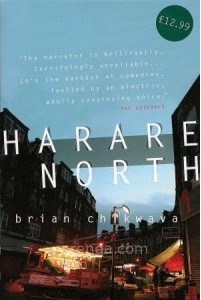
There is this thing called the Caine Prize for African Literature, whatever that means. People compete for it and someone invariably wins. There is a lot of noise making and jollification for a deserved win and the poor winner is expected to write a book. The poor fellow always obliges and dutifully produces a thoroughly wretched book. It hardly ever fails. There have been notable exceptions but one would argue that the writer wrote a good book despite winning the Caine Prize. One such wretched book is Harare North, written by the brilliant, perhaps gifted Brian Chikwava. He is destined to write a good book – once he finds his voice. It is just that right now, his toes are flirting with crickets while Africa is carrying elephants on her head. There are few books that have frustrated me more than Harare North. It is like staring in anger at a rich pot of soup ruined by an impish but talented cook.

Harare North is a meandering journey undertaken by an unnamed main character fleeing imaginary trouble back home in Robert Mugabe’s Zimbabwe (you get the story already, sorry!). He heads for London (aka Harare North) and proceeds to lead a wretched meaningless existence.  Saddled with a not-so-bright friend named Shingi he immerses himself in the under belly of the immigrant community in London building tricks to stay above water. It is not a pretty book but this is not just because of the wretched lives these people live in the grimy underbelly of grimy London. This is an unfortunate book for reasons that are the fault of Chikwava and publishers eager to publish and sell reams of Africa’s dignity to a willing and gullible Western audience. What is it with African writers and stereotyping? In the 21st century many of them are still scheming their way into the pockets of gullible Westerners who truly believe that Africans are exotic lovable dolts to be watched like animals in a zoo.  I am not amused.

On one level, Harare North is a brilliant book, written by a brilliant, sensitive author with the potential of shining a compassionate light into the lives of immigrants of color living desperate, furtive lives in the shadows of London. And sometimes it works. Chikwava lays bare the tricks that immigrants turn to somehow survive in London. But then, what’s with the contrived English? Harare North is engaging and heart-warming, but the contrived English gets in the way, each time. It is like finding your favorite meal infested with tiny obnoxious stones. The book offers evidence of formerly elegant prose poetry ruined by reckless experimentation with contrived English. There is no linguistic structure to it because the language simply doesn’t exist. Profound thoughts become distressed babble under the weight of dysfunction. Not convincing, the contrived result. Chikwava has dissipated vigorous energy to write nonsense. It is funny but it is nonsense.

This is too bad because there is all this brilliance peeking furtively out of the contrived fortress of a pretend-language. There is something phony about contrived language, because it is, well, phony. I didn’t like it when Uzodinma Iweala used it in Beasts of No Nation, and I certainly am dismayed that it ruined a brilliant opportunity in Harare North. Read this beauty of a sentence, reconstruct it in real prose and tell me why I shouldn’t mourn the loss of a dream novel: “Harare township is full of them stories about the misfortunes that people meet; they carry bags full of things and heads that is full of wonders of new life, hustle some passage to Harare North, turn up without notice at some relative’s door, only to have they dreams thrown back into they faces.” (p 5)

Chikwava taps brilliantly into the lode of indignities and humiliation that Africans endure inside Western embassies and then promptly loses it in the fog of contrived language: “…the British High Commission don’t just give visa to any native who think he can flag down jet plane jump on it and fly to Harare North, especially when they notice that people get them visitors’ visa and then on landing in London they do this style of claim asylum. So people is no getting that old consulate treatment: the person behind the counter window give you the severe look and ask you to bring more of this and that and throw back your papers, and before you even gather them together he have call up the next person.” (p 6) What is the purpose of this exercise?

Through the fog of artificial language, a picture emerges, of Chikwava deconstructing the method of African immigrants’ shame, and self-loathing. He explores social class stratification and tensions between the newly arrived (“native” Africans) and the veteran exiles (“lapsed” Africans) albeit in derogatory, stereotypical terms. The resulting self-loathing is emotionally violent as African immigrants recoil from anything that reminds them of their roots. The main character just coming in from Zimbabwe complains of rejection thus. “I have bring Paul and Sekai small bag of groundnuts from Zimbabwe; groundnuts that my aunt bring from she rural home. Sekai give the small bag one look and bin it right in front of me. She say I should never have been allow to bring them nuts into the country because maybe they carry disease. Then she go out and buy us some McDonald’s supper.” P (7) It is refreshing, the candor, he even touches upon gay life in Africa’s prisons, a subject that African writers have been loath to touch or explore even in the 21st century. Chikwava documents in exquisite detail the African immigrant’s willful determination to erase his or her African identity. The character Sekai, the “lapsed” African is always embarrassed by anything African. “I go out and sit at the doorstep and start to use screwdriver to pick off the mud that have cake under my boots from walking around outside. But Sekai follow me and ask me to look down on our street and tell she if I see anyone sitting on they doorstep? Me I don’t get the score what this is all about until she tell me that this is not township; I should stop embarrass them and start behaving like I am in England.” (p14)

Life in Zimbabwe and within the Zimbabwean immigrant community is the theatre of the absurd and Chikwava captures it in harrowing and comic detail. It is a tragicomedy and one never knows whether to laugh or to cry at this dark, intense, brilliant canvas: “Mother, she die of overdose. They carry she to hospital in wheelbarrow and she don’t come back. Then they take she body from the township and bury she in rural house under heap of red earth and rock. Now the spirit is still wandering in the wilderness because family squabbles end up preventing umbuyiso and this has not been done for years now.” (p16)

There is more where that came from: “Shingi sleeps in the lounge; he share the room with Farayi. Two mattresses is on rotting floorboards, blankets all over, small heaps of things telling one story of big journey that is caused by them dreams that start far away in them townships. I can sniff sniff them natives’ lives squatting under the low damp ceiling like thieves that have just been catch.” (p30)

If I seem to obsess mostly about the language, it is because I was distracted, distracted to drink, especially by sentences that Chikwava almost forgot to engineer into nonsense. “And then me I hear that people in the village where Mother is buried will be moved somewhere because government want to take over the area since emeralds have now been discovered there.” (p 17) The language gets in the way in a subversive manner and it as a result the book is torpedoed by an inane contrivance. Wise profound sayings, parables and proverbs become trite under the weight of linguistic engineering. And haunting prose is defaced by bad marketing decisions. But I must say, he is good, Chikwava, he can describe despair with a few deft strokes of the pen. “She take me to the kitchen and the air smell of bad cooking and the sink have one heap of dirty dishes and all. It’s like they lie there for donkey years. The ceiling on one corner is growing mushrooms and things.” (p 30)

Interestingly enough, as I read the book, I kept thinking of Ike Oguine’s The Squatter’s Tale, plotting how to rescue Chikwava’s tale from prose abuse. There is pretty prose in there, trapped in needless experimentation: “The glass slip off my hand and come crashing on the edge of the sink bowl; it break and fill the kitchen with the kind of fright that fill the room when you have break your mother’s bestest teapot.”  (p 31) Nice. Almost. Sometimes however it dissolves into malarial gibberish and you wonder: What is the purpose of this prattle: “You always know more than you believe in over what you know because what you know can be so big that sometimes it is useless weapon, you cannot wield it proper and, when you try, it can get your head out of gear and stop you focusing.” (p 43)

 The book provides ample proof of autobiographical musings. It was probably not Chikwava’s intention to ridicule his heritage in which case it is a weakness of the narrative that he could be accused of creating racist stereotypes and spinning bigoted tales. A sensitive soul reading the book would balk at all these literary Sambos in black face and recoil from a Stepin Fetchit story that appears to have little redeeming value. I concede and celebrate Chikwava’s right of self expression but for me, the question is this: If this was written by a white person, would I be offended? The answer is a resounding yes. There are all these traces of bigotry and prejudice some aimed at gays and lesbians. We see the immigrant of color as a shiftless aimless buffoon. This is just one aspect of the immigrant life. Who tells the others? In addition, the story appears to be ridiculing, and making caricatures out of African traditional customs and values. The book succumbs to too much cynicism like too much stew on white rice. The result is aimless and purposeless, a story that goes nowhere. But then some would argue that Chikwava’s Zimbabwe is not going anywhere fast. Regardless, this is not the Zimbabwe of Petina Gappah’s elegant stories (Elegy for Easterly), or even of Dambudzo Marechera’s brilliant angst-ridden anthems. Should you read this book? Yes, read it, it is fun despite itself. I do miss Oguine’s A Squatter’s Tale. It is a better book. By far

Femi Osofisan: A Song for JP Clark, Our JP Clark

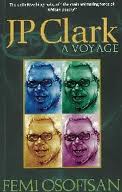
The playwright Professor Femi Osofisan has quietly written a book on John Pepper-Clark Bekederemo, enigmatically titled JP Clark: A Voyage bearing the name the world knows him by still. All I can say is this: JP Clark, the book, is a masterpiece of quiet industry, prodigious intellect and simmering passion, one told lovingly by a master story teller. It is also an important book that should be handed out to every student of African literature. John Pepper-Clark Bekederemo’s contributions to African literature are muscular and this book makes that point eloquently and puts to shame any other biographical work that has been written on Clark (yes, let’s call him Clark). It also says to African writers, we can write and publish it ourselves, and write and publish it well.

This lovely book can stand side by side with any biography written in the West and it will compete favorably. Bookcraft, the book’s publisher did an outstanding job, the editorial work was outstanding. It is a pretty book, with a handsome layout. I thought the collage of Clark’s headshot on the cover was inspired. This book was clearly a labor of love, a work of academic rigor. In using JP Clark as the book’s title, Osofisan forces the reader to wrap the mind around the JP Clark that we knew, that smoldering, enigma that has insisted on doing things his own way.

JP Clark is the product of good research by someone trained to listen to oral folklore and reconcile it carefully with the written. This is a tale warmly told; the reader is at the feet of a story teller, lapping it all in. Read the book and sit enthralled as Osofisan weaves a touching tale about how the name Pepper came about. The book itself is poetry in motion, the pieces ofClark’s poems Osofisan showcases are mostly exquisite in how they chart Clark’s trajectory as a poet and as a person. His humanity is evident with all its dignity and warts and the reader bonds with this most complex of men who it turns out is not the curmudgeon that he makes himself out to be.

The book entertains, educates and subverts with a quiet, steady, unassuming force; you can almost see the twinkle in Osofisan’s eyes as he demonstrates that you do not have to waste reams of trees writing about the environmental devastation in Nigeria’s delta. A few well crafted, well placed sentences, gbam, you are there, soaking in the gas flares. Osofisan pans some of Clark’s poems and the book America, their America, but it is without malice. He dismisses America, their America, with a gentle but pungent force:

“… I consider it a minor milestone in JP’s career, something like a brief diversion in an athlete’s course. The book is most uneven at best, combining passages of brilliant observation and graphic phrasing, with crude generalisations and highly idiosyncratic opinion.”

By Osofisan’s account, Clark’s play Ozidi Saga is a great piece of work. Here Clark is a genius in transcribing an indigenous epic as opposed to recreating Greek myths out of banalities. One gets a sense from the book that much of Clark’s latter poetry is autobiographical, a tad too accessible, prose broken into bits, hinting at the poetry of a man in the winter of his craft. Speaking of reviews and reviewers, we learn that Soyinka once reviewed the same book and laced the review with well-placed insults:

“Each page of America reads exactly like that picture we see often in the Nigerian street, of a child fighting a man ten times his size who stands very still while the child’s arms flail wildly over his head, crying all the time in frustration and self-pity… America their America will prove a useful book to give to any American we particularly wish to insult.” (p. 159)

This earns a swift retort from Clark:

“… it was worthy of Mr. Soyinka, a compulsive performer with a penchant for upgrading himself. It should earn him more return tickets from Uncle Sam. One positive aspect of this performance directed at a packed gallery; it showed that Mr. Soyinka can write simple prose after all. I did not have to take a purgative after it.” (p 163)
JP Clark is a work of anthropology and sociology, a tender and balanced rendering of a complex life lived complexly. Osofisan deploys the rich language of a seasoned and impish playwright; this is a writer with enough self-confidence to appropriate the English language as his own and write is as he feels it. And boy does the reader feel this owner of words as the story is told with near clinical detail but with enough passion and skill to keep the reader thirsting for more. This is one important book, not lazy drunken opinions hurriedly stapled together for a quick buck.

One learns new things; how JP got the name Pepper, we learn also that he wanted to be a soldier and almost made it in. His father dissuaded him and saves Clark and Nigeria from such foolishness. There are many other side benefits; for example the Lagos of old lives and breathes under Osofisan’s expert eyes. Buried in the book is a nice essay on Nigeria’s pioneer transportation system of lorries or trucks, Armels:

“At Agbanikaka it would make its first stopover and passengers would disembark to ease themselves and stretch their limbs, and regale themselves with bush meat, which was the town’s special delicacy. In fact the joke in those days was that in Agbanikaka you could never tell between dog meat and genuine bush meat.”

Meticulously researched, the book makes all the right connections; the oral and the written, but enriched immensely by the oral. Osofisan is not a lazy man. He chronicles excellently the history of the decline of university education in Nigeria. Nigeria has become a dangerous place, swimming with thugs who would rob and beat up icons like Clark because they don’t know or care about those things. There is a sad passage there where Clark and his family were brutalized by thugs and robbers on campus, cultism had taken over and they had no choice but to flee

The compassion and empathy show; there is good chemistry between Osofisan and Clark. The book has all these pictures, many black and white, of an era gone by. The subject is Clark but it is more than Clark. The eyes of memory linger over each one for oh so long. They are mostly undated (unfortunately, offering hints of careless curatorship) but it is a fun activity trying to guess at Clark’s age and the era. Osofisan expertly avoids gossipy editorials, preferring for the reader to make up his or mind based on the mine of evidence offered. And Osofisan knows his literature, man, he does. I remember a lazy morning alone, wrapped in solitude and a warm conversation, reading this pretty book and luxuriating in delectable pieces of Clark’s poetry:

… the river, black, dazzling

And beautiful in spite of oil spills,

Flowed on, as it did before any road

Was built through forest or desert,

And as it will flow, when forest

And desert have taken over the road.

[The Emissaries’ A Lot From Paradise:24-5]

The book starts out with Osofisan heading out with the writer Olu Obafemi to Clark’s home in Kiagbodo. Touching is the journey itself, there is an easy camaraderie between the two writers as they banter and trash talk their way to Clark, to this beautiful once idyllic place. Avuncular beyond his years, his relationship with Obafemi is a study in the enigma and mystery of friendship.

He records Clark’s tempestuous relationship with the fellow writers of the time, principally, Chinua Achebe, Wole Soyinka, Christopher Okigbo, Odia Ofeimun, their loves and their spats, which revolved around ideological differences, different ways of seeing the world as writers and activists, differences which came to an explosive head during the Nigerian civil war. Clark gained fame or notoriety for refusing to side with Biafra.

It would be a shame for this important book to gather the dust of indifference. It would be great to have Osofisan and Clark at a forum discussing the many rich subjects covered in this book. This book ought to end up in a digital library with hot hyper-links to the numerous documents, photographs and sources mentioned in the book. What will happen to Clark’s papers? What will happen to Osofisan’s papers?

It is not a perfect book. Sometimes, it is not clear where Osofisan’s source quote is from and that can be frustrating.  I could not place in the book, when Osofisan and Obafemi traveled to Kiagbodo; the journey is undated. There is a helpful bibliography in the end, but I wondered if Osofisan read Soyinka’s memoir You Must Set Forth at Dawn. It is referenced in the book.

In the book, Professor Ebun Clark, Clark’s wife, a pioneering literary authority in her own right cut a quiet dignified figure in the background. I thought about her, Flora Nwapa, Buchi Emecheta and all the other unsung women writers of their generation who toiled quietly but with determination in the shadows of strong men who would not share, these Virginia Woolfs of their generation and my heart sang solo songs for their courage and grit. I wanted to know more about Ebun Clark and her fellow female writers like Flora Nwapa and Buchi Emecheta. They were at best brilliant footnotes, propping up their husbands’ dreams for the most part in a patriarchy.

I thought about Osofisan’s treatment of the turbulent events in Nigeria starting from the Chukwuma Kaduna Nzeogwu-led 1966 coup to the Nigerian civil war that claimed many lives. It could have used a more in-depth look and I wondered if his analysis was colored by his own biases or politics. You would have to read another book to get more out of that history. But as they say, you can’t get everything out of one book. What I got out of this book has earned Professor Femi Osofisan my undying respect. Alagba Okinba Launko, I salute you.

Note:

Also read For John Pepper Clark-Bekederemo: Triumphing Over an Imaginary Tragedy

Doreen Baingana on fishing for tropical tales

First published in Next Newspapers, July 18, 2010. Reproduced for archival purposes only.

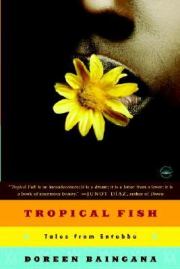
Doreen Baingana’s collection of short stories Tropical Fish examines Uganda and the Diaspora in black and white, with history graying in the fading distance. Idi Amin was a deadly buffoon. Up to 400,000 people may have perished under his reign of lunacy. Amin’s atrocities were perhaps dwarfed by Milton Obote’s. Then there is AIDS. Up to 800,000 people may have died already. Amin and Obote died in peace in exile without any credible attempts to hold them accountable. So much for justice. In Tropical Fish, Baingana says virtually nothing about Obote’s evil reign. This is baffling. How do you forget? Should fiction not document the lived history? Baingana says in the book that Idi Amin gave Asians 72 hours to leave Uganda in 1972. They were actually given 90 days because Amin claimed that Asians had the habit of giving Ugandans 90 days credit. Baingana is inattentive to historical detail.

The story, “Green Stones” is a delightful conversation about relationships, marriages, and life. In Christine, the main character’s world, alcoholism and infidelity hold sway in the form of Taata, her father, a mean drunk, the sauced burden of her mother, Maama. It is a look at family relationships, warts and all from the eyes of a child, a revealing exploration of familiar issues: Infidelity, alcoholism, the extended family, patriarchy – all within the stifling confines of a traditional marriage. ”Green Stones” is written with all of Baingana’s literary muscle. Tart luscious prose bear nice turns of phrases and they delight the palate.

”Passion” and “A Thank-You Note” are the only previously unpublished stories in the book. No wonder. They are awful. They sit in the centre of the book, smug, like badly cooked rice, hoping to be saved by great stew. ”Passion” is an imperfectly designed, puzzling story leaning on the pretense of magic realism. ”A Thank-You Note” is an overwrought introspection on AIDS. Baingana tries – and fails – to put herself in the mind of an AIDS sufferer. The story does serve a useful purpose: the inchoate main character Rosa is mercifully killed off by bad writing. ”Hunger” and ”First Kiss” are rambling, pointless exercises in self-absorption.

You must read ”Lost in Los Angeles: and ”Questions of Home.” They are thoughtful reflections on immigration, the immigrant, exile and homecoming. One is taken by the unresolved pain and anguish that are unearthed in these stories. There are some good observations about the impact of technological advances on community and relationships. The stories spoke to me. Nonetheless, the immigrant of color in Baingana’s book is painfully self-conscious. There are strong hints of self-absorption and narcissism. For Baingana, even lovemaking is an opportunity for deep introspection in search of meaning where none probably exists. Sometimes folks just want to get laid.

The book’s attitude to sex is fascinating; sex is described in near indifferent terms – a few minutes of heaving and pushing. The book makes a grand failure of exploring sensuality and is hugely successful at remaining mum on the sum total of our sexuality. It is a poorly kept secret that same-sex relationships in Africa’s boarding schools are common. Baingana gingerly navigates the fringes of tradition as she rides around on wheels of modernity.

Baingana is unsuccessful at being more than one character, Christine. The other sisters, Patti and Rosa are merely afterthoughts. They are identical triplets cannibalized by Christine’s strong character and weak writing. Baingana asserts Uganda’s otherness as she carefully separates Ugandan words from English words, like a cook separating stones from beans. To her credit, she does not provide a glossary of Ugandan terms. Yes. Let the reader do the research. Tropical Fish is slightly burdened by some editing issues. Baingana should shop around for a more organized publisher next time.

Africans are victims of uncritical acculturation. Questions of identity abound: Who are we? Who should we be? Why are we the ones who keep trying to be like the other? What does exile mean in the age of Facebook? Who really leaves home these days? Who stays home these days? Where is home? Expecting Baingana’s book to answer these questions is like asking the slide rule to compete with the iPad. Our intellectuals have no answers; they are too busy navel gazing, whining about racism and drinking the white man’s best wines. See, they wail to the West, we are human beings too; we eat ice cream!

Baingana’s stories are sleepy, like passengers on a red-eye bus to the city struggling to come alive at every junction manned by thieving policemen. We see the self-loathing that Western education confers on Africans as they flee anything remotely African or indigenous. In the fashion, in the food, in the literature, Africa desires to be white. Africa is turmoil but the book ends on a hopeful note. The exile begins the long process of re-introduction to her ancestral land. Culture shock streaks out of cultural attitudes to work and life. Still, she is here to stay, says the book. Did she stay? I suspect that “Christine” is back home in Washington DC, subversively pinching cantaloupes in farmers’ markets. And the beat goes on.

The Power of Our Single Story

First published in Next Newspapers, February 13, 2011. Reproduced for archival purposes only.

The writer Chimamanda Ngozi Adichie hits the nail on the head when she calls the West on their obsession with the single story of gore that is their Africa. Adichie is absolutely right: In the West, the power of the single story races through cash registers and rifles through white liberal pockets and rich racist valleys. However, there is the implication that the single story is mostly the product of the other (aka white person). Lately the single story has been bred, watered and nurtured for profit by some African hustler-writers. I am talking of people writing to the test of Western hunger for the stereotypical.

Whites are not the only ones that climax to the beat of stereotypical African stories. With all due respects, the bulk of contemporary African writing is all about the single story that the white world loves. Indeed, several African writers have over the years focused on the single story for profit.  These writers will probably ask you, what else is there to talk about? And I agree, for different reasons. Take Nigeria for instance; there is only one single story. What our thieving leaders are doing to Nigeria, is quite simply black on black crime. To tell any other story would be criminal. In that respect, our writers are right to turn their rage inwards and shame our leaders with a single story – the fate of the fabled tortoise that borrowed feathers from birds, flew with them to a feast in the skies and tricked them out of every morsel of the feast. In that fable, the enraged birds sent the tortoise crashing down to earth sans borrowed feathers. Let us send our leaders the way of the greedy tortoise. The good people of Tunisia just sent their thieving tortoise packing.

Achebe’s essay, Today the Balance of Stories speaks to the racism inherent in stories about Africa as told by Western writers and the occasional accomplice of color like VS Naipaul. Adichie’s Single Story speech is essentially Achebe’s seminal essay set to (YouTube) video. The new medium is not The Book. It is called YouTube. Ideas rock and books are finding their way into garden mulch. Think about it. Achebe is a prophet rendered mute by advances in technology. In Adichie’s video testimony gone viral on the Internet, Achebe’s great words are re-born. YouTube says we ought to take a break from writing books and return to the oral tradition of our ancestors.

Adichie represents how things used to be and what to hope for in the Nigeria of our dreams. Sadly, she is a painful stand-out from the forest of mediocrity that now insists on respect. And hers is a thoughtful and inspiring speech. But then, why are we running around assuring people that we really are human beings? Why are we so defensive about our humanity and why do we proclaim our humanity by denying in installments, all about us that is authentically African? Why must we quote mostly Western authors to prove that we are indeed learned? What is wrong with our food? The French eat snails; it is not more appetizing because they call it escargot. Why must we hide the fact that some of us relish sautéed termites and loudly proclaim our love of caviar er fish eggs? Many of us, especially our leaders have a complex about our African heritage. Let us think deeply about these things. Our psychosis is more than skin deep.

Heads ought to bloody roll for what has become of Nigeria under civilian leadership. How can things be this bad in a land just bursting at the seams with some of the best resources the world has? How can people ignore the fact that there are no roads, there is no light, no water, no safety and security, no health care facilities worth using and the educational system has virtually collapsed? Our educational system is so bad many of our Nigerian “professors” refuse to allow their children in their own classrooms. What other stories are there to tell of Nigeria?

I am really beginning to believe that our people deserve what they are getting. Take Abuja; basically thieving intellectuals, civil servants and politicians have carved up all the choice land for themselves and shoved everyone else to the far outskirts to live like sub-humans. And the people seem happy about it, happily going about their daily business of begging thieves for crumbs. If we really believe we are human beings like the white man, we should be fighting this black on black crime. As a people, we should take a deep breath, stop the navel gazing and reflect on why five decades after Achebe’s Things Fall Apart we are still lecturing the white man on the need for respect. It is hard to respect what the eye sees. There is not much to respect in the shame that has become Nigeria. If we urinate in our living room, how can we demand that visitors respect said living room? Anyway, my point is this; we are our own worst enemies.


Why Dr. Ngozi Okonjo-Iweala should be the next president of the World Bank

#OccupyNigeria: For all the beautiful children murdered in January for standing up to the myrmidons of our darkness

I fully expect Nigeria’s Minister of Finance and Coordinating Minister for the Economy, Dr. Ngozi Okonjo-Iweala to be the next president of the World Bank. Her rejection as the first African to run the World Bank would be wrong on many levels. There is no one else better primed to execute the obnoxious policies of the World Bank against African and brown nations than Okonjo-Iweala. Her current tour of duty, although disastrous to Nigeria and her poor, has given her an impeccable resume to spread the World Bank’s gospel of uncritical capitalism and indifference to the world’s poor and dispossessed. Okonjo-Iweala has the playbook down pat, for those of us who still remember #OccupyNigeria, that uprising of Nigerian youths against the Okonjo-Iweala-led World-Bank endorsed policies against the poor, that uprising that was quashed with ruthless efficiency and that  left several young people dead for exercising their rights of association and protest.

No shrinking violet, Okonjo-Iweala has mounted an aggressive and fairly effective campaign for the presidency of the World Bank.  South Africa has endorsed her and The African Union has a beautifully penned hagiography in support of the candidacy here that should make even Okonjo-Iweala blush with excitement. There is a sense of entitlement here, but hey, regardless, she is going to be a vast improvement over the sad sack of odium that was the IMF’s Dominique Strauss Kahn.

As an institution, the World Bank is an ancient bureaucratic relic whose time has come and gone. Now it is mostly a mean cudgel for meeting the West’s imperial needs in developing countries, aided by many of Africa’s intellectual and political elite. The fawning over Okonjo-Iweala by Westerners has been comic. Early in March, the Economist started out of the gate by braying Okonjo-Iweala’s term of endearment, Iron Lady.  Well, She definitely is no Margaret Thatcher, let’s not be patronizing. David Smith of the Observer leads the pack of hagiographies but unwittingly makes Okonjo-Iweala look like some sort of Don Quixote tilting at windmills, rather than a serious economist. You would think he just sighted a simian using twigs as an instrument to fish termites out of a log. There is more crowing here by Lant Pritchett of the Guardian. Annie Lowry of The New York Times has a more nuanced piece here on the three top candidates: Dr. Jim Young Kim, Ngozi Okonjo-Iweala and Jose Antonio Ocampo. The New York Times does have a more dignified editorial in which it appears to lean towards Okonjo-Iweala but it is loud in what it does not say about her candidacy.

What the West will not say in public is in the intelligence briefings that made President Barack Hussein Obama avoid her like the plague and go for Kim. Again, anyone in doubt should remember #OccupyNigeria. Okonjo-Iweala and her colleagues in Aso Rock, and NASS, that pretend-legislature, callously rammed through one of the most obnoxious taxes on the poor in the history of Black Africa. Again, many Nigerian youths died protesting this outrage on the majority by a privileged few screwing Nigeria for their own benefit. Under normal circumstances, were Okonjo-Iweala a Westerner or white, she and her bumbling team would have been fired for gross incompetence. The show of double standards is galling and maddening. Kim’s works have been given intense scrutiny and rigorous analysis while Okonjo-Iweala has been described in patronizing terms, with absolutely no mention of her views or documented works and her deadly role in the subsidy removal fiasco of this past January. But she is African and the world recoils when it comes to holding Africa’s political and intellectual elite accountable. That would mean, finally, Africa is on an upward trajectory, perish that thought.

It would be interesting to know what intelligence America’s White House had on all the candidates that made Obama choose Kim, someone whose views are actually full of compassion and common sense and seem to go against the grain of what the World Bank now stands for. In any case, Obama in my view has become an apostle of orthodoxy in thought and governance and it takes one to know and avoid one. Besides Obama has no history of respect for Africa and Africans. If he does he has a strange way of showing it; his tenure so far has lacked any coherent foreign policy when it comes to Africa. President Bush was a better friend of Africa, by far.

But I digress. When Okonjo-Iweala departs for the World Bank, she will be leaving Nigeria much worse than she found it. That is the most compelling reason why she deserves the World Bank presidency. Nigerians need a break. Okonjo-Iweala’s appointment would be the most eloquent marker of how seriously the world takes Africans as human beings. As a parent, I personally hold Okonjo-Iweala and the Nigerian leadership responsible for the numerous youths who were murdered and maimed early this year by the state for exercising their rights. Again, no Western leader could have survived that mess, not one. The world shrugs its shoulders routinely and rewards African incompetence, corruption and brutality. That is why certified wife-beaters, petty crooks and murderers are paraded on the world stage as “African statesmen.” This is how to keep Africa in perpetual bondage. The World Bank is good at that.

The presidency of the World Bank would be a wonderful homecoming for Okonjo-Iweala one of their own. It is interesting to me that the same African intellectuals and activists who constipated the Internet with anti-subsidy rants have been quiet. Indeed the few vocal ones are actively lobbying for her appointment. That is how we roll in Africa. I was one of several that protested the policies of the World Bank in January, how soon we forget. For the children that were murdered in the struggle for Nigeria, may their sacrifice not end up being for nothing. For my mother in the hellhole that serves as her village in Nigeria, the beating goes on. And the beat goes on. From the White House to the World Bank, Africa is screwed by her own. Farewell, I hope, and pray, Dr. Ngozi Okonjo-Iweala.

Related posts:

The Economist, March 31, 2012: Hats off to Ngozi

BloombergBusinessWeek, April 4, 2012: Former World Bank Managers Endorse Ngozi Okonjo-Iweala

Sonala Olumhense, April 2, 2012: Go, Ngo, Go: This Battle Is Not Yours

Petina Gappah: The Storyteller from Easterly

First published in various media, September 2009. Reproduced here for archival purposes only.

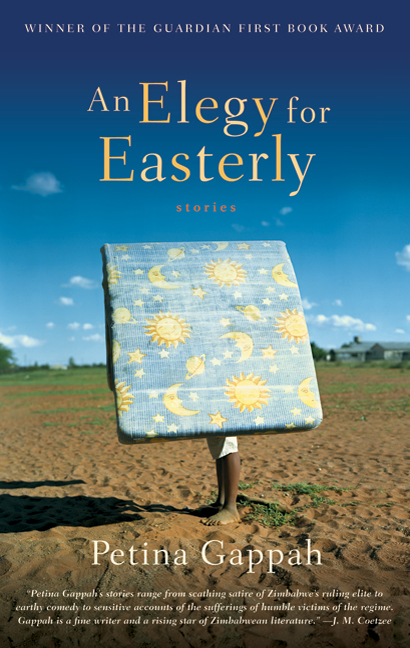
Zimbabwe’s writers have lately been taking me by the literary hand and lovingly showing me wondrous places in the heart of their country – using beautiful prose. I cannot get enough of their works, starting with the late great and greatly troubled Dambudzo Marechera, then Brian Chikwava and now Petina Gappah. Ah! I have just finished reading Petina Gappah’s An Elegy for Easterly published by Faber and Faber, Inc. and now I am in love with Zimbabwe. The streets of Zimbabwe keep patrolling my mind creating gentle vistas and memories of a beautiful place that refuses to go away despite the horrific efforts of President Robert Gabriel Mugabe. And Oh, what a book. You should see this book. It is drop-dead gorgeous, an attractive spirit that stirs things in my heart and loins each time I spy it showing itself off on my coffee table. Quite simply, An Elegy for Easterly is a pretty book of gorgeous short stories and Gappah will probably end up being one of the smartest new writers to come out of Africa in a long time. I must say that her publisher, Faber and Faber knows how to put together a beautiful book. The workmanship shows professionalism and pride in an output. I looked and looked and looked and I could not find a single editorial fault with the book. The result is, well, drop-dead gorgeous. This is an attractive book, Africa as life, breathing deeply and richly out of its pretty cover, a book so pretty I was too intimidated to write notes on its pages.

In Gappah’s book, freshly-baked story-loaves fill my reading world with the complex smells of Zimbabwe. And Africa, that persistent lover, comes calling again. These are all tender stories told by a master story-teller. The brilliance of this book is its universality – short stories about Zimbabwe morph into a grand tour of our humanity. Sadness and joy envelop issues that are common to all of us – disease, injustice, corruption, patriarchy, sexuality, etc. The prose in these stories is pretty and gently muscular, just throaty enough to still keep you hanging on to the edge of your seat. At the Sound of the Last Post is a well aimed catapult salvo of insults fired gleefully at the house of Robert Mugabe. Gappah’s words are pretty little daggers gently drawn, plunging lustily into the manhood of oppressive beasts. The sweet bitterness of her words extracts sweet victory from felled dictators. Tart prose cuts everything in its path to bite-sized sniveling pieces as she expertly documents the circus that has hijacked authentic leadership in Zimbabwe, and by extension, much of Africa. Zimbabwe’s government is exposed as populated by buffoon-leaders goose-stepping to the pretty drum-beats of pretend rituals pilfered from more purposeful and serious societies.

In Gappah’s stories, we go to places of despair now owning only pretty names and precious little else. But comedy steals past filthy skirts of despair and it is really funny. The chaos is uniform and universal. It is too early to compare her to Jhumpa Lahiri but her debut book is on par with Lahiri’s latest, Unaccustomed Earth.  Indeed, where Lahiri is proprietary and almost insular (albeit in a disciplined way), Gappah expertly reaches out beyond the boundaries of Zimbabwe to speak to all of us.

The title story An Elegy for Easterly is an elegant, intimate story of a man hyper-dancing to the rhythm of Zimbabwe’s fading fortunes. It is quite simply beautiful, this story and it showcases Gappah’s intimate, loving mastery of the Zimbabwe landscape. The story At the Sound of the Last Post explodes with guns gently blazing at Zimbabwe’s handlers: “It is three months since inflation reached 3,000,325 percent per annum, making billionaires of everyone, even maids and gardeners.” (p9). Keep reading, gentle reader; the prose gets even more scrumptious, if that is possible.

Our Man in Geneva Wins a Million Euros is easily one of the funniest stories of greed fueled by need that I have ever read in my lifetime. It is delectable and masterfully done. The main character is caught in a 419 money scam; told he has won a million Euros, he dreams of riches that he will use to quell the raging financial demands of his nuclear and extended family. The story races breathlessly to a predictable end, but still leaves the reader sighing with an overwhelming sense of sadness and empathy for the victim, and us. Gappah is that good. It is easy to forget that like Zimbabwe, the characters in these stories mostly go nowhere fast. The banality of impoverished existence haunts and poetry rises to sweetly ambush the reader already wary of sad Africa stories. And sad and haunting is the prose-poetry. Just when you think Africa has exhausted her store of sad stories, a fresh batch unearths itself. Is there an end to this?

The Maid from Lalapanzi is a heartbreaking love story, beautiful in its simplicity and in its complexity. The story spoke, in joyous prose, of a time when there were tight physical boundaries and it was easier to fight for freedom than to flee from terror. In this story Gappah warmly travels through the remains of Zimbabwe, planting seed-stories of life. The heartbreak is of the good kind multiplied many times over and it in turn mass produced multiple sighs from my rugged heart. This writer is good. The Maid from Lalapanzi will stay with me for a very long time for it unleashed in me a warm gush of childhood and adolescent memories. I grinned as I read the love letters. Love blooms happily and lustily, even in the terror-infested weeds of Zimbabwe. The love letters were penned Onitsha Market literature style: “My sweetheart Blandina… Time, fortune and opportunity have forced me to take up my hand to pen this missive to ask how you are pulling the wagons of existence and to tell you how much I love you. My heart longs for you like tea longs for sugar. I wish for you like meat wishes for salt, and I miss you like a postman would miss his bicycle…” (p139) Hilarious. And sweet.

Meticulously researched details are important to Gappah. Not even the most private of details escapes her eyes. She notes everything including the invasiveness of the new commercialism: “The women from Johnson and Johnson had come to the school, and separated us from the boys so that they could tell us secrets about our bodies. They said the ovum would be released from the ovary and travel down the fallopian tube and, if it was not fertilized, it would be expelled every twenty-two to twenty-eight days in the act of menstruation. It was an unsanitary time, they said, Our most effective weapon against this effluence was the arsenal of the sanitary products that Johnson and Johnson made with young ladies like us in mind, they said, because Johnson cared.” (p137) In this story, we witness crass commercialism promoting self-loathing to sell the excess of capitalism. Lovely.

It is fortunate and refreshing that Gappah’s stories do not follow the formulaic patterns favored by the story minting machines of MFA programs. However, there is probably enough to quibble about in the stories. Every now and then, Gappah tries too hard to end a story and it becomes an unwieldy elephant that has been wrestled down and lashed together with weak cords of incredulity. An Elegy for Easterly gathers her wrappers too tightly and clatters too quickly to an ungainly full stop. They say most writers begin with autobiographical stories. One or two of Gappah’s stories come across as fairly autobiographical.  Also there are all these lovely stories that trick the reader into forgetting that sometimes, their key ingredient is their improbability. But so what? Life can be improbable, life is an untidy mess. Like Chimamanda Ngozi Adichie, Gappah could be accused fairly or unfairly of spreading contempt for African men. There is this persistent hint of misandry – the stories are populated by weak waves of weak men fashioning absurd rules to fit their anxieties. That, plus her thinly veiled contempt for Mugabe exposes her to the charge a number of her stories are political statements masquerading as short stories.  My verdict: I don’t care, I love this book.

Of African Writers and their Uncles

First published in Next Newspapers, February 6, 2011. Reproduced for archival purposes only.

Every now and then, the white man, cursed with too much money in his pockets, rounds up all the African writers he can find and sends them off to a conference somewhere exotic and romantic (rarely ever in black Africa) and instructs them to engage in discourse on the African situation. These writers are usually resident abroad, away from Africa’s unnecessary roughness. I call these gatherings pity parties because after a few glasses of cheap red wine, the writers become weepy and whiny and start making pathetic statements about, the burden of being an African writer or a writer of color, the limitations such labels clamp on them and their long suffering muses, whine, whine, whine. I wish they would invite me to these affairs. I love cheap red wine.

It is true that the West for whatever reason is more comfortable seeing people of color, especially Africans, as the other. Nothing we do makes us escape the label of the other. Professor Chinua Achebe wrote Things Fall Apart, one of the world’s greatest books of all times. The other day, a major newspaper in the West described it as an African novel about a simple yam farmer. But then, many African writers or writers of African extraction living abroad are truly divorced from Africa and her myriad issues; forget the lush writing about Africa. Having being raised “white and civilized” through no fault of theirs they chafe violently when referred to as anything other than what identifies them as remotely removed from Africa. They wave their wine glasses at the world, shake their ice cream spoons indignantly and exclaim, how dare you call me African? It is not their fault. They were raised to eat their cake and have it. They are really no different from the rest of the African intellectual and political class misruling African nations today, raised to be smug, conceited and lacking in principles and compassion. These misrulers ignore the squalor around them that Africa has become, they loot funds, they build islands of heaven for themselves and they jet to the West to check that rash on their knee and proclaim their humanity to the West in their fake accents.

When you examine African writing or writing from the writers of African extraction, one thing is clear; it is blessed with an abundant narrowness of range and vision. There is the understandable obsession with everything African. In their writings, huts, moons, stars, fearsome masquerades, wars and malevolent spirits come tumbling out, chased by constipated army generals. The most unprincipled of them hawk these exotica to the delight of bored suburbanites in the West. Distance and time don’t seem to matter to these folks. If you have been in America for three decades, rarely going home to visit, what about contemporary Africa would inspire you to write an African story worth reading?

Do not get me wrong: I truly believe that many of our writers write with a genuine social conscience and indeed are too busy thinking about real social issues to worry about whatever name they are called. Indeed, the sad truth is that the story of modern Africa is a single story of deprivation, pillage, abuse and mayhem in the hands of her black misrulers. The white man did not invent today’s single story, we did. He may have come over to our ancestral land to upend the mango cart, but today we are the ones raping, and pillaging Africa and generally making life miserable for our people. That is the single story. It is virtually impossible to write about anything else. The political elite aided by our unprincipled intellectual elite have lain to ruins all institutions and structures that sustain robust states elsewhere. It is profitable to blame the white man for our ineptitude because suffused with guilt he rewards our irresponsibility with even more grants and awards. The white man loves to play uncle to us.

As African writers, we must get off our high horses and help the people who denied themselves everything to save us from that which we now abhor. Memo to the African writer who proclaims his or her whiteness er humanity at every turn: If you want to be known as just another writer, simply write whatever truly rocks your boat. If you feel no obligation to be an African writer, by all means, stop being one. Be a plain vanilla writer, living in the West. Why not write about America? Look out your window in America and write about deer gamboling on your manicured lawn.  Look out your windows and write about the majesty of the land that adopted you and freed you from the harshness of Africa. Sing the praises of those that clothe and nurture you daily. And when you are done, chronicle and clothe their neuroses and anxieties with the awesome power of your words. If you are a writer and all your five books have been about suffering in Soweto, the white man should be forgiven for calling you an African writer. Get over it.

Chielozona Eze on Kony 2012 and the African Victimhood Complex

“I saw the first white people in my life in 1969. That was in a refugee camp, during the Nigerian civil war. Two Catholic priests and a middle aged lady in a bluish gown. They brought us food, clothes and medicine. It took my little body time to recover from the ravages of hunger and malnutrition, from kwashiorkor. But I made it, thanks to the enormous responses from the peoples of the world.
Fast forward to 2012. I am alive; I teach at an American university. I, too, watched the video, Kony 2012. I’m aware of the many celebrity endorsements of the video and the backlash it has unleashed especially from some African intellectuals and some liberal groups. Teju Cole’s “The White Savior Industrial Complex,” stands out not only for its highly crafted, nuanced arguments, but also for putting together decades of hurt, oppression and paternalisms from the West on Africa. It is difficult to challenge the core arguments of the essay without appearing to be against Africa. The success of the essay lies in the fact that it is rooted in the time-tested model of African write-back ideology, the ideology that has Africa’s victimhood as its first, inevitable premise. But isn’t Africa a victim? Isn’t Africa easily taken advantage of by those who lack all diligence”
 
– Professor Chielozona Eze on The KONY 2012 video and the resulting brouhahaBrilliant and coolly eclectic, Eze breaks down the issues regarding giving and victimhood in Africa into practical lessons. It is so refreshing to see that African intellectuals are showing the world that there is not a monotony of opinions on the Africa project.

Please read Eze here and salute a fine writer and warrior.