In Search of the African Writer

NOTE: First published January 24, 2010 in Next Newspapers. Reproduced for archival purposes only. Next has shut down its website and I am reproducing my old column pieces here.

 Much has been made about recent statements ascribed to Zimbabwean writer Petina Gappah, in which she expressed unease at being called an African writer. She was particularly irritated that her own book blurb called her the voice of Zimbabwe. First of all, I think it is presumptuous for anyone to call Gappah the voice of Zimbabwe and she is absolutely right to reject such a burden. She also has a right to protest whatever label anyone stamps on her. I am not so sure however, what the problem is this time, except that the question that elicited her response was an incurious one. It was a silly question: What was the problem that the interviewer was trying to solve? Other than that, I regard Petina Gappah as an African writer and a fine one at that.

 I have absolutely no problem with the term, “African writer,” I am an African writer. Everything depends on context. And it is true that we are the sum of our experience and folks are right to protest any definition that in their view limits the range of their identity and their life’s work. But I do think Gappah protests too much this time. Prejudice is one thing, but the consumer, that is, the reader has a right to see Gappah the way she presents herself. If you don’t want to be called an African writer, well, don’t be one.  Case in point: In November 2009, Gappah was a willing participant in “African Literature Week” in Oslo. All the writers invited to the event were “Africans. “African Literature Week” was supported by the Norwegian Ministry of Foreign Affairs. From all indications, these African writers had a great and memorable time, and I don’t recall that anyone ever protested the stereotyping or pigeon-holing that this event could possibly represent. I don’t know what people do at these events, how people are chosen to represent “African writing,” etc, but given the stridency of African writers like Adichie and Gappah in complaining about the West’s tendency to stereotype “Africans”, and focus on “single stories”, etc, it seems to me that they are quite simply guilty of eating their cake and demanding it back.

I detect this chic superciliousness, our writers coolly biting the Western fingers that feed them daily. I am not prescribing obsequiousness, I am simply saying, show some respect. The truth is that, largely due to the circumstances Africa finds itself, most of our (African) writing is very limited in range. Read our African writers, close your eyes and recall the themes in their books. They are for the most part predictable and focused on the single story. This is not necessarily a bad thing but the consumer is not to be blamed for identifying the writer with his or her own label. Our actions and words taunt our stated convictions. Word to the African writer: If you are unhappy about the label, “African writer,” stop applying for these grants that are targeted at “African writers,” stop writing to the test of all those Western prizes dedicated to the preservation of  “African writing.” Stop attending conferences on “African literature” facilitated by the kinds of patronizing, condescending white professors that live in Adichie’s stories. Stop publishing your works on websites that are dedicated solely to “African writing.” If you want to be known as a worldly renaissance writer, write about your real life in Europe or America, don’t worry about Africa.

Our rage is misplaced; all over Africa our political and intellectual leaders are hard at work trying to convince the world that we are sub-humans. Yet, when we are called sub-humans, we wail foul. It was not white folks that sent us packing into the cold fields of exile.  Put another way, it was white folks that fixed our broken bones, found us a roof and gave us back our (formerly) broken voices. We should be grateful. I know this is not the politically correct thing to say. Who cares?

I think that our writers are obsessing about the symptoms, instead of focusing on the central issue. Again, it is all about context. Is Professor Chinua Achebe an African writer? Yes. Is the book Things Fall Apart an African novel? It is more than merely an African novel. A Western professor once in my presence hailed Things Fall Apart as the great African novel. He probably meant it as a compliment, but I thought he chose his words carefully. Things Fall Apart is a great novel, no ifs, no buts about it. This is one instance in which those who see the exotic in us do not share in the expression of our humanity.

 Lastly, perhaps, as a people, we are the conquered and we know it but we are not taking it very well. It is humiliating I think to be the conquered, to be the one struggling to mimic alien accents, enjoy their wines, marry the other, etc. I take a more charitable view of our circumstances. There is no conquest per se: The world is browning. That pretty much sums it all. Chew on that.

Oriki for Onitsha Market Literature: Remembering Veronica My Daughter

Someone once asked me to respond to the interesting question: Is Nigerian English the same as Nigerian pidgin? My response: There is pidgin and many variants are spoken in Nigeria. And there is English and many variants are spoken in Nigeria. Debating the idea of one Nigerian English is as useful as saying that there is ONE recipe for cooking egusi soup (yes, soup, NOT sauce!). There are ways of speaking, and ways of expression that are distinct to various sections Nigeria. And it is often possible to tell where someone is from based on how they handle the English language. Some of the best masters of English are from Nigeria. And some of the worst are from Nigeria. What is mildly hilarious is that it is the latter that usually spends precious time correcting the former. There is something about some Nigerians and the attainment of knowledge or whatever; they like to wear it loudly like a Rolex watch, and when someone is around they tap it so that someone can tell they have it. Some would say it is an inferiority complex.

American academics and intellectuals tend to be quiet about their accomplishments. Do not make any assumptions about your neighbor working in her backyard, She may have three PhDs from Ivy league schools and may be secretly building the next generation nuclear reactor. Just call her Jane. And when you read her academic papers, they are highly accessible, while still retaining the requisite substance. American academics tend to be considerate of the target audience. In contrast, my people love bombast. I don’t know where that bad habit came from. Ironically, they are the ones that really need to break it down for the “masses.” Before you clamber on to any Internet forum that houses Nigerian intellectuals, please say your prayers, take some painkillers, drink a quart of cognac and then, only then, start reading. What some may regard as “Nigerian” English is merely the product of a dysfunction: Bad grammar posing as our national anthem. Go read President Goodluck Jonathan’s babble on his Facebook status. Once you recover from the shock of reading Presidential atrocious grammar, then you will understand my frustration.

Please do not die until you have read as many Onitsha Market literature pamphlets as you can. The experience will remind you of some of our Nigerian intellectual elite. In particular, please read Ogali A. Ogali’s hilarious play Veronica My Daughter, featuring the great master of bombast, Bomber Billy. Next, you must read Peter “Pan” Enahoro’s seminal How to be a Nigerian. That pamphlet is a hoot. Please, please, please, find a copy and enjoy. It was written almost fifty years ago; not much about the stereotypical Nigerian has changed other than the Internet is here and they are all now on Facebook entertaining the world. Some of the best masters of the English language reside in Nigeria. When they relocate to America, listening to them the first couple of months is sheer joy. Give them six months, in the zest to become the Americans they will never be, the tongue becomes tied up in knots, they acquire atrocious grammar habits from who knows where, and guess what, when they visit home, they are “hailed” or envied for losing their “Nigerian accent.”

It is actually the case that several of our writers were already wired to write nonsense at home. They come abroad and mangle their already atrocious literary style with additional bad habits. Then they call this new product scholarship. I disagree. What some of our writers call academic writing is simply bad writing. There is no need in my opinion to deploy bombast where a few or blessed silence would do. From the beginning of colonial history our people have been drawn to big words. Back to Bomber Billy in Ogali A. Ogali’s Veronica My Daughter. Bomber Billy was the caricature of the bombastic Nigerian. Here is what Bomber Billy has to say upon sustaining a bad fall:

“As I was descending from a declivity yesterday with such an excessive velocity, I suddenly lost the centre of my gravity and was precipitated on the macadised thoroughfare.” He goes on to assure concerned onlookers thusly: “Don’t put your mind under perturbation. But after my precipitation whereby my  incunabula got soaked, it was made incumbent on me to divest my habiliments which were saturated as a result of my immersion in the rivulet.” When asked if he had gone for treatment he responded thusly:  “I don’t care what the Medical Officer said but I assure you that this is nothing but a cocified agency, antipasimodicala producing nothing but voscandum, miscandum and tiscono. This medicine that I have in hand is called the GRAND ELECTRICAL PUNCHUTICAL DEMOSCANDUM which cures all diseases incident to humanity.”

Our writers are starting to be really innovative. In the blogs, websites, and on Facebook, they are showing us the true face of their creativity, using the new media to create a fusion of voice, text, and dance in the oral tradition of our ancestors. I salute them.

Helon Habila’s Oil on Water

First published in Next Newspapers, October 24, 2010. Reproduced here for archival purposes only.

I usually approach Helon Habila’s books with dread. His novels are too long, even when they are just two pages. I just finished reading his new novel, ‘Oil on Water’, ostensibly about the hell that is the Niger Delta. Habila doesn’t disappoint. The novel is too long. He should have stopped right after the first page and directed us to YouTube to gawk at gas flares and military goons drawing, hanging and quartering hapless civilians. Oil on Water offers absolutely no new insights on the issue of crude oil and the Niger Delta. In any case, everything has been said; all that is left is purposeful rage directed at the myrmidons of Nigeria’s hell-delta.

In this novel, a white British lady has been allegedly kidnapped for ransom by the militants of the Niger Delta. Inexplicably, two journalists, Rufus (the main character) and Zaq (a has-been journalist and a raging alcoholic who has no business being anywhere but in a hospital) are commissioned to go establish contact with the militants and the woman. The awful plot does not allow any room for the thriller that the book loudly advertises. It does however start on a thrilling note borne on wings of well crafted prose-poetry. I adore the first line: “I am walking down a familiar path, with incidents neatly labelled and dated, but when I reach halfway memory lets go of my hand, and a fog rises and covers the faces and places, and I am left clawing about in the dark, lost, and I have to make up the obscured moments as I go along, make up the faces and places, even the emotions.” Right after these memorable lines, the book promptly dozes off and never awakens, despite Habila’s gallant attempts.

It is as if Penguin Books, Habila’s publisher, needed another African novel and the author complied with another sleepy-eyed, rheumy riposte on Africa’s problems. The misfortunes of the people of the Delta have been a boon to anyone with a laptop and a camera. My eyes have endured some pretty bad writing, atrocious cinematography and plain bad pictures in honour of the devastation. There are several books you must read if you are interested in Nigeria’s war on the beautiful people of the Niger Delta, for example, Michael Peel’s excellent book,  A Swamp Full of Dollars. The oppressed people of the delta should rise up in song and strangle all her oppressors.

Part of the problem, besides Habila’s challenges with the novel as a medium (he should stick to writing extremely short stories) is that blogs, Facebook and YouTube are making books struggle for relevance when it comes to contemporary issues. In a few lovely places, ‘Oil on Water’ promises to gather up the rage in the reader until it is an inferno billowing out dark acrid smoke from the conscience’s ears. In a few precious instances, Habila is priest-like, in a trance, churning out dark, brooding, gorgeous prose that offer delectable hints of Ben Okri’s The Famished Road.  In the beginning, the book is engaging; it doesn’t sound contrived and there is abundant evidence that Habila did some research for this novel. There is enough detail to provide memorable scenes. His greatest strength is deployed to descriptions of the apocalypse that is the Niger Delta. Dreamy and haunting are the lush descriptions of the roiling waters and forests. Habila loves water and he finds a peaceful kinship with the seas and the rivers. When he is good, the scenes remind one of Vietnam, Napalm bombs, children on the streets fleeing fires roasting them, and My Lai.

But then it is hard to overcome the main characters’ self-serving, unctuous narcissistic self-absorption. Like many of Africa’s intellectual and political elite, it is always about them. In the end, where is the rage? Indeed, where is the beef? Habila is perhaps guilty of romanticising common thugs pretending to be “freedom fighters.” These are not freedom fighters in the mold of Isaac Adaka Boro and Che Guevara. As Peel shows in his lovely book, these are mostly greedy, self-serving thugs. It is the case that the people of the delta are victimized by their own leaders also. That point seems lost on Habila.

The author does not have the investigative instincts and skills of a journalist and it shows rather painfully. Oil on Water is a gentle disaster of a story lolling about wishing it was a very short story. As an aside, the Pidgin English here is a distraction, a tool struggling for meaning.  Inchoate, the Pidgin hangs in the air, squirming in mid-sentence, as if unsure of its legitimacy. The unintended consequence: The characters are thus diminished as half-humans. The drama and dialogue are forced, and insincere. The book features editorial issues, jerky disjointed dialogue, awkward attempts at humour and improbable twists and turns lifted right out of a third-rate MFA curriculum. Habila, like Rufus, the main character is in pursuit of the elusive “great story.” He should continue the hunt. This story is definitely not it.


Jhumpa Lahiri and this Unaccustomed Earth

Devotees of Jhumpa Lahiri know that she has written three books, her Pulitzer Prize winning The Interpreter of Maladies, Namesake, and  Unaccustomed Earth. She got a well-deserved Pulitzer for The Interpreter of Maladies, a book of exquisitely woven short stories about Bengali immigrants in the West (especially America). They are all focused, disciplined books on the immigrant experience in America (from a Bengali perspective). Exile hurts in real life and Lahiri’s books fairly throb with the pain of dislocation. And she pulls it off with miraculous ease. Anyone who thinks about these things, about immigrants of color and the dislocation of exile should read at least one of Lahiri’s books. I would recommend any of her two books of short stories. The Namesake is a good novel, but Lahiri is first and foremost the czar of the short story. Lahiri’s muse knits a haunting tapestry of life in America, a tapestry glued together by relentless heartaches of the gentle kind, but relentless nonetheless. It entertains.

The other day, I bit my stingy wallet in the lip and she shrieked and gave up a few dollars for a copy of Lahiri’s new book, Unaccustomed Earth (I had to buy it used, it is cheaper that way, America is very hard these days, sigh!). The book landed today looking as good as new. It is pretty; it is so pretty I did not want to open it for fear of defiling it with my peasant paws. But listen to this little quote from Nathaniel Hawthorne, in the “The Custom House” from which Lahiri’s muse takes the book’s title:

“Human nature will not flourish, any more than a potato, if it be planted and replanted, for too long a series of generations, in the same worn-out soil. My children have had other birthplaces, and, so far as their fortunes may be within my control, shall strike their roots into unaccustomed earth.”

Wow. That is deep. Lahiri’s stories are suffused with a haunting beauty, of pretty people dislocated from the bread of their ancestral earth, stoically carrying on in exile, hoping for everything great but resigned to the cloying comfort of middle-class drudgery in America, bearing the badge of martyrdom with a quiet understated defiance. After reading Unaccustomed Earth, I think I am now happily overdosed on Lahiri’s sweet anxieties. I see saris flying everywhere, I see Bengali men, quietly, furtively willing their wives to show up from the kitchen of exile weighed down with the sweets of the past. I feel everywhere the hunger and the deprivation from missed spiritual connections; and arranged marriages mock my idealism at every bindi dot. Red bindi dots mark the foreheads of Lahiri’s fertile stories, never letting of India’s forehead. Lahiri is the Owner of Words, words that comfort, words that hurt, words that take the heart out of your soul. Lahiri examines the furtiveness of lives lived for purposes oblique to the living. Every paragraph has that something that holds you by the hand and leads you everywhere and plumbs the dark depths of your feelings.

I hope Lahiri doesn’t write another book anytime soon. I might just die of Lahiri overdose. And do you blame me? Her stories are so good, they are an addiction. One is forced to ponder the fate our children in this dispensation called exile. Lahiri paints a canvas that is ultra familiar to those of us who obsess non-stop about the condition called exile. It has to be a kind of death, to be mummified in the comforting embrace of the past, of a familiar earth. We know now that it is possible to mope around in exile with no historical recollection of the details of our sojourn. The decades fly by as we ignore our surroundings and loiter around ethnic stores buying up stale delicacies just to be connected to a desiccated umbilical cord that promises a return to a mirage. Life goes on. I find myself wondering: How do my children feel in all of this….? These long names, these meals that they never pack as school lunches, these strips of “culture” that they are force-fed by parents refusing to let go of receding memories of their ancestral lands? I hope my children treat my memories with the same tenderness that birthed Lahiri’s books. It is a tall order but one can only hope. Exile is enough punishment. I salute you, Lahiri.

 It instructs, it informs and it is quite simply, good literature. Attention to detail, exquisitely researched work, and tight, oh so tight flawless prose with not a single strand of prose astray. It is simply awe-inspiring. My two favorite short stories are the first two in the book: Unaccustomed Earth and Hell-Heaven. One or two of the stories may be formulaic, but it is easy to forgive Lahiri, her stories are so well built. If this was an evaluation, I would bleat the following: well defined, well designed, and yes, well developed!

The Empire Talks Back

The benevolent West, traditionally avuncular to African writers is getting impatient with the attitude of African writers and is fighting back, beginning with The Economist’s recent review of Binyavanga Wainaina’s new book “One Day I Will Write About This Place.”  The imperially dismissive review snorted with derision: “[It] would be cheering to report that his first book… is worth the wait. It is not. Mr. Wainaina should not have been encouraged to write in the form of a memoir… Too many African writers are co-opted by the American creative-writing scene only to be reduced by prevailing navel-gazing. Separately, much of the African writing culture that remains on the continent… is propped up with cash from the Western donors that African writers purport to excoriate.”

The Economist is right. Quite a few African writers of stature have been supercilious and condescending in their engagement with the West. They feel entitled to the generosity of their hosts. However, virtually every penny they have earned has come from the West because they write exclusively for the paying Western audience. Back home no one cares much. African governments only scan through books to see who is criticizing them after which they hunt down the poor chap. The writer is lucky to escape the continent into the arms of the waiting West.

The end of dictatorships has spurred rather than slowed the flight of writers from Africa. Virtually all African writers of stature live in the West. Some of them flee with dog-eared reams of foolscap paper in which they have stored what they imagine will sell in the West. And it does. Made-in-Africa misery sells like hot cakes in America.  Thanks to lavish Western funding, there is now such an animal called African writing. Africans created it.  In their works, Africa is a morbid museum, romanticized in perverse ways that would be racist were they to be penned by white writers. Yes, the West should start calling African writers on their hypocrisy. Virtually all African writers of stature beginning from pre-colonial times have been nurtured by Western aid. It bears repeating: The paying reading audience is in the West. No writer can live on what passes for a reading culture in Black Africa.

The vision of the founders of The Caine Prize for African Writing sustained the gifted and vulnerable whose only crime is to be born African. The Caine Prize (please delete “For African Writing” – too patronizing) has been good for African writers, and we should celebrate that. On the contrary, it is impossible to name an African funded prize that is as organized and thriving as its western counterpart. There is not a single award in the arts in Black Africa by Africans that has been sustained for more than a few years. They are usually established loudly with much fanfare, inappropriately compared to better funded, better managed Western prizes and happily allowed to grow weeds until they die of unnatural causes to the accompaniment of the loud bickering of pretend boards of “trustees.” Nigeria’s much touted NLNG Prize for Literature is an example: After several years of wallowing in lush mediocrity, its sponsors have decided that there is no dysfunction that money cannot cure. The award has been increased from a hefty $50,000 to an absurd $100,000 as if money confers prestige and stature on mediocrity. The NLNG Prize does not even have a dedicated website, yet it is offering $100,000 to young upstarts. What for? I say use some of that money to build a website for heavens’ sakes.

He who pays the piper should dictate the tune. Perform a roll-call starting with Chinua Achebe, Ngugi Wa Thiong’o, Wole Soyinka to the new writers – Ngozi Chimamanda Adichie, Chris Abani, E.C. Osondu, Helon Habila. Binyavanga Wainaina, Petina Gappah, etc., and it becomes obvious that virtually all of these writers got their fame abroad. The older writers were literally rescued from the jaws of prison, destitution and death – to dizzying fame. From pre-colonial times, African writers of stature have been nurtured and sustained by white liberal largesse in the form of funding, awards and fame. They have enjoyed being wined and dined by white funders, only taking breaks to berate the West for her “racist” ways. The list of complaints is endless and exaggerated by a bounteous imagination: The white wine is not well chilled, the steaks are too done and of course whites are all racists who are interested only in the single story coming out of Africa, whine, whine, whine. Nonsense. Left to Nigeria, Soyinka’s papers would be dinner for termites. Today, they are cooled in the air-conditioned vaults of Western libraries, and serenaded by attentive guards. If Achebe had stayed in Nigeria after his paralyzing auto accident, he would have been long gone to his ancestors by now. He is alive by the grace of modern medicine and the generosity of white folks. The immense contribution to the cannon of English literature by African writers would have been impossible without the West’s generosity. African writers should be grateful. I said it. Sue me.

ps

I did read Binyavanga Wainaina’s memoir and I enjoyed it, I recommend it highly. Read my review here.

Jude Dibia: Blackbird Singing

First published in Next Newspapers, August 29, 2011

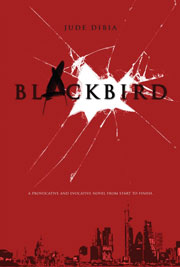
For several weeks, Blackbird, the new book by the Nigerian writer Jude Dibia followed me everywhere.  When I was not with the hard copy, the e-book stared at me from inside Adunni my iPad. I just finished reading it; I won’t lie, I thoroughly enjoyed myself, despite the best efforts of its publisher, JALAA Writers Collective. It is a pretty book, I love the cover. It is of high quality both in design and texture. Blackbird is perhaps the best designed book to come out of a Nigerian publishing house in recent times. It helps that it is highly readable. I will leave it on my coffee table so that Americans will see that we also know how to write and publish books, yes. It is not a perfect book; I realize that our writers and publishers at home are working extremely hard against the odds; however JALAA needs to collaborate with a reputable editor. Blackbird suffers from editing issues that should have been caught even by an untrained eye. My review hard copy was missing page 276; that is absolutely unacceptable and unprofessional. The only reason I completed this review is that I was able to continue reading the book on my iPad’s Kindle app (no missing pages there. My sense is that I got a bad copy, quality control is an issue here). No one should have to go through all that just to read a book. I will not die until Dibia pairs himself with a professional publishing company. His literary talents are being frittered away by mediocre support. The patrons of the arts should seriously consider expending some of their boundless energies and resources to supporting writers like Dibia who are long on talent and short on critical support. The world would be better for it and it would begin to stem the ongoing distortion of Africa’s richly lived life by some of her more established writers.
An engaging treat. Luckily the book was engaging enough for me to want to continue reading it. Overall, Blackbird is a work of considerable industry and purpose. I was sad when I got to the end of this pretty book. I wanted more. Yes, Blackbird is an engaging book – and an important narrative. This book gracefully charts Dibia’s upward trajectory as the writer of Walking with Shadows and Unbridled. With Blackbird, Dibia has firmly established himself as a Nigerian writer of stature Let me just say that Blackbird is one of the very few truly credible looks at contemporary Nigeria since the end of military rule. Dibia does this by allowing the story to showcase the seething resentments of an impotent people being suffocated by the mean currents of freewheeling capitalism and insensitive thieves posing as leaders. In Nigeria, as Dibia shows so eloquently, no laws protect the newly free. Dibia gently powers the novel with convincing prose that unfortunately would have sizzled even more in the hands of a practiced editor, “The ocean refused to be still; it took more, claimed more, and retreated less but paradoxically the hungry sea left behind more of its unwanted children, its vomit littering Scorpion’s little patch of beach-front: a seagull’s skull, uncapped beer bottles, horse scat, empty packets of cigarettes, the left foot of a size twelve shoe, a dead army of used condoms, and an old deflated football.” (p 14)

Love and lust in Nigeria. Blackbird is a thrilling story of love and heart break on many levels, populated with interesting characters that proudly wear names like Scorpion, Razor, Nduesoh and Mfoniso. Well formed characters are carefully introduced with impeccable timing. The story revolves along the not too parallel lives of three couples whose demons intersect as a result of love and lust. The confrontations become a vehicle for examining today’s Nigeria. There is Nduesoh and her older white husband, Edward, representing the upper class. Maya and Omoniyi are struggling to make ends meet in the underbelly of Nigeria’s underclass. Ndoesoh’s sister Idara is betrothed to Gabriel, a police officer; they both hope to join Nigeria’s fast shrinking middle class someday. This is modern Nigeria with all of its challenges and triumphs. You will not see these stories in the traditional places where generous prizes are offered to writers willing to pen the past tense for glory. Dibia does a great job of getting into the hearts and heads of his characters. With the exception of a few spots, Dibia effectively deploys the English language as a mere vehicle of communication.  He does falter when he experiments unsuccessfully with Pidgin English. With Blackbird, Dibia makes the case that even in the new dispensation, there is deprivation also. Blackbird wears a carefully designed plot; indeed, Dibia is almost too fastidious in his attention to design detail. In this book, Dibia thought through every sequence, every movement. Gone (well almost) is the over analysis of issues, and the communal navel-gazing; some of the characters actually want to have fun. What a concept.

Well researched analysis. Using muscular research, Dibia tackles a sweeping breadth of canvas and he pulls it off nicely. Under the guise of a romance novel, he explores a broad swath of social issues, starting with the androgynous Omoniyi who is married to the sultry singer Maya, the object of Edward’s wandering eyes. He explores relationships, the failed promise of monogamy, and the yearning that results from material and spiritual deprivation. There are class struggles, sexuality and gender issues, extended family stresses, educational inequities, racism, the obsequious treatment of white expatriates by Nigerians, police brutality, urban renewal and gentrification, etc. Dibia relies on allusions and subliminal messages to tell his story. The protagonist Nduesoh’s self-loathing and self-esteem issues are a collective proxy for communal self-loathing: “She stared at her reflection in the huge mirror… she hated the sight that greeted her – the large landscape of a forehead, the flared nostrils that were begging for a surgeon’s knife, the puffy lips, the spaced out eyes and the gap between the two incisors, which could clearly accommodate another tooth. She was a monstrosity to look at without make-up…” (p 30) I love how Dibia documents perverse gentrification of once tranquil neighborhoods, Nigeria’s upper class have sharp elbows and they are not taking any poor prisoners. There is also true romance, affecting, it touched my rugged heart, all these loving couples that get caught in a culture war of the haves versus the have-nots.

Letting the muse loose. Dibia relaxed his literary muscles and let himself gloriously loose in Chapter 5 and 11 my two favorite chapters. Chapter 5 contains my favorite lines. ‘As Omoniyi walked from the bus, he suddenly felt intimate with this place. It had its own lost soul and palpable body; its own vibe, expressed by a pandemonium of car horns, mixed with the cacophony of tired bus engines, overlaid by a multitude of voices that talked, whispered, shouted, traded, cursed, laughed, cried, sang and sighed, all in unison. Once you set foot in Underground City, you felt its touch and its breath on you.” (p 104) You can almost touch and smell the places the book has been. Tenderness resonates everywhere. Listen to these lovely lines. “Underground City. A conglomeration of roguishly built shanty homes, it flanked the Sambo creek, a torrid expanse of water twisting like loins to the sea.” (p 104) There are also clever allusions to cities like Ajegunle in the barely fictitious names Dibia assigns places, for example, Elnugeja and Muelegba. I would say Chapter 11 is his best. Dibia comes alive with passion and conviction. It reads like the apocalypse. Nigeria’s burden is black on black crime. He unwittingly makes a compelling case. Our leaders are criminals and her followers are fools for taking their nonsense. This book updates the unending catalogue of Nigerians’ fate in the hands of successive herds of rogue leaders in an understated style.

Earning a place in our history. I love Dibia; he shies away from hallucinogenic crap, the staple of some of his writing colleagues.  I liken Dibia to Chukwuemeka Ike, one of Africa’s most understated literary icons. Ike is relatively unknown today because he shunned politics of drama to entertain and educate us with stories of contemporary Nigeria. Like Ike, Dibia is firmly grounded and genuinely focused on understanding our Nigeria. Through his eyes, we see the madness of urban sprawl and the devastation from the exodus from the villages. Dibia knows fashion in an intimidating way; but, he shows off this knowledge tastefully. Dibia quietly shows us Nigeria, a complex place while some of his peers write pretentious nonsense for the cocktail circuits of the West. Dibia has in at least one sense focused on tackling contemporary issues that the ordinary reader can identify with while the older generation of writers brood over the fading past tense. Nigeria is a nation reveling in self-doubt, pining for definitions that spell mimicry. Dibia’s story is familiar to us.

This is not a perfect narrative. Blackbird is not a perfect book. There are simple errors that should have been fixed by an editor. Some of the story’s conflicts appeared contrived and come off as a bit melodramatic, with little nuance. I would advise Dibia to explore his funny side more, He is downright funny when making fun of Nigerians’ quirky ways of giving directions: “That yellow house wey get green-white-green for doormat and opposite am you go see Mama Sikirat beer parlour or when you reach the end of the street, you go see one plank like bridge wey dey near Holy Ghost Church, cross am and in front you go see the house wey get tap for de front.” (p107) Sometimes it has the feel of a soap opera; it has its fair share of clichés and melodrama. At times the dialogue doesn’t flow as well. It clatters towards a hasty unconvincing end like a villager hurriedly gathering her wrapper around her ahead of a gathering storm. There are still traces of Dibia’s tendency to overanalyze; sometimes people just want to have fun. Some would say that Dibia has sewn a web too neat for real life. But Dibia doesn’t live a messy life. What is wrong with that? I make bold to say that this book with all its myriad imperfections is an important scroll. And just so you know, the book’s title, Blackbird, is inspired by Morning Has Broken, a song by Yusuf Islam, the artist formerly known as Cat Stevens. You have to give it to Dibia, he is coolly eclectic. I love this man!

Beyond the balance of the stories…

It takes uncommon intelligence to survive Africa. I know. I lived it for over two decades. But then, suffering is overrated and conquering it requires effort and uncommon intelligence. Africans are geniuses. So why are things the way they are? We can’t talk about it because white liberals love to stifle debate. White liberals and their African sidekicks love to hate V.S. Naipaul. They refer to him as what Chinua Achebe would refer to as a thoroughgoing racist. Once pronounced thusly, all debate is smothered and we are all back to being human beings again – until the next racist book about Africa is written. And the wailing and drama resume. Sure Naipaul is a racist. And it seems every book written about Africa today is awash in the red ink of racism, bigotry and prejudice.  Even many Africans write about Africa as if they are snooty expatriates from on high. Africa is filth, savagery and broken people pretending to be humans, that is the message they subconsciously communicate.

Liberalism is the arrogant guard of the black wall that rejects debate. No one must go past it. When it comes to matters African, our avuncular white liberals tend to cry louder than the bereaved. We ought to move past cute Third World movies and the despondent poets of the past, dark era that depict us as the other.  Why are things the way they are? Our intellectuals understandably seek desperately to legislate relationships. From Chinua Achebe to Ngugi wa Thiong’o, the refrain is: “Can’t you see, we are human beings like you?” We are scared and we lash out at those that ask questions about our humanity and our competence. I fully understand how Achebe can accuse Conrad of racism for turning the corner, seeing Africa and Africans and saying, “This is another planet, these are not my people.” But then at what point do we begin to ask hard questions about ourselves and hold our looter-leaders accountable? Yelling racism keeps at bay the answers to our issues. It drives away accountability also.

I have harsh words for our leaders. Western education has created the worst caliber of leaders that has ever ruled much of Black Africa.  It has taught them the key tenets of selfishness. They lack compassion and understanding. They are solely responsible for the mess that Africa is in today. The white man’s contribution historically is well documented.  Today, he has become a convenient foil for the greed, ineptitude and evil of our leaders. Yelling at the white man has become a money maker.  Our intellectual and political elite have found profitable props in the avuncular patronizing condescending attitudes of white liberals. White liberals have been singularly responsible for genetically coding in our leaders a lack of introspection, an allergy to accepting responsibility and a disdain for the word, credibility. As the Nigerian project has shown, their motto is do what I say, not what I do. Certified wife beaters, thugs and thieves are paraded on the world stage as “statesmen.” Plagiarists are forgiven their transgressions and false prophets are handsomely rewarded for lying about their achievements. There is no excuse for what is happening in Nigeria. At its best, we are looking at uncritical mimicry. Democracy has combined with the new Christianity to become a force more deadly than AIDS in oppressing our people.

African intellectuals are at war with the West. They are human beings and they are not going to stop telling white folks that. They write obsessively about the otherness that is African but they are obsessive about not living the life that they describe so hauntingly in their oh so cute books. Kiran Desai’s gorgeous book The Inheritance of Loss is a work of haunting beauty and dark genius, lovely how she mimics our mimicry, our rejection of the state of being conferred on us by a racist, mean God. We do not question why things are the way they are. We describe what is and demand equality and respect. The self-loathing manifests itself in many ways, not only in Naipaul’s books.

It is tempting to romanticize the writer as a dreamy eyed idealist resting only on truth-oars. With respect to African writers, nothing could be further from the truth. Many African writers have written for dictators, and continue to share wine and break bread with thieves mimicking democracy. When it suits their purposes, they ignore, with powerful words, atrocities committed by their friends and relatives. It is an abuse of power: The power of empty words. But mimicry is not going to get us far. We are building monuments that are unsustainable. We insist on going to the moon when our people hanker for the simple pleasures of clean water, good roads and safe communities. We have embraced a religion that is dismissive and contemptuous of our past and present.  Their God says we must reject our being in order to be accepted by him. Ours is the only race that has uncritically embraced this new plague called Christianity. Mimicry. It will kill off our race.

Strange Passages to Harare North

First published in Next Newspapers, November 14, 2009

There is this thing called the Caine Prize for African Literature, whatever that means. People compete for it and someone invariably wins. There is a lot of noise making and jollification for a deserved win and the poor winner is expected to write a book. The poor fellow always obliges and dutifully produces a thoroughly wretched book. It hardly ever fails. There have been notable exceptions but one would argue that the writer wrote a good book despite winning the Caine Prize. One such wretched book is Harare North, written by the brilliant, perhaps gifted Brian Chikwava. He is destined to write a good book – once he finds his voice. It is just that right now, his toes are flirting with crickets while Africa is carrying elephants on her head. There are few books that have frustrated me more than Harare North. It is like staring in anger at a rich pot of soup ruined by an impish but talented cook.

Harare North is a meandering journey undertaken by an unnamed main character fleeing imaginary trouble back home in Robert Mugabe’s Zimbabwe (you get the story already, sorry!). He heads for London (aka Harare North) and proceeds to lead a wretched meaningless existence.  Saddled with a not-so-bright friend named Shingi he immerses himself in the under belly of the immigrant community in London building tricks to stay above water. It is not pretty but this is not just because of the wretched lives these people live in the grimy underbelly of grimy London. This is an unfortunate book for reasons that are the fault of Chikwava and publishers eager to publish and sell reams of Africa’s dignity to a willing and gullible Western audience. What is it with African writers and stereotyping? In the 21st century many of them are still scheming their way into the pockets of gullible Westerners who truly believe that Africans are exotic lovable dolts to be watched like animals in a zoo.  I am not amused.

 On one level, Harare North is a brilliant book, written by a brilliant, sensitive author with the potential of shining a compassionate light into the lives of immigrants of color.. And sometimes it works. Chikwava lays bare the tricks that immigrants turn to somehow survive in London. But then, what’s with the contrived English? Harare North is engaging and heart-warming, but the contrived English gets in the way, each time. It is like finding your favorite meal infested with tiny obnoxious stones. The book offers evidence of formerly elegant prose poetry ruined by reckless experimentation with contrived English. There is no linguistic structure to it because the language simply doesn’t exist. Profound thoughts become distressed babble under the weight of dysfunction. Not convincing, the contrived result. Chikwava has dissipated vigorous energy to write nonsense. It is funny but it is nonsense.

 This is too bad because there is all this brilliance peeking furtively out of the contrived fortress of a pretend-language. There is something phony about contrived language, because it is, well, phony. I didn’t like it when Uzodinma Iweala used it in Beasts of No Nation, and I certainly am dismayed that it ruined a brilliant opportunity in Harare North. Read this beauty of a sentence, reconstruct it in real prose and tell me why I shouldn’t mourn the loss of a dream novel: “Harare township is full of them stories about the misfortunes that people meet; they carry bags full of things and heads that is full of wonders of new life, hustle some passage to Harare North, turn up without notice at some relative’s door, only to have they dreams thrown back into they faces.” (p 5)

 The reader is distracted to drink by sentences that Chikwava almost forgot to engineer into nonsense. “And then me I hear that people in the village where Mother is buried will be moved somewhere because government want to take over the area since emeralds have now been discovered there.” (p 17) The language gets in the way in a subversive manner and it as a result the book is torpedoed by an inane contrivance. But I must say Chikwava, can describe despair with a few deft strokes of the pen. “She take me to the kitchen and the air smell of bad cooking and the sink have one heap of dirty dishes and all. It’s like they lie there for donkey years. The ceiling on one corner is growing mushrooms and things.” (p 30)

 It is perhaps a weakness of the narrative that Chikwava could be accused of creating negative stereotypes and spinning bigoted tales at the expense of Zimbabweans. This is not the Zimbabwe of Petina Gappah’s elegant stories (Elegy for Easterly), or even of Dambudzo Marechera’s brilliant angst-ridden anthems. There are traces of bigotry and prejudice some aimed at gays and lesbians. We see the immigrant of color as a shiftless aimless buffoon. This is just one aspect of the immigrant life. Who tells the others? Read it, it is fun despite itself. I do miss Ike Oguine’s A Squatter’s Tale. It is a better book. By far.

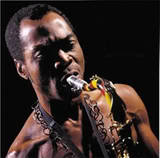
For Fela Anikulapo Kuti: Memories of you

First published in Next Newspapers, November 20, 2010

There are days in America that wear the beauty of a well-tended garden, every image in its right place, days created the night after goddesses loved and rocked their lovers to blissful restful sleep. On those magical days, I always go for a walk. And my friends come with me, strong voices of Africa, spilling in song out my iPod. Fela Anikulapo Kuti, Ladysmith Black Mambazo, Miriam Makeba, Sunny Ade, Osita Osadebe, Ebenezer Obey, Rex Lawson, Celestine Ukwu. Prince Nico Mbarga. Victor Uwaifo. They follow me, our ancestors’ son, wearing a blue suit and an attitude, trailing all these people staring at my weirdness.

The guttural sounds of the spirits of Lagos gush out of Fela, Abami Eda, the Weird One. My senses threaten to implode from the torrent gushing out the eaves of Fela’s motor mouth. Alagbon Close. I am the son of my ancestors dressed in the other’s blue suit. I am dancing, dancing, dancing, in my head as Amebo my iPhone shivers with delight.  Listen to those drunken horns strutting high attitude. Fela is perched deep in the orchestra pit of the dispossessed taunting privileged thieves. Hear the horns honking at thieves, mooning bastards:“Now listen now! Now listen now! I dey do my part, I be human being like you like you! I dey sing I dey dance, without me you nor go happy at all at all. Now listen!”

Roforofo Fight. At home, my laptop Cecelia is fueling her breasts with tomorrow’s juice cells. I am feasting on food, rice and designer stew and Jumoke Verissimo’s book. I Am Memory. Hear Verissimo purr. I love this owner of words. Me, I am worshiping in temples where words dare not go. Oh, Fela. Fela is on a roll. Overtake Don Overtake Overtake. ODOO  Hear horns spreading attitude on the antiseptic fields of Babylon.  And I miss my mother, Izuma of the stout bush that cannot be felled. I should be dancing with my mother under that canopy.

American morning. Air, crisp, freshly minted, eager to please, still nippy. Me, hands in winter jacket watching our sons.  Soccer. Little boys bounding out of pods of infinite energy, going at soccer balls and dreams. Our teenage daughter Ominira, snapping pictures that will die on Facebook.  Fela rises out my iPod, sassy. Alu Jon Jonki Jon. Sweet delicious lunacy. Pure genius! Life is good today in Babylon as Fela rides me to that magical place that grows hope out of the oven of defiance. Suffering and Smiling. In Babylon. Fela. Palm Wine Sound. Fela. We are stalking the mean streets of America’s neighborhood, speaking truth to power. Fela. Trumpets strutting denial, horns sobbing, strings snickering justice to injustice.

Fela. Priest, summoning spirits from termite mounds.  Palm Wine Sound. Horns sobbing. Suffering and Smiling. Hear the guttural voice of Abami Eda calling the dispossessed from the latrines of despair. Come and dance. Come and dance. Alu Jon Jonki Jon. Lagos comes calling, with roasted plantain and groundnuts. And trumpets taunt the meek, loosening timid limbs under broken lamp posts.  Tight. This is genius. Listen to that, just listen. Grab Fela and dance, just dance. Today. Who are you re? I say, who are you re?

Winter in America. Snow. White. Wet. Slippery. Me, sober; got the groceries, forgot the cognac. Me, lucid, bored. Fela, Weird One glares out our window, in his underwear, longs for sex & sax. Kalakuta Republic calls. Our sons and other cubs roll the snow brown, building igloos and dreams. In the white plains of America, Olokun cradles our sons, and hands the bigoted bifocals. We did not ask to be born; we will not beg to be saved by this narcissus. Fela, Abami Eda, where are you? Sango’s horn sobs thunder to Ogun’s flash of iron rage. Dance with me. Life is good.

Fela. Monday Morning in Lagos. Joy blares out of horns. Genius. Jazz. Smooth. Raw. Guttural. Words of the oracle chase the cowries of divination on the streets of Ajegunle. The arrangements are pure joy. Lagos lives amidst the horns and the shakara. Pure water. Pure genius. Life is good. Joy. Save me. Christmas Eve. Fela, sassy sax building Lagos brick by brick in our living room. Yellow Fever. My lover and I are busy building a bukateria in the kitchen. America. Exile. Home. Exile dulls her pain on cognac, now my tongue has fallen hard for plump American peaches. Nigeria. I miss Akara junction. I miss my little brother grinning at me as I spend his Naira on long-lost delicacies. Africa calls but it is great to be home with my very own clan and Fela. The seasons are changing. Make wherever you are home. In the beginning, Orunmila made Fela. Esu gave Fela big balls. Orunmila covered Fela’s balls in pants of fire, handed him a sax and said: Go forth and multiply. And Fela complied for once in his riotous life. Oh what joy. What a riot. Abami Eda is up there in the pantheon of imps, suffering and smiling. I miss you, Baba.