Burma Boys and strange wars

“No European writer could have written ‘Things Fall Apart,’ ” says Ernest Emenyonu, who chairs the department of Africana studies at the University of Michigan at Flint. It was “a new kind of writing,” for two reasons:

The first was the way Achebe made the colonizer’s language his own. By incorporating Igbo speech patterns, proverbs, folk tales and beliefs, he invented an English that could “articulate African aesthetics and African poetics.” The second was that he “explored the psychology of imperial conquest” and challenged Eurocentric views.

In other words: Part of what Africans suffered at European hands was the loss of control over their own narrative.

Achebe took back that narrative.

–          Bob Thompson, Things Fall Into Place,

The Washington Post, March 9, 2008
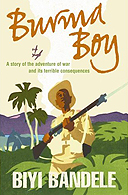
I have just finished reading Biyi Bandele’s latest novel, Burma Boy. Major kudos to Farafina, the publishers of this book. Farafina has come a long way since I last read their production of Tanure Ojaide’s The Activist. Burma Boy is a beautiful production, carefully laid out with a nice cover, bereft of typographical errors and significant editing issues. It is remarkably easy on the eyes. I salute Farafina for a job well done. In terms of the contents of the book itself, have you ever read a book that you could never put down because you feel this weird obligation to finish it? To relive that experience, buy Biyi Bandele’s book Burma Boy and try to read it. You will never put it down. Spurred on by Bandele’s boundless enthusiasm for the story and his reverence for his father’s noble contributions to the war effort, I so badly wanted to love this feisty book. Unfortunately, I had trouble reading it to the end. I got lost in the middle but I re-booted my motivation and started over. And I slugged through the book again. And again. The exercise was tedious; not painful, but tedious. This book is an ambitious project but I am not quite sure Bandele pulled this one off.

Don’t get me wrong, I absolutely loved the dialogue in Burma Boy – Bandele’s skills as a really good playwright are evident and enviable. I loved the galloping intensity of the first chapter of the book as hearty chunky sentences raced me through the colorful streets of Cairo and the demented tortured soul of the book’s first character, Major Wingate. Unfortunately, the transition from a playwright to a novelist is bumpy at best. For example, a play can happily absorb umpteen characters; you know, market women, street urchins, hangers-on in the king’s palace, etc, etc, but a novel does not have that much staying power. There are all these characters, inchoate, rambling on and on with malarial delirium. Also, caricatures have their place in plays; properly deployed they can be delightful exaggerations of the human condition, witness the riotous and manic delights of the characters in Wole Soyinka’s Jero plays. Burma Boy struggles with an identity problem, a play wishing to be a novel.

What is Burma Boy all about? It is about a certain war takes place in Burma but I shall return to that question later. The book’s one major failing is that it fails to anchor the story in its proper context. The reader is initially left hanging, wondering why this book is talking about a certain war. You would almost have to read about what Burma Boy is trying to deliver in order to have a fair shot at enjoying it.  The alert reader quickly learns that it is about a certain war, some of which took place in Burma and boatloads of Nigerians fought in this war, and it was a war that they didn’t have a dog in but one they fought in like dogs. But what was the war all about? Those who truly want to understand what Bandele is trying to say should first read the books he recommends in his helpful “Author’s Notes” at the back of the book. I especially recommend James Shaw’s A March Out. Then they should read Burma Boy. In this respect, the book fails to deliver what would appear to be an enchanting story. Anchored to a succinct context, the story would have been a crowd pleaser. Bereft of an enabling context, the reader keeps asking the irritating question: Where are we?  The book lurches drunkenly from obese sentence to obese sentence, egged on by legions of tragic-comical characters.

So what is this book really all about? The near-context for all this penkelemesi is buried in one sentence one-thirds into the book: “The story of the day is that Kingi Joji, monarch of Ingila is fighting a war in a land called Boma and he wants our help.” (p 42) As seen through the eyes of Private Ali Banana, the main character, it is about the heroic exploits of West African soldiers who were part of the Chindits, forces that fought gallantly during World War II. The Chindits, under the fearless and lunatic leadership of a British officer named Orde Wingate were a part of the allied Special Forces of the 2nd World War. As Chapter 1 of Bandele’s book shows Wingate was easily one of the most charismatic, if not lunatic military chiefs of World War II.  The Chindits were highly effective against the Japanese. They destroyed bridges and railroads, attacked logistics units and disrupted vital supply lines, all while staying largely embedded inside enemy territory. These West African soldiers or “Burma Boys” were a critical part of these operations; however most of the stories in print tend to glorify only the white combatants. The most charitable of the stories involve condescending, patronizing, and mostly racist commentaries about these soldiers. Their white counterparts certainly found them fascinating, if not exotic and tended to write about them as if they were sub-humans. Books like Shaw’s The March Out that Bandele praises effusively are written in this vein. Bandele set out on a noble quest – to write a story from the West African soldiers’ perspective. Unfortunately, he takes the ball from the white writers, and mostly runs fast in the wrong direction.

There is plenty to frustrate the reader in this book. Bandele obviously read a lot of books about the Burma experience and it shows. It is not a pretty sight however. Numerous scenes are lovingly slapped together and they hang together, tough but separate, hardly ever jelling in this unlikely stew of a story – like the unhappy ingredients of a pot of okro soup put together by a hungry and impatient cook. Every ingredient stands alone refusing to play Bandele’s dream symphony. The okro soup’s richness is rendered destitute by the narcissism of its feuding ingredients. For example, in design and execution, chapter 1 is easily the best part of the book, but what is the point of this chapter other than to introduce a perversely eccentric character – Major Wingate? Also characters are born and rapidly killed off – there is no staying power.  A painful riot of too many minor characters ensures that the reader stays distracted from the message. The book is a caricaturist’s delight. Stereotypes, mostly ethnic fall upon stereotypes and jostle gamely for space in the reader’s limited span of attention. Here, in this book, exaggerations are an inappropriate tool for scoring points. Also since the war theatre remains oblique to the reader, let me suggest that a map of the war theatre in that region (Burma, India, etc) would have been useful.

Overweight sentences puff and huff their way through a maze of a story. The very first sentence in the book screams, “I need to go on a diet!” I am not exaggerating; two mere sentences go on for three quarters of a page. Awkward sentences, fat, with muscles in the wrong places and fat everywhere else. Exhibit one:

“Godiwillin Nnamdi, a school-teacher’s son from Onitsha who had joined the army to spite his father for some slight he could no longer remember, ominously announced that only last week two Indian nationalists, who wanted neither the British in their country, nor the Japs, but would prefer the Japs if they had to make a choice, had been caught trying to poison the base’s water supply.” (p 56)

There are all these long sentences thrown into a room and thy loll about like grenades that won’t go off. Exhibit 2:

“A wandering bomb soared beyond the trucks and disintegrated into several smaller bombs as it struck a tree like an axe with a thousand blades, carving the thick stem into several pieces and flinging the disembodied upper trunk with its crown of shattered branches into the solid undergrowth behind.” (p 114)

The attempts at humor only register and arrest the beginnings of a smile on the reader’s face like the beginnings of great sex arrested at half climax. Frustrating. There are good moments. Hear Private Ali Banana, the main character:

“’… I pay homage to the scorpion for, as the saying goes, he who spurns that which is short, hasn’t stepped on a scorpion. Am I being spurned because I’m short? It surely cannot be because I don’t speak your language. I’ve tried learning it, your eminence, God is my witness. But every time I start from a to z, I get lost somewhere between β and đ, and my head hurts and I have to lie down to recover. May you live long kyaftin sir.’” (p 40)

My favorite line is: “Trust in God but tie your camel tight.”(p 111) Ali Banana easily has the best lines. My favorite:

‘Mules?’ Ali gasped as if stung by a driver ant. ‘Do you know who I am? I’m the son of Dawa the king of well-diggers whose blessed nose could sniff out water in Sokoto while he’s standing in Saminaka. I’m the son of Hauwa whose mother was Talatu whose mother was Fatimatu queen of the moist kulikuli cake, the memory of whose kulilkuli still makes old men water at the mouth till this day. Our people say that distance is an illness; only travel can cure it. Do you think that Ali Banana, son of Dawa, great-grandson of Fatima, has crossed the great sea and travelled this far, rifle strapped to his shoulder, to look after mules?’ (p 38)

Beautiful. And then we find out miles of pages later that this fabulous oratory is delivered by a man who turns out in fact, to be a boy-soldier. Incredulous, such precociousness especially when one realizes that the same child had uttered ‘I here for to killi di Jampani.’ (p 33) It is impossible to see the child in Ali Banana even as the book assures that Ali Banana indeed started out as a thirteen year old soldier. This reader is unconvinced. It stretches credulity.

In Burma Boy, a tedious tale unfolds through the eyes of a writer unfamiliar with the terrain of Burma and India, the war theatre. It is one thing to be born after an event; it is another thing to have never been at the scene of the crime. The book answers the question each time, with a forlorn “No, I was not there and I have never been there.” Bandele’s knowledge of the geography is not intimate enough and comes across as contrived – as if the writer read about several places and sprinkled the resulting knowledge on several pages of the book. Burma is still a distant, remote land. It is not enough to litter the book with exotic flora and fauna. The landscape is not watered enough, not nurtured enough to keep it alive. Every battle is fought in the same leafy hills, sunken valleys and paddy fields. The book suffers from the rich monotony of a stunted imagination.

Then there is this abiding disconnectedness. For example,  Chapter 4 seems to start exactly where Chapter 3 did not end and this reader is not sure why. Weak synaptic connections try gamely to string the chapters together. Most times the ends don’t touch and the result is jarring. One just feels lost in this vast jungle that the writer doesn’t seem to conquer. And the reader feels like a hapless soldier, captured and frog-marched through a jungle to nowhere. Once the reader recovers from the climactic end to chapter 1, the book never really builds up again; there is nothing to look forward to.

The book’s other major failure is in not mining what is truly harrowing – the fact that these soldiers were indeed little boys conscripted to fight a war by their elders. Once you get to that realization, several passages in the book assume a haunting surrealism, like during a particularly  wretched passage to India; of little boys stowing away their mothers’ delicacies (kuli-kuli and dawadawa) as they go to the war in Burma:

“’While we were at sea over a hundred pounds of dawadawa were found under Aminu Yerwa’s bed after the men sharing his cabin started complaining of  foul smell. The dawadawa had gone bad in the airless cabin and there were maggots gathering inside it.’ Dawadawa, a seasoning made from fermented locust bean, was pungent enough even when fresh.” (p 52)

These were children after all, albeit loquacious children, who afflicted with chicken pox, malaria, and diarrhea, seemed to be fighting diseases and home sickness rather than the Japanese. As a result, the book’s lack of depth startles and rankles and leaves a yawning chasm in the reader. And the reader soon learns that nature abhors a vacuum. For instance Burma Boy does not go to the depth of feelings that forced these young men to fight in a war that they did not ask for. You would have to read another book.

Burma Boy is a cautionary tale about the limitations of oral story-telling in literary world. How many epic stories have we lost because they got lost in the translation to “the book”? Maybe www.youtube.com will help but I am afraid that we have done our ancestors a grave injustice. Fifty years ago, Chinua Achebe wrote Things Fall Apart and in so doing set out to model how we should tell our own stories. Things Fall Apart was a stunning salvo in response to contemporary literature like Joyce Cary’s Mister Johnson that sought to dehumanize the African. With that book, Achebe assured the world in compelling evocative prose that the sum total of the African should not be expressed in primal grunts and half-sentences. For we were poets, philosophers and scholars before the Westerners came and christened us bumbling illiterates. That war rages on today. I must say that I was particularly distressed by Bandele’s use of contrived English in this book. Indeed our writers’ new-found love with contrived English in its various viral strands threatens to shove us back into those dark ages that Achebe and his peers got us out of. Everything must be viewed in its proper context; as in Things Fall Apart, the language must be a vehicle – of communication, not of eternal damnation to a dark hell that only houses sub humans. We are not children of a lesser god.

I have a frayed copy of James Shaw’s The March Out. You read the book and you are left with no doubt as to where Biyi Bandele got his inspiration from. His Muse drank liberally from The March Out, down to similar scenes, characters and leafy sceneries. Even the signs are the same as in:

WARNING

DEAD JAPS IN THE RIVER

ALL WATER MUST BE CHLORINATED

(p 27 in The March Out and p 140 in Burma Boy)

Biyi Bandele pronounces himself gratefully indebted to the late James Shaw and similar writers whose “unforgettable” accounts chronicled “salutary instances of the courage and resourcefulness” shown by the Africans who served in Burma. I beg to disagree. James Shaw’s The March Out is unforgettable only in its rank racism in depicting Africans as exotic sub humans. The Japanese are referred to as slant-eyed Japs and Africans loll about grinning, shuffling and speaking contrived half-sentences. Hear Shaw:

Haruna looked wooden; he and the others plainly resented my presence. Not wanting an unwilling orderly, I asked for a volunteer, but with no response. Feeling depressed, I told Haruna to leave m, and sat for a time too uncomfortable for even the slight exertion of exploring my hole. Suddenly a presence loomed up, and a voice spoke: “Dis orderly work – me fit do um for you.”

I was surprised at being addressed in English, for the speaker was a Tiv, or Munchi, one of an extremely backward tribe with which teachers and missionaries have little success. Not one in a hundred speaks English or Hausa, and their own jaw-cracking dialect is hard to learn. Training them is difficult at first, but they make good soldiers and boast that they do not fear to die, believing that death met bravely is the only passport to life hereafter…. As is usual in his tribe, his teeth were filed to points like a dog’s and the skin of his face stood up in bumps and ridges. It had been cut open in infancy with a knife, another playful Munchi habit.” (The March Out, p 28).

If you think that passage is beyond the pale, unfortunately, in several instances, Burma Boy cries louder than Mr. Shaw, the bereaved. Unfortunate stereotypes litter the pages of Burma Boy and it gets tiresome. The March Out does have something going for it that elevates it beyond Burma Boy: It has helpful maps of Burma and India and I love the black and white picture of “a typical West African infantryman” wearing a “tribal haircut!”

Stripped of appropriate context Bandele’s characters come across as needless stereotypes that reinforce those in James Shaw’s unfortunate book. So Burma Boy, rather than being an Achebean response to a most unfortunate book about Africa, simply becomes yet another version of the same. Because the book falls far short of the expressed or implied purpose – to give rich voice to Bandele’s father’s “stories of carnage, shell shock, and hard worn compassion.” I would strongly recommend that the reader first read Bernard Fergusson’s excellent introduction to James Shaw’s The March Out. It serves as an excellent context to Bandele’s book. Or better yet, read James Shaw’s entire book.

I find it interesting just reading the very positive reviews of this book by Western reviewers. For me, Bandele can do a lot better than this. Burma Boy is a story hanging in mid-sentence stuck in the deep throat of Bandele’s Muse, still waiting to be told. I understand why the author would like to write a book about Burma in honor of his father, a brave Burma Boy but I am not sure I understand why I would call this a successful response to the stated need to write that book. In the end, Ali Banana concurs with the bemused reader:

“He was a foot soldier fighting a crazy war he didn’t even really understand. He didn’t understand why King George was waging a war in Burma from far away England. And it didn’t matter to him.” (p 206)

Neither did it matter to Bandele apparently. Private Ali Banana is luckier than this reader; in the end, he embraces the liberating arms of madness and engages in juicy dialogue with snakes and trees. Oh, to be so lucky.

 

Guest BlogPost: Professor Pius Adesanmi – Face Me, I Book You: Writing Africa’s Agency in the Age of the Netizen

Professor Pius Adesanmi is the author of You’re Not a Country, Africa!

(Keynote lecture delivered at the African Literature Association Dallas, April 2012. Sponsored by the Graduate Students’ Caucus of the African Literature Association (ALA))

I owe the title of this lecture partly to the Nigerian poet, Amatoritsero Ede, who recently “booked” a fellow Nigerian writer for “facing” him in a Facebook spat and, partly, to my favorite palm wine tapper in Isanlu, my hometown in Nigeria. Although Ede coined the brilliant expression, “Face Me, I Book You”, I think the greater debt is owed to my tapper. I call him my tapper extremely cautiously because he also tapped wine for my father for decades, becoming my tapper only after Dad passed on in 2007.

My palm wine tapper needs no introduction to you. You know him. He is an eponymous subject, still very much part of whatever is left of the bucolic Africa “of proud warriors in ancestral savannahs” which fired the imagination of David Diop, Léopold Sédar Senghor, and others in the Négritude camp but irritated Wole Soyinka, Es’kia Mpahlele, and other opponents of Négritude’s “poupées noires” version of Africa to no end. You know him.

You know him because his craft is ageless and has defied the frenzied and chaotic wind of postmodernity blowing over Africa. Baba Elemu – that’s what we call a palm wine tapper in Yoruba – is still alive and kicking in towns and villages all over West Africa. Firoze Manji of Pambazuka once busted my West African monopolist bubble by telling me that they also know the palm wine tapper in East Africa. You know him.

You know him because the fruit of his labour episodically irrigates your tongue whenever summer research takes you to those parts of Africa where he still plies his trade. His black and rusty Raleigh bicycle, the ageless gourds and tired plastic containers attached to the rear end of the bicycle (carrier in Nigeria), all bubbling and foaming in the mouth, and the dark brown belt of reeds that has gathered mileage by taking his ilk up and down the trunk of palm trees since Obatala got drunk in the mythic process of creation, are all iconicities of a certain version of Africa that will just not go away. You know him.

In addition to this generic portrait, my own palmwine tapper is always a vital source of reconnection with my roots during summer vacations in my hometown. Connoisseurs of the matter at hand know only too well that nothing beats the early morning harvest, especially if it comes undiluted with water. That is why the palmwine tapper has to beat even the most auroral farmer to the belly of the bush. The palm tree knows how to reward the tapper who sets forth at dawn.

Whenever I’m home, the pact between my palmwine tapper and me ensures that he wakes me up around 6 am on his way back from the bush with my own reserved portion of “the usual”. I suspect that one of his kegs was named for me or I was named for it as Achebe was named for Victoria, Queen of England. He filled it faithfully every morning and his “akowe, mo ti gbe de o” (Book man, I’ve brought your wine) was my muezzin’s call to prayer. My mum would grumble that I now wake up to the call of palm wine. Whatever happened to the Pius she raised to wake up to the Angelus and morning mass?

I did not hear my tapper’s call to prayer on this particular day in the summer of 2008. The jarring clang of TuFace Idibia’s “African Queen” – I’m sure you all know that song – was what woke me up. One of my nieces in the village had been kind enough to set the said song as my ringtone. Ladies and gentlemen, please sing with me: “You are my African queen/the girl of my dreams/you take me where I’ve never been”. That was Idibia crooning in my cell phone. Who could be calling that early in the morning? I concluded that it must be some silly friend back in Canada or the US who’d forgotten the time difference between Nigeria and North America. I hissed and fumbled for my phone in the greyish darkness of the early morning and the voice that came from the other end made me jump up in bed.

“Akowe!”

“Akowe!”

That was my palmwine tapper phoning me – wait for this – from the bush! As I later found out when he returned from that morning’s sortie, he was calling me from the neck of one of his trees. He wanted to let me know that delivery would be delayed that morning and I may not get my regular quantity of “the usual”. Funny things had happened to his gourds. I understood. In the village, strange spirits disguised as villagers sometimes climbed trees to help themselves to the fruit of another man’s labour. It was all part of the territory. I told him not to worry. I would accept whatever he was able to supply.

Then it hit me like a thunderbolt! The familiar and the strange. The uncanny. Try to imagine an elderly palm wine tapper atop a palm tree in the village, reaching for his pocket to fish out his blackberry in order to discuss the laws of supply and demand with a customer whose father he had also served decades earlier under a totally different economy of meanings and you will understand why that event, in the summer of 2008, marked a turning point in my attempts to fashion new ways of listening to so many new things Africa seems to be saying about her historical quest for agency – a quest that has lasted the better part of the last five centuries .

I also began to think seriously about how the new economies of agency emanating from Africa pose serious challenges to the work of the imagination in the postmodern age of social media and immediate communication. In thinking along these lines, I haven’t been too far away from the epistemological challenges which confronted another thinker, another place, another time. I am talking of Walter Benjamin’s attempt to grapple with the rise of the image – film and photography – and its impact on the work of art in his famous essay, “The Work of Art in the Age of Mechanical Reproduction”.

The Age of Mechanical Reproduction? That’s so dinosaur now! Perhaps you will agree with me that until a blackberry joined the arsenal of tools and implements that my palm wine tapper took atop his trees every morning in Isanlu, he belonged in a habitus of tradition governed by those mytho-ritualisms of existence which has led to tensions in the arena of historical discourses and counter-discourses about Africa’s agency. My palm wine tapper sans his blackberry comes from the world we have come to associate with Chinua Achebe’s Things Fall Apart  – especially the world as the people of Umuofia knew it before Obierika’s famous metaphor of the rope and the knife – or Birago Diop’s Breath – where we must “listen  to things more often than beings” in order to hear the voice of fire, water, wind, and bush.

This is the world of cosmic equilibrium to which the poet persona in Abioseh Nicol’s poem, “The Meaning of Africa”, returns after ironically escaping the world of the cold northern sun which gave my palm wine tapper his blackberry. You will recall that after loving the sophistication of Dakar, Accra, Cotonou, Lagos, Bathurst, Bissau, Freetown, and Libreville, Abioseh Nicol’s poet persona was advised to:

Go up-country, so they said,

To see the real Africa.

For whomsoever you may be,

That is where you come from,

Go for bush, inside the bush,

You will find your hidden heart,

Your mute ancestral spirit.

The story of agency as it relates historically to Africa is easy to narrate from this point. Europe encountered this Africa of “mute ancestral spirits” and “hidden hearts”, called her horrible Conradianly dark names, and proceeded to deny her agency through a series of historical violations and epistemic violence, which bear no rehashing here. As disparate and contested as they have been, Africa’s and her diaspora’s epistemological responses to these violations have been fundamentally about the recovery of agency.

We named these responses Négritude, pan-Africanism, cultural nationalism, decolonization, just to mention those. In the process of articulating these robust responses, Wole Soyinka and Eskia Mpahlele may have gone after Senghor; Ali Mazrui and the Bolekaja troika may have gone after Wole Soyinka who, in turn, went after some of them as neo-Tarzanists; Mongo Beti may have gone after Camara Laye for publication of work not sufficiently anti-colonialist; and Obi Wali may have gone after English-language dead-enders, opening the door for Ngugi wa Thiong’o’s decades-long crusade against Europhonists, I don’t think that anybody would quarrel with my submission that these tensions and disagreements are more or less what the Yoruba would call the multiple roads leading to the same market. That market is the recovery of the self, recovery of agency.

In the stretch of essays and books from “Dimensions of African Discourse” to The African Imagination and, lately, The Négritude Moment, Abiola Irele has done remarkable work mapping the evolution of and the tensions inherent in Africa’s counterdiscourses of self-recovery. Writing from a different philosophical perspective in the essay, “African Modes of Self Writing”, Achille Mbembe takes a somewhat dismissive tack absent from Irele’s work but nonetheless identifies three historical events – slavery, colonization, apartheid – as fundamental to the two currents of discourses and processes of self-recovery that he identifies as central to the question of agency: Afro-radicalism and nativism.

What is interesting for me – and I believe for numerous readers, critics, and followers of Mbembe – are the weaknesses he ascribes to both traditions of discourse in his attempts to problematize them. To Afro-radicalism, he ascribes a “baggage of instrumentalism and political opportunism” and to nativism he ascribes a “burden of the metaphysics of difference”. I wonder what my brother, Adeleke Adeeko, thinks of that particular critique nativism but I digress.

My reading of Mbembe’s essay has shifted over the years from a fundamental disagreement with his characterization and insufficient contextualization of Afro-radicalism and nativism to what I am beginning to think are gaps and silences in his critique of the African imagination. These gaps and silences pertain to the very nature of Africa’s agency even within the ideological politics and the economies of self-recovery in the African text. For we must ask: what sort of agency does Africa really acquire in Négritude and cultural nationalism? I am talking about the version of Africa which Chinua Achebe, Senghor, Birago Diop, Mongo Beti, Ferdinand Oyono, and Abioseh Nicol rescued from Europe’s post-Enlightenment philosophers and colonialist writers. Which agency does Africa acquire in the texts of these shons of the shoil?

Which agency does my palm wine tapper acquire as he moved from Conrad to Achebe? I think his transition is a move from being silent and unspeaking in one textual world to being rescued but spoken for in another textual world. One world gives him to us in body parts, capable only of dialects or incomprehensive babble, tapping a horrible alcoholic brew consumed by lazy natives in irrational quantities, an activity he gets to perform only if he escapes poisonous snakes, lions, and hyenas. Another textual approach restores the cosmic harmony of his world, the ancestral dignity of his work, and treats his product, palm wine, as worthy of the elevated cultural registers and aesthetic apprehension that Africa’s violators would normally reserve for merlot, cabernet sauvignon, or pinot noir.

The flora, fauna, and seasons of his world, especially the palm tree, also become subjects of elevated aesthetic treatment. If, as Adam Gopnik, the Canadian essayist for The New Yorker, assures us in his Massey lectures, the Romantic imagination elevated winter and ice to art and aesthetics, Achebe and his contemporaries would do much more for the world of the palm wine tapper in their attempt to fully restore his agency. Don’t forget that harmattan and even the white froth and foam of palm wine became worthy elements of metaphorical constructions.

But the tapper is still spoken for in and by these texts. In at least one instance, he is upbraided for killing trees in his youthful exuberance. I am thinking here of a different version of the problematic that Linda Alcoff evinces in her well-known essay, “The Problem of Speaking for Others”. Race and gender are weighty dimensions in Alcoff’s treatise on the pitfalls of speaking for the native, the oppressed, or the gendered subject. What happens if Africa is the subject that is spoken for or represented, albeit in the ideological resistance mode of Afro-radicalism and nativism, by the privileged African intellectual, especially the writer?

African feminism’s critique of Négritude’s treatment of African woman and African womanhood provides part of the answer. We must all remember that Mariama Ba and her contempories, writers and critics alike, got tired of Négritude’s constant conflation of Mother Africa and the mothers of Africa. Yet, in the beautiful and memorable lines such as “Négresse, ma chaude rumeur de l’Afrique” and “Femme noire, femme nue”, the Négritude poet actually believed that he was conferring agency on his subject.

In his earlier cited essay, Mbembe approaches this part of the agency question in a manner which allows me to offer possible windows into the dilemmas of representing Africa’s agency by writers in my generation. “Over the past two centuries,” writes Mbembe, “intellectual currents have emerged whose goal has been to confer authority on certain symbolic elements integrated into the African collective imaginary.”

I think my problem as an intellectual arose that morning in Isanlu when a momentary cognitive scission occurred and denied me the ability to “confer authority” on the intrusion of a symbolic element such as a blackberry into the imaginary of palmwine as I used to know it. It was immediately obvious to me that what was happening was beyond what could be explained by the usual recourse to the tradition-modernity binary, with the attendant intimations of how Africa negotiates modernity by gradually appropriating, domesticating, or integrating it within her own orders of experience.

From the top of his palm tree, my palmwine tapper was articulating his own agency and self-representing in ways that are miles ahead of the imaginaries which underwrite my work as a writer and critic. That, I posit, is the problem of African art in the current age of social media and MAC, my acronym for mutually assured communication. The fact that he phoned me from the top of a tree in the bush rattled and unsettled me. What if, God forbid, my Baba Elemu had also recorded videos of himself at work and posted it on youtube as these new possibilities of agency now afford him? What if he tweets his conversation with me from the top of that tree? What if he makes a photo of himself at work the cover of a Facebook page dedicated to tapping? What if… questions, questions, questions.

In a way, I think the writers of Négritude and cultural nationalism, escaped these dilemmas not because they shared coevality – or restored it where it was denied – with the palm wine tapper but because they operated as artists in the age of mechanical reproduction which, as revolutionary as it was, still allowed the possibility of a certain “inert” version of Africa that could be “rescued”, “re-represented”,  and “spoken for” in their texts.  My second submission is that this inert version of Africa, on behalf of whom Afro-radical and nativist discourses and praxes were articulated, now speaks for itself in ways that perpetually confound art and the imagination. Coping with an Africa which no longer needs your powers of metaphorical mediation to articulate novel forms of agency which have the added power of immediate global circulation is one of the most formidable dilemmas facing the generation of African writers, artists, and intellectuals to which I belong.

Chris Dunton and I have edited some special issues of journals in which we described these new writers, in the case of Nigeria, as the third generation. That description of convenience has been vigorously challenged.  My good friend, Abdourahman Ali Waberi, also a keynote speaker in this conference, has famously described that generation of writers as “les enfants de la postcolonie” in the case of our Francophone counterparts. Jacques Chevrier at some point was moving the idea of “migritude writers” but I haven’t followed the critical fortunes of that concept. Thanks mostly to the Nigerian members of this generation who have been winning bucket loads of international literary prizes – I am almost blushing with nationalistic pride here – the work produced by the children of the postcolony is now globally known and is the subject of numerous panels in conferences such as the ALA.

I am thinking of Helon Habila, EC Osondu, and my maternal cousin, Segun Afolabi, who have all won the Caine Prize. There is Chimamanda Adichie and, also, Tricia Adaobi Nwaubani, who did well in the Commowealth competitions. There is Teju Cole, who recently won the Hemingway Prize here in the US. Oprah made the fame of Uwem Akpan and hefty manuscript cheque confirmed Helen Oyeyemi’s arrival on the global literary scene. To these we must add other bright representations of new African writing, especially the novel, such as Binyavanga Wainaina, Monica Arac de Nyeko, Petina Gappah, Leonora Miano, Alain Mabanckou, Abdourahman Waberi, Dinaw Mengestu, Hisham Matar, and Ellen Banda-Aaku, my co-winner of the Penguin Prize for African Writing.

So, we have a cast of writers and a new writing that now whets critical appetites in international conferences. My concern is whether we are paying sufficient attention to the extraordinary dilemmas that these writers face in their attempts to write a continent which now possesses the ability to self-write, self-inscribe, and self-globalize even before the first sentence of your novel, poem, or short story takes shape in your head. How do you write a continent which no longer lies inert to be rescued from misrepresentation? I saw hundreds of responses and counter-discourses from the African street to the Kony 2012 video before Teju Cole and Mahmoud Mamdani offered their famous responses. In Twitter and Facebook years, the writer and the scholar were light years behind the African street. To bring this dilemma back to my point of departure, how should this generation write my blackberry-wielding, self-inscribing palmwine tapper? Reduce palmwine and blackberries to conflicting metaphors and inscribe that conflict in flowery prose? That would be too simplistic.

Besides, there is a second problem. Those who wrote Africa’s agency in the age of mechanical reproduction never really had to deal with new forms of art that competed with and challenged the ontology of their respective mediums of expression. The novel, the short story, the poem, the play, and the painting didn’t have to worry too much about other forms of generic expression emerging at once as evidence of Africa’s new ability to self-represent and also as contending and competing forms of art. This lack of competition, if you ask me, partly accounts for why the scribal form of the African imagination, enjoyed an imperializing prestige over oral forms much to the consternation of colleagues like Karin Barber and Thomas Hale.

Tricia Nwaubani’s excellent novel, I do not Come to you by Chance, sadly, does not enjoy the luxury of not worrying about competition for its ontology as a form of art which seeks to represent a particular reality of post-SAP Nigeria in terms of its local and international dimensions. What do you do if you are writing a novel about what, for want of a better description, we must call Nigeria’s 419 letters and the imaginaries that have now come to be associated with it, only to discover that those letters themselves are now being discoursed and critiqued as art forms on their own terms? Where the 419 letter now stakes a vigorous claim to an ontological identity as art, does a novel which ventures into its territory even merit the description of simulacrum? Which is the art representing what? It is almost now possible to claim that the 419 letter waiting in your mailbox as you listen to my lecture here is art representing the reality that is Nwaubani’s novel. If your head is not spinning yet, please remember that some actors in Africanist scholarship here in North America have been very active in making a case for 419 emails as an art form worthy of critical reflection. I have received at least one solicitation in the past to help evaluate submissions to a planned special issue of a scholarly journal on 419 letters as a literary genre.

As I speak, the same argument is being made for the literary quality and generic integrity of tweets. In Canada, where I am based, the literary establishment seems to have made up its mind that the tweet is a literary work. Now, that’s tricky because it makes every tweeter a potential writer just as a collection of somebody’s Facebook status updates or 419 letters could give us a Nobel Prize for Literature down the road. If you look at the website of Canada Writes where the CBC organizes the prestigious CBC Literary Prizes, you’ll be able to assess the considerable energy devoted to tweets and tweet challenges. Tweet is literature as far as Canada Writes is concerned.

The Nigerian writer, fiery critic, columnist, and cultural commentator, Ikhide Ikheloa, has been screaming himself hoarse about the need for African writing to face these new realities. Like Obi Wali, decades ago, Mr Ikheloa has been making very weighty pronouncements on the future of African writing. And he is arguing, among many pro-social media arguments, that tweets, Facebook updates, and the associated genres of the social media age, would leave African writers behind if we don’t come up with imaginative ways to engage the forms of continental agency which they throw up. The way he sees it, social media is a significant part of the future of African writing and he has been warning that writers in my generation, especially those who remain social media stone agers, are in danger of extinction.

I take Mr. Ikhide’s work extremely seriously and follow him religiously online. You should google him, follow him on twitter, and add his blog to your daily reading. When he is not upbraiding African writers in the new generation for not taking the full measure of the possibilities of the social media revolution for our work, he is making very valid points in terms of the contributions of social media to even our own agency as writers.

Let me explain my understanding of Ikhide’s position. Errors of interpretation would be mine. I think the debate about which audience the African writer ultimately writes for is further complicated for my generation by the mediators who stand between our work and our audiences. A measure of that is how much of Africa we still literally translate or italicize in the actual process of writing. Go to any Nigerian novel and see what happens with registers and diction depicting the actualities of youth experience, counterculture, and postmodern citiness for instance.

Paraga, mugu, maga, yahoozee, aristo, shepe, etc, all capture experiences which the Nigerian writer in my generation italicizes to mark their strangeness and otherness. Yet, Western writers using other Englishes in Britain, Canada, New Zealand, Australia, and the United States, don’t always feel compelled to capture local experiences in italics. Just last month, Elizabeth Renzetti, a Canadian columnist writing for the Globe and Mail, had this to say about the extensive registers of drunkenness in England:

“The English have more words for drunk than the Inuit have for snow, perhaps because it is as much part of the landscape. On a given night, you might be bladdered, legless, paralytic or rotten with drink…I thought I’d heard them all until British Home Secretary Theresa May used the phrase “preloaded” on Friday to announce her government’s war on binge drinking. Preloading refers to the act of getting hammered before you go out to get hammered – that is stocking up on cheap booze from the grocery store in order to be good and wobbly by the time you hit the bars.” – Elizabeth Renzetti

“Bladdered, legless, preloaded – all registers of English drunkenness. Would a British writer in my generation Italicize these experiences specific to his own people in a creative work? You guess is as good as mine. “Stop Italicizing Africa!” Ikhide screams at writers in my generation all the time on Facebook. “Stop writing Africa for your literary agents, publishers, editors, marketers, and Western liberals”, Ikhide screams. Perhaps Ikhide already suspects that there is a reason why Salman Rushdie and Paulo Coelho – more international writers are following their example – have quietly migrated a great deal of their art, celebrity, and mystique to Facebook. “If your handlers insist on an Italicized Africa, take your agency to social media and engage the world freely”, Ikhide screams at African writers.

I hope I am not the only one who takes Ikhide extremely seriously.

I thank you for your time.

Good reads…

First published, March 16, 2011. Reproduced for archival purposes only.

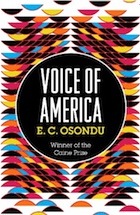
I am enjoying several books at once. I just finished reading EC Osondu’s Voice of America. The title story alone is worth the price of the book. Osondu uses crisp language, shorn of gimmicky frills to tell engaging, funny stories. The stories spoke to me personally, and took me to an era I am intimately familiar with. Osondu wrote about the past and it seemed like it was here.

 Uche Nduka has just released a new volume of poetry with the enigmatic title eel on reef. I adore Nduka, I believe he is one of Africa’s most important poets, he writes with care, erudition, vision and affection, every word in place, almost fastidious, but still bold. Find that book and devour every luscious word, this is how to write poetry.

 The journal AGNI (72) has a portfolio of African Fiction edited by EC Osondu and William Pierce. Some of Africa’s best writers are assembled under that canopy, having a good time with their muses and demons. I read The Treasonable Parrot by Ogaga Ifowodo. It is pretty good, with an edgy hilarity.  Victor Ekpuk has some art pieces in there nicely breaking up the monotony of text. There is a harrowing piece in there by Chuma Nwokolo (Sentencing for Six). If you don’t know Nwokolo, please run, don’t walk to http://www.African-writing.com, he is addictive. Victor Ehikhamenor is up there cracking ribs with his patented njakiri. I shall be reading Igoni Barrett’s piece next. Barrett is darkly brilliant, enigmatic and eclectic, one of the younger literary Turks to watch.   Oh, please go to AGNI online and read Akin Adesokan’s affecting short story Knocking Tommy’s Hustle.

I am officially in love. With Abimbola Adunni Adelakun’s book, Under the Brown Rusted Roofs.  They say never judge a book by its cover. When I first got the book I took one look at it, spied some typos in the first few pages and tossed it into a corner of my bedroom where books that I don’t care for go to die.  This is one poorly produced book, the editor and the publisher should not be allowed to touch another manuscript again, ever.  I only went back to the book after reading an interview in which Professor Niyi Osundare  gushed over the book. I see now why Osundare loves this book. Adelakun studied Yoruba customs, folklore and mythology, apparently not in a classroom, but on the tough gritty streets of Yorubaland. There are strong shades of Ola Rotimi’s intimacy and proficiency with Yoruba folklore. And the dialogue is straight from the street’s pots, no pretense.  I am going to start a campaign to find a good editor and a real publisher that will take this book and Adelakun to the heights that they deserve.

Hear Adelakun: “Afusa never went to school, but always taught her children their homework. She taught her first son the alphabet by gazing into his alphabet book for long and mastering the letters… Afusa was worn out with the stress she had gone through in the day but while she waited for the herbs to boil , she made her son, Sikiru, who had just started school, read the alphabet. ‘A for APPLE,’ the boy read. ‘Hen-en. Go to the next one.’ The boy paused and asked  her what an apple was. ‘Why didn’t you ask your teachers?’ The boy shrugged. ‘See. It is the thing they drew on the page. Look at it. It is round like a ball.’” A for Apple! Oh Nigeria, what have you done? This book makes me sad, but I am deeply in love with it.

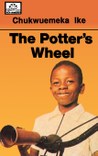
I am reading Chukwuemeka Ike’s The Potter’s Wheel again. Ike is one of Africa’s most unsung writers. Hear him describing a nine-year old spell a jawbreaker: “Obu spelt his name slowly and correctly. The teacher was satisfied. ‘Now, we shall see.’ He switched over to English. ‘Spell me em – em – tintinnabulation.’ The whole class shouted as the jaw breaker rolled out of the teacher’s mouth like bombs from the hatch of a bomber. No one in the class had heard a word so bombastic before. Obu rolled his big head from one side to the other and accepted the challenge. ‘We shall see’ was at the blackboard with a piece of chalk waiting to write the letters down as Obu spelt them. ‘T…i…n…’ The teacher wrote the letters down. ‘t …i… n … n …’ Obu bit his lips, held his chin with his left hand, looked at the seven letters on the board and saw the rest of the word dearly in his mind’s eye: ‘a…b…u…1…a… t… i…o…n’ The teacher dropped the chalk without writing the last letter on the board, and rushed to shake the small hand of his new-found genius. ‘Wonderful Terrifious! Marvellous! We shall see this year.’ Obu was the kind of boy every teacher wanted in his class – young, full of brain rather than brawn, the type who was destined to enter Government College, Umuahia if it reopened after the war.” Read what you enjoy. Toss the rest. Life is short.

The poet lives in us…

As someone who thoroughly enjoys reading Nigerian poetry, let me just observe that several of our new poets are timid holdovers from the Soyinka-Okigbo era; that era that Chinweizu famously derided as unreadable and obscurantist. Such an uncritical adherence to that era ignores the fact that even as oblique as their works were, Wole Soyinka and Christopher Okigbo were truly relevant to the times in at least one sense. They spoke in decipherable code to their fellow intellectuals (some of them in uniform) and the intended audience listened closely. Soyinka has many seasons of incarceration to show for the effectiveness of his poetic rage. Okigbo died carrying his message.

An uncritical adherence to a Eurocentric approach has the unintended consequence of isolating our best voices, and assigning their songs to a pantheon of obscure mediocrity. On behalf of our long-suffering people, I would like to urge a return of voices to the true songs of our people. Africa cannot afford the consignment of her griots to the barracks of the unreadable. How does the poet become truly relevant to the yearnings and anxieties of our people?

Soyinka, Gabriel Okara, Okigbo, these poets spoke to the oppressors in the language they understood. Our new oppressors do not understand the complex nuance of the type of poetry that many of our poets seem to favor, that pass the smell test in the West. And if therefore they do not read our poetry, when will they hear the clanging of the chains around our people’s necks? Which begs the question again: What are our poets living for today? It is about seizing opportunities. Our lands lie devastated, enduring rape upon rape. Our poets stare stunned, in disbelief and in shame, because, this time, their voices have been drowned in shallow pools of self-absorption. Word to the poet: turn your poems into songs of freedom, and let your songs morph into weapons of war. We are at war, what are you doing stringing together incoherent sentences?

The poet lives, breathes in all of us. And as Soyinka would probably say it, the poet dies in all who keep silent in the face of tyranny. Let us honestly divine the difference between poetry and unadulterated drivel. The consumer is the ultimate arbiter of what good poetry is and what is painful to the eyes. But I miss the haunting lyricism and imagery of poets like Okogbule Wonodi. Hear him sing to me: “But we have poured more wine/than the gods can drink/more than the soil can drink/and have become outcasts/dispersing the fishes/for which the baskets are laid/and the fisherman did not like us.” [Okogbule Wonodi, Icheke: IV]

Is Wonodi a bad poet? I would never know. I hope that there are many more bad poets where he came from. I come from a land of simple people who hide deep meanings inside simple words. One has to listen carefully to my people to get the insult or the accolade. I look for those kinds of poems to enjoy. Freed from the stifling confines of classrooms, I have taught myself to only pay for that which my heart seeks. If a poem turns out to be what the acerbic reviewer Randall Jarrell refers to as giving “the impression of having been written on a typewriter by a typewriter,” I will simply move on quietly to a more worthy pursuit. Our poetry is not dead; it just needs packaging.

Thriving societies of thinkers and doers look at their world and they see visions of possibilities and they say, why not? We have inherited a culture that celebrates customs as sacrosanct, and the past poses as the present tense. The great societies take their best thinkers and exhort them to think, no, dream of a better world, and worry about the constraints later. Every day, we lose our tenuous grip on our continent; I think we are going to drown in the syrupy fluid of Western customs and traditions.

In the beginning there were walls. And in the beginning walls defined every being and everything. The Berlin Wall is no more and poets lament the coming of the new dispensation. Except that the new dispensation is not new; it is here. Books are dying, poetry as we know it is limping on life support and prose is hawking her wares in obscure literary journals like a junkie in need of a fix.  But the world lives, life goes on and ideas continue to rock our foundations. In the seeming irrelevance of the written word, the poet lives. Poet, do not cripple your voice with silly little sentences that make sense only to the terminally drunk. I say, speak up, don’t stutter. Straighten up and lift our people’s dreams on the strong backs of your strong voices, and carry them through to the deaf myrmidons of darkness who live beyond the valley of darkness, past the hills of decadence. And sing it; sing it for a people long used to the silence of her priests. The poet lives. The poet lives in all of us.

Not in the Name of their God

The new evangelical Christianity is a pernicious force in the West dumbing down the populace in degrees every Sunday. The lack of spirituality here is heart breaking; it is like watching malnourished people. It is a mystery how people can subject themselves to such psychological abuse. People are addicted to worshiping a narcissist, they will do nothing else. I visit homes and there are absolutely no books in there other than the bible and vacuous tracts and of course the torrents of envelopes that come from thieving pastors exhorting the abused faithful to tithe, tithe, tithe or go to hell.

The real tragedy is that this dysfunction is being imported to Nigeria along with used cars and toothpicks. The West can probably afford this shallowness but we see the effect on a nation like Nigeria. Why are we mimic-people? The new church of dollars and euro has been part and parcel of the rape and plunder of Nigeria. Must we live like this? It comes down again to a rank failure of leadership. Our intellectual and political leaders have failed to manage the change that is necessary to move our nation forward.

The new Christianity has flourished like a plague under “democracy.”  What Christianity has done to black Africa is worse than the combination of AIDS and the worst wars. What kind of God will allow adults to brand children as witches and then maim and murder them? As we speak, there is genocide going on in Akwa Ibom orchestrated by the some adherents of the new Christianity, against children. I say, let’s sweep them off our land. And then maybe our children will smile again.

It breaks my heart to think that Nigerian pastors are doing this to our people. I say, get your heads and hearts out of those temples of doom. Build your own gods in your own likeness. Mimicry is killing our race.

I am deeply wary of organized religion, because, using Christianity as an example, it has been an instrument of subjugation and state-sanctioned terrorism. The so-called holy books are similar in one aspect – they are great works of fiction crafted by insecure men to subjugate and keep under control women, children and those that were born different from them (gays and lesbians). The bible actively endorses slavery and bigotry against homosexuals.

In the name of their God and bible in hand, they bound our ancestors with chains and threw them in the holds of massive ships to be slaves. Whenever I think of what it would have meant to cross the seas under those conditions, I want to find someone and exact my revenge. The expansion of Western civilization and the creation of mimic-fiefdoms (Nigeria, Haiti, Dubai, etc) have been built on the backs of the conquered. Let’s be frank, the yardstick today is the Eurocentric and we are the other. And what is this nonsense parroted by Dinesh D’Souza and others that Christianity brought Africa the great benefits of civilization? At what price? Did our civilization not have poets, musicians, art pieces, etc, etc, before the coming of the white man and his bible? Did they not loot, bible in hand, our people and artifacts? And what has happened to our people who are now told they must know Jesus before they enter a fairy tale? Is my grandfather going to hell because he was unfortunate to die before Jesus pamphlets came to our village? What has been the unintended consequence of this conquest?  We have lost everything and all we do is mimic the conqueror. The loss of a people’s language is the loss of self. Everything gets lost in the translation. They don’t eat fish eggs, they eat caviar, and they say my people eat termites. There is no word for termites in my dying language, and we don’t eat termites, we eat irikhun.

The movement of civilization has been at the expense of people of color. We have been hunted and haunted by the demons that inhabit their narcissistic God.  There is no excuse for what Christianity and other alien religions have done to Black Africa, none. When Dinesh D’Souza says that slavery and colonialism were the transmission belts that brought civilization to Africa and Asia, I shake my head.

In Nigeria, the new Christianity is the new alcoholism ravaging the already dispossessed daily. Watch this video and reflect upon the caricature nation that our people have created. Deeply upsetting. And deep. My initial thought is that thieving pastors have rushed whoosh into a yawning vacuum that was created by generations of failed leaders. These new thieves are now raking in millions from their own self-serving failure to lead. We are muttering to ourselves and our people are chanting themselves to lunacy and irrelevance.  In today’s Nigeria, the Christian God is a loud judgmental drama queen keeping the “unfaithful” up at night with unctuous tuneless songs. The weather is warming up here in America and thieving Nigerian pastors with their jheri curls and fake American accents will soon be jetting down here to buy designer crap with money stolen from the doubly dispossessed. Why anyone would tithe ten percent of money they do not have so that these pastors may live in sinful opulence is beyond me. What manner of God will allow this pillage? They are all thieves and I hope they all end up in heaven praising their drama queen. I wouldn’t want them in hell with me and Fela.

Chimamanda Ngozi Adichie: These things around our necks

First published July 26, 2009 in Next Newspapers. Reproduced here for archival purposes only.

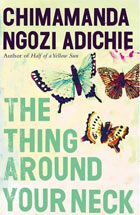
Chimamanda Ngozi Adichie’s latest work, The Thing Around Your Neck is a mostly delectable feast of twelve short stories. This is a good book, I heartily recommend it. Adichie has a great gift: she is the nettlesome sibling from hell, sitting there demurely and ever so sweetly, painstakingly pointing out all the pimples on your beautiful face. Subversion lurks every where in Adichie’s stories. The resentments, the rage, the anger, smooth like refined sugar bleed gleefully out of Adichie’s stories and we are all sweetly diminished. When the stories are good, they are like elegant buses, gently letting you off at the curb of Wonder and easing back into traffic carrying their mysterious burdens to somewhere. The reader is left behind wondering about these things around the neck.

Maybe I am suffering from Adichie overdose, but Adichie is becoming fairly predictable to me. I can now recognize her stories even in the dark. The thing wrapped tightly within Adichie starts slowly at the beginning of each story and rises with quiet, oh so quiet indignation and gently retches all over everyone. What do I think of the stories? The title story The Thing Around Your Neck is formulaic and improbable in parts. But it is okay, it is still a good story. The story The Arrangers of Marriage is about a woman joining the husband (a medical doctor) in America in an arranged marriage. I had previously read it somewhere. I enjoyed it again especially when I came to my favorite lines: “My husband woke me up by settling his heavy body on top of mine. His chest flattened my breasts.” After two readings, it is still a funny story. However, The Arrangers of Marriage risks being stereotypical and improbable. But it is the truth. The Shivering is an intimate dialogue with heartache and suffering in the shape of two gentle souls talking through their losses ease the reader into the mysteries of sexuality and religion. A couple of stories break new ground on gay and lesbian issues in Nigeria. Adichie’s stories remind us that we are still dipping our squeamish toes in the sum-pool of our sexuality.  Some of the stories in this book do come across as dated, especially the ones about immigrant life in America. In America no one gawks at my nappy hair anymore, few people ask me where I learned to speak English, I definitely do not remember anyone asking me lately if I had ever seen a car before I came to America. It is a good thing; America is browning and now we are the ones asking the silly questions.

Adichie is becoming afflicted with a keen sensitivity that she wears loudly on the skin. It is a double edged sword. In the story Jumping Monkey Hill about an encounter with a patronizing and condescending white professor, there is this aching over-awareness of the self and it unnecessarily politicizes Adichie’s stories. There is the over-analysis of people and their motives. Injustice sprays a mist on the writer’s skin, making the writer hyper-sensitive. Sometimes things happen. There are assholes in every culture. Adichie’s stories are populated by mostly male Nigerian jerks. Which begs the question: How much of our intolerance for our own assholes is really self-loathing? Self loathing is fast becoming an African obsession. Our lives are carefully and painstakingly measured against a lily-white otherness. We are always falling short and the neediness fuels our neurosis. The danger of this compilation of stories – is that it comes off as a narrow look at the lives of complex people. It may be the truth; Adichie may have drawn hasty conclusions. How much of this is Adichie’s fault? We will never know; exaggeration is a useful tool in storytelling. And Adichie wields this tool expertly.

 I hate to say this, but when it comes to short stories, Adichie is no Jhumpa Lahiri. Where Lahiri offers crisp freshly minted prose in every piece of her latest short story collection Unaccustomed Earth, Adichie is uneven, delivering stories that range from the stodgy (The American Embassy) to the truly inspiring (The Headstrong Historian). What emphasizes the unevenness of Adichie’s stories is that the book is actually a compilation of several past works, an archival of sorts. All in all, This Thing Around Your Neck is really about our shared injustice colluding to distort our history. This book is a humanized narrative that is deeply affective – for the most part. Enjoy the book; it is life staring at you.

What Dele Olojede owes us next

The respected journalist Olatunji Dare, former chair of the editorial board of Nigeria’s Guardian newspapers, writing in the Nation Newspaper recently, reflected on the promise and frustration that was the  defunct Next newspaper ( What’s next for NEXT?)  For many of us who had worked for Next, Dare’s words were bitter-sweet and caused quite a stir. His observations properly situated Next as a pioneer in 21st century Nigerian journalism:

“When it made its debut in December 2008, NEXT was only as an electronic newspaper.  A paper edition would be introduced in August 2009. Audio and video would come later.  But even as an electronic newspaper, its entry into Nigerian journalism was electrifying. The web design was clean, tidy and well-structured. Colour and space and type meshed to produce a visual delight. The site was fully navigable. The reporting was sharp… The headlines were sober; they did not scream at you nor offend your sensibilities. The writing was clean, crisp and lucid. The editorials were magisterial; thoughtfully and closely argued, they provided insight and leadership on a wide range of issues, national and foreign. Shortly after its debut, NEXT was parading some of the finest writing to have graced Nigeria’s news media in recent memory.”

Dare’s essay was a nice ode to Dele Olojede, the complicated thinker and doer who had dreamed of Next and implemented one of the most exciting runs in the history of Nigerian journalism. Olojede’s place in Nigeria’s history is assured, thanks to respected icons like Dare, history will be kind to him. Indeed Olojede was able to bring to fruition his pioneering dreams and those of quiet and largely unsung leaders like Ekundayo Ogunyemi (Naijanet)  Muhtar Bakare, Sola Osofisan, Philip Adekunle, Nnorom Azuonye and Omoyele Sowore who long ago saw the digital world as an opportunity and a bridge to bring together all our story tellers and stories in one huge digital playground.

I appreciate the kind words Dare had for many of us who were privileged to have been part of that journey that was Next. I will be forever grateful to Next and my editor Molara Wood for the opportunity to exorcise my demons and practice my craft and for the exposure to a wide reading audience well beyond my wildest imagination. In the beginning of my tenure as a columnist, Next was generous to me and gave me wide latitude to write about any and everything that suited my fancy.  My three years at Next have been the most productive in my writing life and I give Olojede and Next full credit for allowing all that to happen.

Having said all that, many of us were treated poorly as employees of Next. There were clearly management issues, many of them so egregious, in a real country, they would have landed Next’s owners in big trouble. It is easy to google and come up with evidence such as this, this and this  Dare’s article confirmed in me that for yet another Nigerian leader, the hunter’s version of history was going to whitewash the real history. It is a cultural dysfunction I suppose, one of our weaknesses as a people is to exaggerate the positives in a leader and minimize or gloss over his or her frailties. I am now convinced that the next phase in the struggle for the life and soul of our nation is to hold our intellectual and political elite accountable. They are getting away with murder literally. Without accountability, they have become self-absorbed and tone-deaf to reason.

Back to Olojede, the mystery and the power of the Internet that Olojede tapped into allowed him to harness resources everywhere and in many cases bring some young people home from Europe and America to Nigeria.  In my three years with Next, I never met Olojede, did not need to. My editor Molara Wood handled all my affairs pretty much; she went to great pains to make sure I was comfortable. However, after a few months it became apparent that there were some issues with funding. Wood wrote to me one day to say apologetically that my weekly contract amount was being reduced by management. It was unilateral; there was no offer to renegotiate my contract. I was fine and soldiered on, I really did not care that much even when the long delays in payment became indeterminable; as far as I knew they would pay up eventually. There were never any assurances from management that they were aware that we were not being paid.

After a protracted period of time, I finally contacted management by email to complain about the nonpayment and the silence and to express disappointment that no one had reached out to me to talk about the issues. I never heard from anyone. Instead, Wood informed me with concern that management had decided to stop paying columnists; I was free to continue writing but it would be without pay. To say I was appalled by such unprofessional conduct would be to understate it. By this time, Next was owing me hundreds of thousands of Naira.  At the time, It seemed to reek of arrogance and a callous disregard for the welfare of employees. When my editor left Next, I did not have the heart to continue staying there and so I left. To this day, I cannot brag about getting a single email from Olojede or Next’s management regarding my tenure or the huge sum I am owed. Olojede would not have accepted such irresponsible conduct from his employers in the United States.

I was extremely lucky; many others had taken huge financial risks to go work for Next. And suddenly they were being told unceremoniously to take a hike. I am still haunted by the terror I saw in some of those folks’ eyes when I visited in September, 2011.  What Next did to those young people is unconscionable and Dele Olojede and I know that in the West where we all studied and lived, that would have been beyond acceptable, they would have sent him to the cleaners in a court of law.

Shabby treatment aside, nothing has upset me more than the fact that Olojede has recently allowed Next’s website to shut down. There is an emerging pattern here: Olojede seems to act unilaterally and imperiously; he seems allergic to the term stakeholder or what it means to communicate an action before implementation. The shutting down of Next’s website is unconscionable and unacceptable. Over the years that Next was in existence, the website gathered several pieces of significance nationally and globally, pieces that are now connected to external websites as resources through hyperlinks. All those links are now broken thanks to Olojede’s decision to shut down the website. I shall be blunt; Dele Olojede’s decision to shut down Next’s website is irresponsible; it is not that expensive to keep a website going. More importantly, many of us who had hoped to have access to our column pieces are now struggling mostly in vain to recreate our works. We should have been given ample warning ahead to time to allow us retrieve our column pieces. This is simply unacceptable and I am happy to call Olojede on this this conduct more than any other management deficiencies of his. It is abusive, it is wrong, it is irresponsible. Mr. Olojede, I ask you to bring back the Next website by all means necessary

Olojede’s mistakes, and they are legion have only inspired the West and others to continue to lionize him. Last year he won the prestigious John P. McNulty Award  for “running a 24-hour newsroom on diesel generators.” The prize was a hefty $100,000. African exotica sells in the West. Let me observe ad nauseam that Africa’s political and intellectual elite would benefit from not being held accountable by the masses they purport to serve – and by an avuncular West too eager to give them a pass on even their most egregious acts of misconduct. The next frontier in the struggle for Africa’s emancipation is for us to turn the glare of accountability on our own leaders. It is important to share the great and the unsavory in our leaders. It holds them accountable and serves also as a guiding beacon for those who will come after them. I was not privy to the inner management workings of the newspaper but clearly money was an issue in addition to what many have analyzed as poor management. And so Next’s fate is also a commentary on what should be merely an expense in the interest of a society. I am not a fan of external interventions, but I would have applauded the West if they had helped sustain Next. Memo to the West: The cost of an unmanned drone would have kept Next alive for eternity and propelled Nigeria to a new planet in accountability.  My conclusion? Dele Olojede may be a visionary but he hurt many people and a good start would be for him to apologize to them. He should also restore the Next website as a matter of top priority And Olojede, you do not owe me any money, I have written it all off, don’t worry. Not that you are staying up worrying about it. But this you owe the world; turn on the Next website again. That would be nice.

Christopher Okigbo’s Voice

First published in Next newspapers, March 13, 2011. Reproduced for archival purposes only.

The late great Christopher Okigbo once said of his poems’ similarities to other people’s works: “It is surprising how many lines of my Limits I am not sure are mine and yet do not know whose lines they were originally. But does it matter?” I think it matters. A while back on Next, the poet Chimalum Nwankwo offered evidence that Okigbo had plagiarized some of his poems. He quoted Carl Sandberg’s poem, For You: “The peace of great doors be for you./Wait at the knobs, at the panel oblongs./Wait for the great hinges.//The peace of great churches be for you./Where the players of loft pipe organs/Practice old lovely fragments, alone//The peace of great books be for you,/Stains of pressed clover leaves on pages,/Bleach of the light of years held in leather.//The peace of great prairies be for you./Listen among windplayers in cornfields./The wind learning over its oldest music.”

He contrasted it with Okigbo’s The Passage: “O Anna at the knobs of the panel oblong,/Hear us at the crossroads at the great hinges/Where the players of loft pipe organs/Rehearse old lovely fragments, alone-//Strains of pressed orange leaves on pages/Bleach of the light of years held in leather://For we are listening in cornfields/Among the windplayers,/Listening to the wind leaning over/Its loveliest fragment….”

Nwankwo has been harshly criticized for his views, but he has a point. Many Nigerian thinkers that I greatly respect and admire point out Okigbo’s youth and observe that “derivation” of others’ works was common practice at the time. But then if someone had shown me Sandburg’s lines without attribution, I would have sworn that it was Okigbo’s voice. Which begs the question: How much of Okigbo’s voice is borrowed or “derived”? Derivation is nothing new. The late Ola Rotimi made it very clear that his play The Gods Are Not To Blame was an adaptation of the Greek mythology Oedipus Rex. Wole Soyinka has been careful to make the connections between his plays and external influences. So is Okigbo guilty of plagiarism? Yes, I agree with Nwankwo There is no attribution as far as I can tell; if there had been notes explaining this, it would be reasonable to see this as an experiment.

A poem is a spiritual journey undertaken by the poet-priest, a deeply personal journey that finds voice in poetry. If I was to take a renowned writer’s work and incorporate it into mine, I would be required by traditional conventions to cite the source. If I was to come up with a copy of it, using most of the language, without attribution, it is possible that it would speak to a reader as the original spoke to me. If the reader was to find out that indeed, this new story used language and themes virtually lifted (in Okigbo’s case, about 80 percent) from the original, the reader would feel a certain sense of disappointment. There would also be questions as to whether indeed the writer undertook that journey personally. There is a software out there that determines how much of a student’s work is similar to work out there. Okigbo’s piece would have been unacceptable today were it to have been submitted as original work, no ifs, no buts about it. More importantly, it raises reasonable questions in my mind about how much of the spiritual journeys in his works were his journeys. I think that is an important question.

Donatus Nwoga wrote an excellent paper on the subject titled Plagiarism and Authentic Creativity in West Africa. The paper showcases several other instances of plagiarism by Okigbo. Take this piece by Miguel Hernandez, the Spanish author of “El amor ascendia entre nosotros“: “ Love ascended between us like the/moon between two palms/that have never embraced;/Love passed like a moon between/us and ate our solitary bodies/ And we are two ghosts who seek one another/And meet afar off.

Here is Okigbo’s “Lament of the Lavender Mist”: “The moon has ascended between us—/Between two pines/That bow to each other;/Love with the moon has ascended,/Has fed on our solitary stem;/And we are now shadows/That cling to each other/But kiss the air only.

Here are lines from Alberto Quintero Alvarez: “What departs leaves on the shore/Gazing seawards at the star foreseen;/What arrives announces its farewell/Before a coming-and going that goes on for ever.

Here is Okigbo: “An old star departs, leaves us here on the shore/Gazing heavenward for a new star approaching;/The new star appears, foreshadows its going/Before a going and coming that goes on forever…”

These pieces and several other instances in Nwoga’s excellent paper offer evidence of plagiarism; if it is “derivation”, it is actually poorly done, with little attempt at creativity. I believe my friends who assert that these forms of imitation were common practice at the time but it would be impossible to defend this conduct today. I am in awe of Okigbo and I doubt that the day will come when someone would convince me that he was anything less than a genius. But let’s call what he did by the real name: Plagiarism. And it matters, because it was wrong.

Guest Blog Post: Unoma Azuah Reviews Naija Stories Anthology

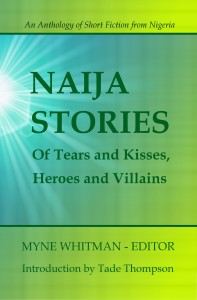
Colourful  Threads in the Nigerian Literary Fabric: A Review of Naija Stories by Unoma Azuah.

Naija Stories makes a rewarding read because a  sizable number of the stories in the anthology beam beyond the imperfections of the weaker stories. This collection adds a unique design to the tapestry that makes up the layout of the Nigerian literary fabric. The stories renew our plush tradition of yarning and knitting of anecdotes.  The anthology is divided into four sections with the subtitles: Tears, Kisses, Heroes, and Villains. These subtitles pretty much represent the contents of the sections.

Stories that beam with the brilliance of precision, include, “Blame it on a Yellow Dress,” “Showdown at Rowe Park,” and “One Sunday Morning in Atlanta,” among others.  These stories glitter with vigour. “Blame it on the Yellow Dress,” explores incest. It reveals how a father sexually abuses his young daughter. The writer makes the reader empathize with the main character, and effectively rouses our anger and succeeds at evoking our sense of pathos. “Showdown at Rowe Park,” chronicles the conflicts of secondary school students. It is quite a simple story, rich with humour with a well-developed suspense.  Though the language is near banal, the writer is able to capture the mood and setting in a way that effectively enhances the theme of the story.  He is further able to make such a familiar story, especially to Nigerians that can identify with life in secondary school, vivid and definitive.

 “One Sunday Morning in Atlanta,” is another engaging story in the collection. Though some actions in the story are called to question when it comes to verisimilitude. For instance, the strong influence the protagonist’s mother has on him, seems rather  far-fetched  and the childish altercation  between the protagonist and his sister in the church makes one wonder if they are adults or teenagers.  Nevertheless,   the gradual build-up of the story makes it more convincing. The paradox in the fact that the protagonist, while in a club, dancing and socializing, could not get the attention of a girl he wants, but was able to get her into his house through the guise of evangelism adds a plus to the account because it makes the story emblematically charged.  Additionally, the writer’s ability to lay bare the contrasts of Nigerian idiosyncrasy and  American exclusive traits heightens his effectual use of wit.

The very first story in the collection, however, sends discouraging signals to the reader. The premise of “A Glimpse in the Mirror,” falls flat because its theme of death is redundant and melodramatic.  Qualifying it within the context of a meal or a broth makes it taste like an over-salted soup. The central character, a coffin maker, loses all the father figures in his life and ends up losing his life as well.  The sardonicism in the fact that one of his customers wants a plane-coffin for his late mother who had always wanted to enter a plane, but never did, almost elevates the story.  But this boost fizzles out because that is all we see of this secondary character in the story.  There is no employment of variety in the story’s mode of delivery—no humour, no suspense and no re-channeled digression. Stories with the three E’s are always a pleasure to encounter: entertainment, education and expansion of one’s scope of life.  As Stephen Minot puts it, “When you turn from literary non-fiction to fiction you cut the tether with the truth.”

My hope for the three E’s dimmed as I read from the first section towards the last section. Some of the contributors to the anthology are amateur writers who have little or no idea of what a short story should be.  Hence, brevity among other flaws becomes a challenge. For instance, the story, “Can I Please Kill You,” is a mere didactic story about abortion. The story does not achieve much except attempt to sell a moral. The emphasis is on the fact that the protagonist decides not to go through with an abortion, while a nurse who is symbolic of ethical precursor praises the character for her wise decision. There is nothing crisp in the story’s structure, theme or style. Another story that does not succeed at its rendition is “Seeing off Kisses.” It drifts from one unfocused point to another. The inconsistency in characterization does not help.

Though some of the resolutions of the stories are loose, they nonetheless, bear conclusions  that fall within the standards of well tied ends. That is, some wind-up with optimistic outlook to life, while others culminate quite unconventionally, which in itself is positive because most unconventional or disturbing resolutions force us to re-examine some of the stubborn beliefs or expectations we hold.   Naija stories has done a successful work of showcasing new and emerging voices in Nigerian literature.

About the author:

 Unoma Nguemo Azuah teaches Composition and Creative Writing at Lane College, Jackson, Tennessee. She is an MFA graduate of Virginia Commonwealth University, Richmond, Virginia. She also has an MA in English from Cleveland State University, Cleveland, Ohio. Her undergraduate degree in English is from the University of Nigeria, Nsukka.  As an undergraduate at Nsukka, she edited the English department literary journal—The Muse and received the awards of the best Creative Writing student for two consecutives years: 1992 and 1993. Her other awards include the Hellman/Hammett award, the Urban Spectrum award, the Leonard Trawick award and the Association of Nigerian Authors/NDDC Flora Nwapa award for her debut novel Sky-high Flames.