The 2011 Caine Prize: How Not to Write About Africa

Reprinted for archival purposes; First published in NEXT Newspaper in May 2011

The Caine Prize for African Writing has been great for African literature by showcasing some truly good works by African writers. The good news is that the Caine Prize is here to stay. The bad news is that someone is going to win the Caine Prize this year. This is a shame; having read the stories on the short-list I conclude that a successful African writer must be clinically depressed, chronicling in excruciating detail, every open sore of Africa, apologies to Wole Soyinka. The creation of a Prize for “African writing” may have created the unintended effect of breeding writers willing to stereotype Africa for glory.

The mostly lazy, predictable stories that made the 2011 shortlist celebrate orthodoxy and mediocrity. They are a riot of exhausted clichés even as ancient conflicts and anxieties fade into the past tense: Huts, moons, rapes, wars, and poverty. The monotony of misery simply overwhelms the reader. Fiammetta Rocco, the Economist’s literary editor who chaired last year’s judges, crows that the stories are “uniquely powerful.”  The stories are uniquely wretched. The chair of this year’s judges Hisham Matar declares presumptuously that the stories “represent a portrait of today’s African short story: its wit and intelligence, its concerns and preoccupations.” Really? Is this the sum total of our experience, this humorless tasteless canvas of shiftless Stepin Fetchit suffering?

Five stories made the shortlist. Zimbabwe’s NoViolet Bulawayo has a fly-ridden piece, Hitting Budapest, about a roaming band of urchins, one of them impregnated by her grandfather – at age ten. Uganda’s Beatrice Lamwaka features, Butterfly Dreams, a pathetic story about a child soldier. Lamwaka apologetically documents Africans’ otherness by italicizing and explaining every Ugandan word – layibi, tipu, opobo, malakwang, etc. Enough said. South Africa’s Tim Keegan’s What Molly Knew, is a plodding tale about an interracial marriage gone awry filled with gunshots and ingredients that make for an African howler. Botswana’s Lauri Kubuitsile fires a volley of wretchedness in In the Spirit of McPhineas Lata, portraying the men of Botswana as drunken simpletons. South Africa’s David Medalie almost rescues the prize from the murk with The Mistress’s Dog, an affecting tale involving a well-fed dog, (what a concept, Africa without kwashiorkor!).

Medalie may not get the Caine Prize. His story is not African enough. No rapists, no murderers, no poverty. Why, there is a cell phone in the story. Shame on Medalie. Besides Medalie, Bulawayo would be my pick for the prize. She sure can write, unfortunately her muse insists on sniffing around Africa’s sewers. The tragedy is that these are good writers showcasing good prose and great dialogue.  But to the extent that literature documents the lived life, they are stuck in the fog of stereotypes. The stories are so ancient, it is a wonder they did not feature smoke signals and slide rules. Except for Medalie’s The Mistress’s Dog, there is not a single mention of the Internet and cell phones, not once. Outside of the destructive force of organized religion, wars and diseases, the Internet and cell phone technology are the most powerful forces in the ongoing restructuring of African communities.

In 2005, the Kenyan writer, Binyavanga Wainaina, himself a Caine Prize winner wrote the now classic satirical essay How to Write About Africa in which he caustically smirked thus: “Among your characters you must always include The Starving African, who wanders the refugee camp nearly naked, and waits for the benevolence of the West. Her children have flies on their eyelids and pot bellies, and her breasts are flat and empty. She must look utterly helpless. She can have no past, no history; such diversions ruin the dramatic moment.” It is as if these writers read Wainaina and misunderstood his sarcasm and rage as the bible on how to write. Wainaina, tell them it ain’t so,

The sponsors of the Caine Prize may be looking in the wrong places. We are witnessing a renaissance in African literature; it breathes joyfully in those spaces where African writers are not self-consciously burdened by the need to tell a certain story. It is interesting, the prize’s rules do not require that you write only about misery and huts and crap, it only requires that you be a writer of African descent. With the exception of Medalie, all the writers are united by a narrowness of range, and shallowness of depth.

The Caine Prize has become a truly prestigious prize, which is a good thing. The problem now is that many writers are skewing their written perspectives to fit what they imagine will sell to the West and the judges of the Caine Prize. They are viewing Africa through a very narrow prism, all in a bid to win the Caine Prize, The sponsors of the Caine Prize should organize a retreat and invite African thinkers of history and literature to vision a prize that encourages writers of African descent to write, yes, think and write out of the box of orthodoxy. Keep the Caine Prize, lose the contrived stories. Africa has suffered enough as it is.

Hurrah for Kony 2012 and Africa’s Invisible Children

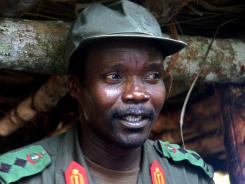
The name is Ikhide. I am an African. This African rises to applaud Jason Russell the filmmaker, and  Invisible Children, the geniuses behind the epic video Kony 2012, a riveting documentary that has now been watched by over 50 million human beings. Kony 2012 is a ringing indictment of a silent horror, of the murderous acts of a barbarian and child murderer Joseph Kony and his sick Lord’s Resistance Army, operating in Uganda and neighboring states. Please stop whatever you are doing if you care about the fate of children in this world and watch this 30-minute film. And when you are done, pay tithe to this wonderful organization that has damned the consequences to tell the truth about the shame that is happening to children in Africa. The world is silent as an indifferent political and intellectual elite sips alien wine in stolen mansions. I say to you Jason Russell, do not stop what you are doing, you are an angel.  Ignore the nattering nabobs of negativity. They are experts at babbling and doing nothing to save Africa’s children.

Let me restate this to our tone deaf Western liberals and their co-opted African intellectuals: Joseph Kony’s deadly acts are being wreaked on beautiful children whose only crime is to be born in the war that Africa has become, thanks to thieving rulers and narcissistic African intellectuals. Watch the video, it is masterful. If it does not bring you to tears, nothing other than onions will. As a brilliant side benefit, it showcases the rank incompetence and barbaric greed of the African intellectual and political elite. Let me restate once more:  I am an African, and I salute Jason Russell and Invisible Children for producing KONY 2012, and for shining a bright light on one of the open sores of Africa (apologies to the venerable Wole Soyinka). I said it, I mean every word, sue me please.

I have been reading on the Internet what appears to be some lame grumbling about the intentions of Russell and  Invisible Children. There has been some high-minded whining about Invisible Children’s methods. You can read a sample of such pointless hand-wringing and muttering in this piece in the UK Guardian, Kony 2012 campaign: Oprah and bracelets won’t solve problem by Michael Wilkerson. The patronizing mumbling of condescending white liberals aside, I am not surprised by the loud noise making by many of my fellow African intellectuals. This  is what we do best; coolly bite the fingers that feed us. It bears repeating: This über awesome video, Kony 2012, will forever be the visible face of a viral social media campaign that has raised awareness about a war against children and humanity that has been going on now for about 25 years. I say again to Russell and Invisible Children, please ignore all distractions and continue the great work that you are doing on behalf of the beautiful children of Africa. I will make bold to say that there is hardly any African intellectual on earth that has the moral right to point accusing fingers at the motives of Invisible Children. To Russell et al, I raise my fists to your industry; may you profit mightily for every child that you save.

 Hurrah for Invisible Children. A snake is dead and people are wondering who killed it. Who cares? Is the snake not dead? Western liberals and African intellectuals are baying at the moon, their favorite pastime. The mess that is today’s Black Africa has been engineered by her political and intellectual elite of which I am a card-carrying member. We are a self-serving lot parading the streets of Europe and America, sipping lattes and the best wines of the world and yelling at the white man for doing for us, what we are too lazy and selfish to do for ourselves. Let me restate this: There is virtually no African intellectual of stature that is left in Africa; we and our cute children are safely ensconced in the laps of the West from where we write beautiful but insincere twaddle about the West’s obsession with the single story.

Well, the latest single story to come out of Black Africa is the mini holocaust being perpetuated on children and women by Joseph Kony, a lunatic barbarian whose Lord’s Liberation Army has been terrorizing human beings (yes human beings) in East Africa for a quarter of a century. What started out as the lunatic malarial rant of a demented woman soon turned into genocide against children and women. As many as 30,000 children have been conscripted, maimed hurt and killed according to several estimates (we will never know since Africa’s political and intellectual elite tend to loot funds that are meant for niceties like education for children and real data).

Enter Invisible Children a non-profit that is visionary and yes, controversial (who isn’t?). They come up with a brilliant concept. Make this barbaric criminal Joseph Kony famous so that he qualifies for world attention and accountability. Plaster the fool’s face all over the world, make this deadly buffoon the face of a modern day Hitler and hold him accountable. They enlist opinion and political leaders all over the world. The video clip is a hit; by the time you have read this, about 60 million enraged people would have watched it. Please, please, please, be one of this new emerging citizenry by watching it. It is only 30 minutes. You will not be the same again. It is one of the best produced videos on human suffering that I have ever watched. I broke down in tears when a child that could have been mine broke down crying begging to die so he could go be with his brother in heaven, a child who had been slaughtered by these animals. What is misleading about that?

 In my Nigeria, Christians routinely murder, yes, murder children for being witches.  You do not hear powerful writers complaining about that. Let a white person say a word; out comes their powerful pen in defense of Africa.  This is not the first time we have risen in self-righteous indignation.  A few years back, BBC produced a harrowing documentary Welcome to Lagos, about the lives of Nigerians in Makoko, the slum from hell. It documented the shame of Nigeria, of women, children and men, living and loving under conditions that would make pigs attempt a jailbreak. This spectacular work was met with derision by some of Africa’s most powerful intellectuals, most notably Wole Soyinka and Teju Cole.  I am tired of this, I really am. White man, help yourself, knock yourself out, shine a light on the plight of the children of Africa. They are children too. They deserve a wholesome childhood – like my children’s. Nigeria produces geniuses like Soyinka and Cole and unspoken horrors like the witch children of Akwa Ibom. What is happening to thousands of African children is a silent genocide and we should all be ashamed of ourselves for babbling while children burn. Literally.

I ask: Where is the outrage? There is outrage alright – strangely directed at Invisible Children  and  those who have dared to do something even as Africa’s intellectuals mutter in their lattes at Starbucks and their friends the politicians loot everything in sight like ravenous simians.  To put things in perspective, a former governor of one of Nigeria’s impoverished states, James Onanefe Ibori has just been convicted in Britain for stealing $250 million of his state’s money. $250 million! What did Ikhide and his fellow intellectuals do? Nothing! Absolutely nothing. We mumbled, said the usual nonsense and went back to drinking Argentinian wine. Think of how much that money would have done for the children of that criminal’s state. By the way, Nigeria’s anti-corruption outfit had previously declared Ibori more innocent than Mother Teresa. If you want to see what Nigerian intellectuals and politicians have done to public education in Nigeria, please visit one of their “universities” and ask a random student to write an essay. Visit one of their primary schools; in the West such a building would not qualify as a piggery. What the Nigerian elite steal from each child annually is what the West genuinely spends on each child’s education. Let us stop fooling ourselves. We need help and I welcome those who are trying to help. And to those carping about the methods of Invisible Children, I remind you, we say to the deity, Orisa, if you cannot help us, do not hurt us, get out of the way.

For the avoidance of doubt, Joseph Kony is more than a thug, he is a mass murderer who must be found and destroyed. Uganda’s  Museveni regime (yes, it is a regime pretending to be a democracy) crows that Kony is not a problem in Uganda anymore because he had been driven into another country. We are not talking about Mars, we are talking about another hapless African country being ruined by yet another incompetent buffoon. If the man has 300 children in his custody, that is 300 children too many. That should be unacceptable to every one of us. Drop your intellectual pretensions, help a child today.

The hypocrisy around this issue is galling. The columnist Max Fisher, writing the piece The Soft Bigotry of Kony 2012  cannot quite make up his mind about the video and the intentions of Invisible Village. He makes assertions that reek of Western liberal arrogance and condescension. Hear him: “The viral video campaign reinforces a dangerous, centuries-old idea that Africans are helpless and that idealistic Westerners must save them.” Dear Mr. Fisher, I have news for you, Africans are helpless many thanks to their irresponsible, thieving leaders, many of them PhDs from Ivy League schools. Africans will take help from Wal-Mart, Oprah, anybody with a wallet and/or a conscience. Because no one else is coming to their aid in the war on them by black intellectuals and politicians.  Interestingly Teju Cole and Fisher engaged in some sort of Twitter banter that is fascinating only in the sense that no one is listening to the other. Cole’s tweets collate into whiny poetry, beautiful but not saying more than we already know about white privilege:

“Feverish worry over that awful African warlord. But close to 1.5 million Iraqis died from an American war of choice. Worry about that. From Sachs to Kristof to Invisible Children to TED, the fastest growth industry in the US is the White Savior Industrial Complex. This world exists simply to satisfy the needs—including, importantly, the sentimental needs—of white people and Oprah. The white savior supports brutal policies in the morning, founds charities in the afternoon, and receives awards in the evening. The White Savior Industrial Complex is not about justice. It is about having a big emotional experience that validates privilege. I deeply respect American sentimentality, the way one respects a wounded hippo. You must keep an eye on it, for you know it is deadly.”

Teju Cole is spot on. The West is a big bowl of hypocrisy. So what? Invisible Children can’t win; if they had put a cute picture of my cute son asking the question that the cute white kid asked, they would have been accused of being patronizing. If you don’t like their video, go make your own. I am not holding my breath. Let Invisible Children tell our story the only way they know how, warts and all! Lord knows, Ikhide and his club of fellow intellectuals only lift their arms to grab a Malbec.

Yes, I said it. With democracy as a pretense black leaders are getting away with murder. Literally.  White liberals are guilty of double standards – white leaders go to jail for misusing a credit card, African rulers, certified wife beaters, murderers and kleptomaniacs are paraded on the world stage as statesmen. If they were white they would be paraded in front of the world as jail birds. It is time to stop the silliness. Joseph Kony must be stopped, dead or alive, preferably dead. I have one suggestion to make. Invisible Children should put a $10,000 ransom on Joseph Kony’s head,  anything more than that is too much, his mother will deliver him any way you want, dead, alive, sautéed, drawn and quartered. We are like that, we don’t ask for much to throw one of our own under the bus. I said it, sue me.

As an aside, it is interesting that folks are now rifling through the financial statements of Invisible Children, calculating how much per dollar they actually spent on a “helpless African child.” Who cares? Those that have not held the thousands of NGOs in Black Africa and Haiti accountable are now baying at the moon. I say leave Invisible Children alone.  Every dollar that they spend on a child in Africa is a dollar truly spent that will not be spent by any African NGO that I know of.

Back to the buffoon Joseph Kony: The children of Africa need help desperately; those that have been hurt could use the closure from bringing this man to justice dead or alive and liberals are engaged in hand-wringing psychobabble. Not so for Western liberals and their African intellectual sidekicks. For them ideology trumps common sense. President Bush the Republican had a well-funded, thoughtful policy toward Africa (President Barack Hussein Obama’s has been largely incoherent by the way, he is too focused on re-election and so he is ashamed of Africa). As a result, we saw the dramatic results in Aids abatement (the Lazarus effect happened mainly because Bush flooded the region with funding). You don’t hear liberals giving him credit for anything other than his disastrous foray into wars. On the other hand, President Clinton dismissed the Rwandan holocaust because according to him Rwanda is of no strategic significance to the United States. For such silliness, he is revered in pantheons of the liberal left. Sometimes you want to holler.

We may quibble with the methods of Invisible Children but they have been hugely successful. Thanks to their energy, passion, intellect and doggedness, 50 million people have engaged in a Civics lesson about a part of Africa that would have been neglected. They have also fostered a useful debate about the nature of giving etc. Russell and Invisible Children have shown us the face of the new world and it is populated by citizens without walls. They have forced President Obama to commit and deploy troops to East and Central Africa to help an incompetent regime root out a thug and a mass murderer. What is wrong with that?

Thanks to Russell and Invisible Children, the world has an opportunity to give back to Africans the humanity that is being denied them daily by narcissists who call themselves rulers and thinkers. I say lustily, a pox on all their houses. And as for avuncular patronizing Western liberals, maybe this video will begin to cure them of their condescending avuncular double standards. Now I have to run to go buy me a Kony 2012 Action kit. Please buy one. It is only $30. I am an African. I approve this message.

Related Reads:

Max Fisher: The Soft Bigotry of Kony 2012

Max Fisher: The Bizarre and Horrifying Story of the Lord’s Resistance Army

The Kony 2012 video

Max Fisher: Why Is Obama Sending Troops Against the Lord’s Resistance Army?

Elizabeth Flock: Invisible Children responds to criticism about ‘Stop Kony’ campaign

Joshua Keating Guest post: Joseph Kony is not in Uganda (and other complicated things)

Kate Cronin-Furman & Amanda Taub –  Solving War Crimes With Wristbands: The Arrogance of ‘Kony 2012’

Russ Feingold: Fighting the Lord’s Resistance Army Will Take More Than Guns

Polly Curtis: Kony 2012: what’s the real story?

Vanity Fair: Africa Bono


MUSDOKI: Literature and the distortion of history

Reprinted for archival purposes: First published December 25, 2010

The poet Ahmed Maiwada is a talented, hard working writer possessing a vision seemingly informed by a personal sense of integrity. In his poetry and prose, Maiwada, boldly experiments with life’s meaning, even as he stares controversy in the eye. He has just written a debut work of fiction titled Musdoki, published in Nigeria by an outfit called Mazariyya Books. Maiwada is the Chairman of Mazariyya Entertainment Company, which presumably owns the publishing unit. What is this book about? I am not quite sure, even though I read it back-to-back twice. Let’s just say that the main character Musa Maidoki aka Musdoki, is a good looking self-conscious lawyer from Northern Nigeria with awkward social graces who is hounded by a demonic lady bent on setting him on a destructive path.  Also, as the book tells it, Musdoki, living in the South, gets caught up in the civil unrest following the 1993 annulment of the Nigerian elections by a Northerner, General Ibrahim Badamosi Babangida. M.K.O. Abiola, a Southerner was widely believed to be the winner of the elections. Angry Southerners spill into the streets, eager to exact revenge on Northerners for the sins of Babangida. So alleges the book. This distorted interpretation of history ensures that this deeply flawed book is fascinating reading.

Musdoki reads like a typical debut novel. It seems autobiographical; like Musdoki the main character, Maiwada is a lawyer and one detects his life’s experiences between the book’s covers. It is difficult to tell if one is reading a work of fiction, or the true autobiography of the author. The book has its charms. Read it, close your eyes and you can visualise Nigerian males in heat lusting after ladies with names like Christine, ladies who wish to be re-christened Jolene after country singer Dolly Parton’s song of the same name. Weird, but charming.  This is one quirky, strange book; Maiwada loves lime and shades of green. It seems like every colour in the book is lime, or a shade of green: The story inhabits a strange space filled with malevolent aliens wearing lime and green coloured dresses. Sorcery is a recurring theme. Sometimes however, attempts at magical realism manufacture hallucinatory silliness. The book is an intriguing, if awkward sequence of malarial hallucinations; Musdoki sees apes, hawks, flying feathers etc in strange places. The reader is treated to Ben Okri-like scenes with people morphing into snakes and appearing in bathrooms.

Like Okri’s The Famished Road, Maiwada’s novel adequately captures the drama and dysfunction that is Nigeria. There is atmosphere, lots of it. Maiwada negotiates the Nigerian cities with eyes of wonder and magnificent detail. The book draws on a lot of colourful characters to portray equally colourful scenes: Nigerian bus drivers collect urine to use as hydraulic fluid for their buses; there is a dog named Junta and there is a tortoise named Tortoise; the reader learns a lot; for example, fadamas are flood plains, low-lying land; and there is a truly gripping, scary section in the book where a girl tries to drown Musdoki in the sea.

Shabby production. From a technical standpoint, however, Musdoki is a shabby production, a disjointed sequence of events featuring awkward dialogue with an inchoate plot. Maiwada’s talent for prose-poetry is not enough to save the book. This is a book featuring loosely and poorly structured narrative, hopping along on several themes, many allergic to each other. Musdoki, the main character is described as handsome and he knows it. He is also self-absorbed and narcissistic, wearing an air of megalomania. He has these awkward, stilted mannerisms. A deity-complex seems to follow him everywhere he goes and he loiters around, drenched in a smug air of self importance. muttering baffling psychobabble that fuels his self-absorption. The dialogue flows with the speed of molasses, moving along like a constipated boa constrictor. Most times the dialogue is merely baffling and one wonders where it is leading.

Musdoki is a sad commentary on the awful state of the publishing industry in Nigeria. It is really disheartening how a publishing company can take the product of a promising writer like Maiwada and simply staple together his raw manuscript with little attempt at polish and refinement. There is abundant evidence that not a single sentence was edited by someone with editing skills. The book showcases the usual issues plaguing books published in Nigeria and they collectively spell mediocrity, to put it mildly. ‘Musdoki’ suffers from an abundance of poor attention to detail, sloppy research, grammatical errors, awful prose, inappropriately used words and an atrocious grasp of Pidgin English. Even the spine loudly misspells the book’s title. The publishers have done all the wrong things that it is possible to do to a book. It is a shame because one could visualize a totally different outcome for the book in the hands of a competent publishing company.

Stereotypes and caricatures. One gets the feeling that the main purpose of Musdoki, once one gets past its editorial issues, is to goad Nigerians of Southern extraction into a foaming rage. It features unfortunate stereotypes of Southerners as caricatures. On the other hand, Northerners are clothed in the dignity of moral rectitude and are portrayed as victims in that troubled space called Nigeria. Where Southerners communicate in halting English like half-humans, Northerners happily engage others using standard English. The book is reams of bigotry and ethnocentrism casually dropped into the middle of a baffling tale. It features an analysis of the events after the unfortunate annulment of the Nigerian elections on June 12, 1993. The analysis is rife with misstatements. According to the narrative, Southerners, especially the Yoruba, enraged that the elections have been annulled by a Northern president, go hunting for Northerners to kill in revenge. There is an orgy of ethnic cleansing and Musdoki survives a near lynching: “Lagos was shut down by the riots in the streets following the annulment of the 1993 Presidential Election in Nigeria… I learnt that offices and banks had been shut down; that there were bonfires… that the Hausas were being murdered in the streets by the Yoruba who would stop a moving vehicle and demand for its occupants’ identities and then hack down any of its Hausa occupants (p86).” What are we supposed to make of this? I would say that ‘Musdoki is a work of fiction bearing weighty untruths. This is magical realism taken to an unnecessarily provocative level. As an aside, the book makes the case eloquently that Nigeria is a strange country of mimic-people invested in uncritical imitation of whites and western values. Who in the world has hot dogs and hot coffee for breakfast?

Bigotry. As poorly produced as the book is, it is an important one, because it allows the reader a peep into the seething soul of a Northerner. At some point in the book’s journey, Musdoki is in a car filled with Northerners, fleeing the South and an alleged pogrom. This is Maiwada at his best, or some would say, at his worst. The reader is taken by Musdoki’s trip home to the North away from the vengeful Yoruba. It is harrowing and moving indeed, except that this is fiction. It did not happen. The dialogue in that car houses some of the worst bigotry against Southern ethnicities that I have ever heard or read in my lifetime. In any case, someone with a good grasp of the events of 1993 should educate me: What exactly did M.K.O. Abiola the presumptive winner of the elections say against the North after the annulment that was meant to incite Southerners into war?

This book is an inelegant expression of lingering resentments by Northerners against Southerners, a book that is almost dismissive, perhaps a rousing defense and justification, of the pogrom of the sixties against the Igbo, one that is curiously silent on the genocide that was the Nigerian civil war. It also seems devoted to glorifying T.Y. Danjuma’s counter coup, that bloody response to Chukwuma Kaduna Nzeogwu’s 1966 one (p100). Hear one of the characters taunt the Yoruba. “They are indeed white hyenas. Otherwise, why have they deserted their towns and villages for their dogs and goats? See for yourself! How can white hyenas ever have the liver to declare a war, like Ojukwu did? (p99).” ‘Musdoki’ is a bipolar organism moving swiftly between narcissistic self-absorbent musings to a sweepingly false vista of Nigeria’s history, relentlessly blurring the border between truth and fantasy. It comes across as a partisan attempt to rewrite a most unfortunate portion of Nigeria’s history.

Misogyny. Musdoki is also an important peep into the state of gender relations in today’s Nigeria. If this book is accurate, the relationships are mostly unwholesome and steeped in disrespectful engagement. Strong shades of misogyny colour relationships; and women get the awful end of the stick. It is a disturbing look at how Nigerian men view women and how women (submissive and docile for the most part) respond to the abuse. This attitude is pervasive and it doesn’t seem to matter if the women are educated and accomplished. Indeed it appears to be the case that those attributes would appear to aggravate the misogyny.

Musdoki is what happens when living witnesses remain mute and a nation refuses to confront its past. Time is dulling the pain of injustice. It is the nature of injustice that Biafra seems so far away. Dozens of books have been written about this mad episode in our nation’s growth, most of them by Southerners, the latest being ‘Half of a Yellow Sun’. Adichie’s book is a work of stellar industry and near genius considering that the author was born well after the end of the war. There are perhaps some facts and conclusions in that book that need to be addressed and confronted. This should be done with respect for historical accuracy and compassion for the hundreds of thousands of lives that were lost in that unjust war.

It is true that in terms of the written word, with respect to the Nigerian civil war, the commentary has been dominated by Southern thinkers. There have been few Northern writers weighing in with their perspective. Despite the myriad flaws of Musdoki, it is an important book in that it shows that a fiery rage burns still in the hearts and minds of Northerners. There is no excuse for what happened during the pogrom and the Nigerian civil war. Today, the major characters of that era are still with us, sporting fancy titles and stealing the nation blind. They loom large on the landscape seemingly proud of the mess that they have created out of our nation space. It is said that Danjuma’s counter-coup was the North’s deadly response to what they saw as an Igbo coup led by Nzeogwu. We are living with the consequences of those dastardly actions today. Let it not be said that the writer Ahmed Maiwada is following the same dastardly dysfunctional tradition.

On Black Sisters’ Street

Reprinted for archival purposes only; first published in December 2009.

Chika Unigwe’s book, On Black Sisters’ Street chronicles the sad odyssey of an army of young women prostitutes drawn from various parts of Nigeria (and the Sudan!) who invade Europe desperate to do for themselves and their clans what waves of prostitute African governments have neglected to do for them. The ladies, Efe, Ama, Sisi, and Joyce are the main characters in a set of stories that collectively narrate epic struggles in the face of fear and despair. In this well-researched book, Sisi leads this pack of warrior-sisters on the streets of Europe determined to force down the doors of poverty and hopelessness that forced them away from home. They go out daily in search of lonely men – and wealth, the new measure of respect back home in Nigeria.

There is plenty to like in the book. It is rich with environment, populated by colorful, pleasant details that do not overwhelm the senses. It is a book that will take you a few days to read – the prose is languid, seemingly in no hurry to get to a climax. I like the way Unigwe introduces side issues into conversations and they stick with you – issues like sexism and the treatment of women as chattel in Africa. It is a neat trick, how she tucks weighty issues into throw-away sentences.

Every character in this book is driven by a deep hunger. Perhaps the monotony of yearning is the story of a Nigeria gradually turning soulless from material lust. In the process, we have learnt to hate ourselves. Energy seems reserved for mimicking the otherness that resides in the West. Unigwe’s book showcases Nigeria as a nation of people deeply invested in acquiring the trappings of an otherness that emanates from the West.

God must be exhausted and Nigerians are to blame. The book captures the ceaseless supplications for more and more and the pious request for God to annihilate our enemies that stand in the way of our more and more. God must regret the day the devil tricked her into creating the Nigerian; we are such a needy group. We see the new Christianity as the new plague sweeping across a nation of uncritical thinkers.

The absurdities of life in Nigeria are expertly captured. Lagos is filth and dust at dusk advertising the meanness of neglect: The chapter named Ama was the best. It hearkens to the beauty of Chinua Achebe’s Things Fall Apart, of what happens when language is not in the way of the story. Here, Unigwe writes with confidence and her literary muscle barrels her voice into a full-throated roar. The expert way she weaves local Igbo and onomatopoeic idioms into the English is sexy, kpom kwem.

The book offers plenty to frustrate the reader. The prose is uneven overall; as a result the book sometimes has the consistency of pulp fiction. The use of Pidgin English in this book added nothing to the book. Unigwe’s knowledge of Pidgin English seemed tentative or perhaps watered down to make it more palatable to a broader market. Pidgin English has an image problem. In the hands of Nigerian writers it undergoes an extreme makeover and acquires an inferiority complex.

 The book’s chapters are not numbered; they are repeatedly named after each “sister” or the street Zwartezusterstraat. There are about thirteen chapters named Sisi. Confusing. The chapters see-saw between multiple consciousnesses; the reader is force-fed the future up front and in the next chapter, the past walks up to the day. The reader learns of the future death of one of the characters – on the first few pages of the book.

The book is not quite convincing in its analysis of how the girls chose prostitution. It is not for lack of trying. Indeed, Unigwe is guilty of an over-analysis of the characters’ motives. She obviously interviewed a lot of prostitutes. One wonders if they held back from this sister who went to too much school.

The plight of Nigerian girls in Europe is the most visible symbol of the wanton rape of generations of youths by badly behaving Nigerian rulers. Unigwe appears however to have no stomach for conflict. Europe harbors a huge contingent of ladies from Edo State in Nigeria. There seems to have been a deliberate attempt to avoid this reality.  The chapter named Alek (Joyce) is my least favorite. It reads like an exhausted affirmative action afterthought. The character was developed as coming from Sudan, escaping the war, ending up in Nigeria and then Europe after her soldier-lover got bored with her. Darfur does not belong in this book. The chapter sits like a patronizing ode to the notion that prostitution is universal.

 On Black Sisters’ Street is a good story fiercely resisting flight because it is airborne on timid wings. This is a shame because Unigwe has the muscle to communicate proprietary feelings using Standard English. My humble advice is that Unigwe should relax and take maximum advantage of her mastery of loose limber prose and let the words fly recklessly with her imagination. That would be quite a book.


Daniel Pink on Drive, The Surprising Truth About What Motivates Us.

I just finished reading Daniel H. Pink’s book, Drive: The Surprising Truth About What Motivates Us. The point of the book may be summed up by Pink’s tweet: “Carrots & sticks are so last century. Drive says for 21st century work, we need to upgrade to autonomy, mastery & purpose.” (p 203). Drive is an easy read, thoughtful and quite engaging. Pink is fascinated by the processes, cultures, and people that power successful leading-edge organizations’ work in the 21st century, especially those in technology corridors. In Drive, he has done a fine job of researching these organizations and telling a compelling story about why they have so spectacularly changed the way we do business – and our world.

There is a helpful chapter-by-chapter summary of the book at the back (Part 3). The book’s introduction alone is worth the price of the book. Alternatively, you may wish to listen to the book’s main points in Pink’s Ted Talk here. You may also be entertained by this affecting YouTube video about the book. The book is divided into three parts; it effectively ends half-way after Part 2 and the next half, Part 3 seems devoted to fillers – sample exercises, bibliographies, a long index, extensive notes, acknowledgements, etc. Part 3 also houses Type I for Parents and Educators: Ten Ideas for Helping Our Kids, the part that would pique the interest of educators the most, perhaps be the weakest section of the book. Here Pink aligns Drive with Carol Dweck’s book, Mindset, and the reader gets the sense that the book is being aggressively marketed as a companion piece to Mindset.

Alignment with the work. Drive is the second book I have read lately on what motivates individuals, the first being Carol Dweck’s Mindset. Dweck’s views in Mindset especially with regards to praising children are being embraced by many school districts in America as this Washington Post article shows. These books are becoming part of a conversation about how best to teach children in today’s classroom as instructional and political leaders worry about academic performance. Effective teaching and great teachers were on President Obama’s mind. In his 2012 State of the Union speech: “Teachers matter. So instead of bashing them, or defending the status quo, let’s offer schools a deal. Give them the resources to keep good teachers on the job, and reward the best ones,” he said. “In return, grant schools flexibility: To teach with creativity and passion; to stop teaching to the test; and to replace teachers who just aren’t helping kids learn. That’s a bargain worth making.” Obama has also advocated increasing the drop-out age to eighteen and many jurisdictions are under pressure to adopt initiatives and bold reforms to enhance the academic performance of minority children.

Alyson Klein, writing on Edweek (January 24, 2012) Obama Wants Lower College Costs, Higher Dropout Age says this about Obama’s vision: “…Obama wants to create a new competitive program that will challenge states and districts to work with their teachers and unions to comprehensively reform the teaching profession. This new competition seems to be a twist on and an expansion of the existing Teacher Incentive Fund. It would seek to: reform colleges of education and make these schools more selective; create new career ladders for teachers to become more effective, and ensure that earnings are tied more closely to performance; and, establish more leadership roles and responsibilities for teachers in running schools. The competition would also seek to improve professional development and time for collaboration among teachers; create evaluation systems based on multiple measures, rather than just test scores; and, reshape tenure to raise the bar, protect good teachers, and promote accountability.” So, the book comes at a time when educational leaders are examining initiatives from the merely boutique to a grand vision that revamps the K-12 paradigm in favor of cradle-14 instruction.

Understanding the inner person. The book’s central point is that human beings are divided into two types, Type X, motivated by extrinsic rewards (pay raises, etc.) and Type I, motivated by intrinsic rewards that are innate and not easily quantifiable. For example, Wikipedia is sustained by an army of unpaid volunteers who toil daily to create what is today an incredible resource, without worrying about the need for external rewards. Similarly there is the miracle of technology enthusiasts improving upon open-source products like Linux and Mozilla’s Firefox – for free. Pink says understanding what motivates these individuals may be key to unlocking the best work culture in the 21st century.

Drive starts out on an optimistic note: “Human beings have an innate inner drive to be autonomous, self-determined, and connected to one another. And when that drive is liberated, people achieve more and live richer lives.” (Kindle Locations 985-987). Pink maps and historicizes the world of work around business operating systems or “motivations” thus: “Motivation 1.0 presumed that humans were biological creatures, struggling for survival. Motivation 2.0 presumed that humans also responded to rewards and punishments in their environment. Motivation 3.0, the upgrade we now need, presumes that humans also have a third drive—to learn, to create, and to better the world.” (Kindle Locations 2886-2890)

Pink asserts that humans crave Autonomy, needing to be in charge of one’s life; Mastery or constant improvement; and Purpose, hoping to make a sense of one’s life through altruism. According to him, 21st century institutions need Motivation 3.0 and people with Type I behavior for success: “The Motivation 3.0 operating system—the upgrade that’s needed to meet the new realities of how we organize, think about, and do what we do—depends on what I call Type I behavior. Type I behavior is fueled more by intrinsic desires than extrinsic ones. It concerns itself less with the external rewards to which an activity leads and more with the inherent satisfaction of the activity itself. At the center of Type X behavior is the second drive. At the center of Type I behavior is the third drive. If we want to strengthen our organizations, get beyond our decade of underachievement, and address the inchoate sense that something’s gone wrong in our businesses, our lives, and our world, we need to move from Type X to Type I.” (Kindle Locations 1047-1053).”

Like Dweck’s Mindset, the book is chockfull of suggestions for turning your regular Type X worker bee into a Type I worker; some of them counter-culture and bound to be controversial. Pink advocates also praising workers and presumably children for “effort and strategy” rather than for “achieving a particular outcome.” From Early Man, the world has always valorized achievement (aka the Super Bowl). In addition, cultural norms in individual homes and communities would require wholesale revamping. My experience as a parent has been that in America’s classrooms, each unique strand of intelligence (and achievement) needs to be recognized and valorized.

Drive and equity. Interestingly, Pink mentions the term “diversity” just once in the book. And it is to explore his ambivalence about affirmative action programs in the workplace. He is not a fan of mandated affirmative action; instead he advocates allowing institutions to voluntarily diversify the workplace without the burden of mandated goals. In his view, these goals end up being ceilings instead of floor. He is of the view that we should believe in the good of individuals and institutions who would want to voluntarily diversify their organizations. “Imagine an organization, for example, that believes in affirmative action—one that wants to make the world a better place by creating a more diverse workforce. By reducing ethics to a checklist, suddenly affirmative action is just a bunch of requirements that the organization must meet to show that it isn’t discriminating. Now the organization isn’t focused on affirmatively pursuing diversity but rather on making sure that all the boxes are checked off to show that what it did is OK (and so it won’t get sued). Before, its workers had an intrinsic motivation to do the right thing, but now they have an extrinsic motivation to make sure that the company doesn’t get sued or fined.” (Kindle Locations 1902-1910). Pink’s view is an interesting one; many would argue that without state interventions, America would still have separate and unequal schools today.

Pink also advocates encouraging organizations to form self-selected teams in which workers are able to choose potential fellow workers who would best fit their culture, etc. in order to maximize chemistry and productivity. He uses Whole Foods and several leading-edge companies as examples:  This would make sense in a homogenous society. In a diverse community, determining what it means to be a team member would be a more complicated undertaking.

Drive and the classroom. I would have loved a more comprehensive analysis of the American educational system using his ideas and the numerous examples of high- performing instructional programs and organizations he cites in Part 3. That section is a good compilation of several boutique schools programs and initiatives that could have used a well thought out essay connecting all their eclectic dots.  Are there schools in high-impact neighborhoods that excel? If so, what can we learn from them? How can educators identify and showcase home grown, high-performing schools in high- impact schools? What does Pink think about the state of public education today in America? Pink may wish to continue what he started by partnering with educational experts to further flesh out the thoughts in that section.  Kevin Brookhouser has a useful review here in which he shares results of applying some of Pink’s ideas in his classroom. Also helpful is this  blog post by Larry Fliegelman titled “19 Top Ideas for Education in Drive by Daniel Pink.”

Pink says that people should be appropriately compensated, but that most people are motivated more by intrinsic rewards. He calls this the Tom Sawyer effect; make a chore seem pleasurable and people would want to do it. Many teachers would disagree with Pink according to a recent job satisfaction survey reported by the Washington Examiner here. In that survey, a majority of Fairfax County teachers say their job satisfaction depends on their paychecks.

What next? Advances in computer technology are perhaps the most important drivers for how the classroom and the world of work are (going to be) organized. The book forces the reader to reflect on the muscular force of the Internet and emerging ether-worlds (social media networks) in shaping cultures and attitudes everywhere. What should the classroom, the work place look like today? In 5 years? 10? Institutional, local, state, and federal statutes and attitudes are behind the times and are weighty constraints in the ability of visionaries to reform entrenched bureaucracies. Local, state, and federal statutes and mandates may stifle creative and innovative initiatives. Perhaps the conversations should include a review of these constraints or variables.

Finally, the big “M” in the room is the Mystery of the being that makes the outcomes of Autonomy, Mastery, and Purpose different and unique for each human being. We will never understand the mystery of Steve Jobs and the burden of the gift that enabled him to change the world in such a muscular and profound manner. Indeed, for most of his adult life, in his reflections, Jobs sought to make sense of the spirituality behind his gift which seemed sometimes to be a burden. Many years from now, perhaps every child would have a customized individual education plan that reflects his or her gifts – and potential. I do applaud Daniel Pink for providing a platform in Drive to allow instructional leaders to reflect upon ways to best meet the instructional needs of the new students that we see in our classrooms. They live in a different world than what today’s schools were built for. Pink’s book should inspire educational leaders to look in the eyes of every child, every adult in the classroom and ask: “How can I help you use your innate gifts to be successful?”

Carol Dweck On Nurturing a Growth Mindset

In Mindset: The New Psychology of Success published by Random House, Inc. the author, psychologist Carol Dweck advocates that human beings must shed themselves of a “fixed mindset” and acquire a “growth mindset” in order to attain personal growth and progress. I am not a fan of motivational books; however Dweck makes sense; adults, especially those in charge of children ought to take her core ideas to heart. The book’s premise may be summed up in Dweck’s own words thus:

 “When we teach people the growth mindset, with its focus on development, these ideas about challenge and effort follow. Similarly, it’s not just that some people happen to dislike challenge and effort. When we (temporarily) put people in a fixed mindset, with its focus on permanent traits, they quickly fear challenge and devalue effort.” (p. 10)

Also there is a great chart by Nigel Holmes at the end of the book that highlights the difference between a “fixed” and “growth.” (p. 245). Rip it out and toss the rest of the book. Tape it to your mirror and study it daily. It alone is perhaps worth the price of the book. The book is a well-paced easy read which succeeds in engaging the attention of even the most distracted reader. Its practical tips will aid many instructors in their personal growth and in imparting knowledge to students. Dweck is right; every individual has unique gifts and gaps. We look to coaches, teachers and parents to be nurturing firm guides by the sides of malleable youngsters

As with any book, there is much to disagree with in Mindset. Chapter 7 is, for me, the most insightful part of the book; however it is the section I had the most issues with. Here, Dweck quotes Rafe Esquith, a Los Angeles second grade teacher who denigrates restaurant labor as “flipping burgers.”

“Esquith bemoans the lowering of standards. Recently, he tells us, his school celebrated reading scores that were twenty points below the national average. Why? Because they were a point or two higher than the year before. “Maybe it’s important to look for the good and be optimistic,” he says, “but delusion is not the answer. Those who celebrate failure will not be around to help today’s students celebrate their jobs flipping burgers.… Someone has to tell children if they are behind, and lay out a plan of attack to help them catch up.”” (p. 198)

“Flipping burgers” is an honest, dignified living that can lead to leadership positions, either as manager or owner of the restaurant. There are special needs children for whom “flipping burgers” would be a major milestone to be celebrated. Indeed, many parents fleeing troubled lands toil with pride in these jobs in order to provide for their offspring. I think that school systems should be ensuring that children are college and career ready. Messages like this send mixed signals to teachers and demoralize whole populations of students who may not be going to college.

Dweck relies on several scholars, thinkers and corporate leaders to make her case about the difference between a “fixed” and a “growth” mindset. However besides Jaime Escalante and Marva Collins there are few minorities of note in her examples.  On the other hand, the vast majority of her examples of entertainers and sports jocks are minorities. If this was a teacher’s resource I would urge that the examples be supplemented by a diverse group of examples. By the way, Jaime Escalante and Marva Collins were not without controversy. Jaime Escalante was rightly eulogized by the world when he passed as this New York Times obituary shows. But his methods did not always meet with approval. There is a good analysis here of Escalante’s efforts. Also, this Reason magazine article does a great job of analyzing the complex man that Escalante was. Similarly, Marva Collins was also steeped in controversy as this biography shows.  It is true that corporations are headed exclusively by white males in today’s world; however that may be changing as Carla Power’s illuminating article in Time magazine shows. “India’s Leading Export: CEOs” (August 1, 2011).

Dweck’s message is compelling, but the frequent recourse to non-clinical experiments diminishes the credibility of her conclusions. Example: There is a puzzling experiment with African American students who were asked to write an essay to be graded by Edwards Caldwell III, who Dweck describes as “a distinguished professor with an Ivy League pedigree… a representative of the white establishment.” The professor grades the kids harshly and many of the kids respond with similarly harsh feedback of his grading. Dweck concludes somehow that these kids have a fixed mindset about a “white establishment figure.” How she concludes in the experiment that all the black kids saw was a “white establishment” figure rather than merely a cantankerous adult is unclear to the reader. The notion that because they are black, they would all see him as part of a “white establishment” seems patronizing. There are many such “experiments” in the book that reek of pseudo-science.

Mindset is about 200 pages too long, stretched relentlessly to make the same point ad nauseam. It is an uneven, preachy book that focuses too much on the power of individuals to change complex organizations. Robust institutions rely on structures and talented people but Dweck cites numerous instances of organizations and corporations felled by powerful leaders that were hobbled by a “fixed mindset.” There is little reflection on the corporate structure and culture that deified one individual.  Structural issues in complex organizations seem glossed over to make an admittedly compelling point. Indeed, it is the case that structural imperfections amplify what she rightly refers to as “CEO disease.” Dweck should probably have collaborated with scholars of corporate systems and structures.

Many people would disagree with Dweck that the great John McEnroe was burdened with a fixed mindset; he may have had a fixed bad attitude, but a fixed mindset? Similarly some of the examples that Dweck cites glowingly as having a “growth” mindset have since met different and unfortunate fates; for example, Jack Welch. Robert Trigaux, writing in the St Petersburg Times had this to say of Welch:

“…the Myth of Jack Welch — Superhero of Corporate America — has long needed serious deflating. (Manager of the 20th century? Get real.) Welch also acquired the nickname “Neutron Jack” — a dubious monicker much like the one owned by less revered cost-cutting champ,”Chainsaw” Al Dunlap — for introducing to GE the policy of routinely firing the “bottom 10 percent” of the company’s work force. Welch reasoned that fear was the best way of keeping GE’s minions on their toes.”

Human beings are complex manifestations of what many would call multiple intelligences. Mindset raises many questions. Does genetics play a role in resilience? Does wealth or the lack of it sustain a willingness to thrive in the face of adversity as in the case of Christopher Reeve? Is the inability to accept failure a function of society’s expectations? How do parents view failure? What about cultural norms? Is there an immigrant perspective? I found Dweck’s analysis of mental health issues too glib. A celebrated chef commits suicide and she ascribes that to a “fixed mindset.” Depression, suicide, etc. are mysteries that are yet to be fully unraveled by modern science.

Dweck advises against praising for ability rather than for effort. “Praising children’s intelligence harms their motivation and it harms their performance.” (p 175) Many would disagree and say that kids should be praised for using their innate intelligence for the good. From my experience, the problem has been selective praises for what society accepts as accomplishment. As the book suggests, children do need honest and constructive feedback. The influence of adults makes a difference.  We should not praise kids as smart because we run the risk of turning them into “liars, simply by telling them they were smart.” (p 73)

I did learn something new about Alfred Binet’s motivation for inventing the IQ test:

 “… Binet, a Frenchman working in Paris in the early twentieth century, designed this test to identify children who were not profiting from the Paris public schools, so that new educational programs could be designed to get them back on track. Without denying individual differences in children’s intellects, he believed that education and practice could bring about fundamental changes in intelligence.” (pp. 4-5)

I did not know that.

The Balance of Our Stories

Reprinted for archival purposes only. First published December 2007

I wake up to dawn in America and our preteen daughter Ominira is peering at me, needing my attention, hankering after my wallet. I need money for my cafeteria account daddy! I get up praying that I can find a check book in this house and that said check will find money in our bank account. I wander around the house looking for the brief bag that houses my cluttered existence – there must be a check book in there somewhere. Writing checks! That is so analog. I hardly ever write checks preferring a digital fiscal existence through my trusty laptop Cecelia. I wander around this house of rooms each with its own name. It is not a big house, but America allows the living poor to dream about things that others really have, like rooms with their own names. Why do we have a sun room? I don’t know. What happens when the sun goes down, do we flee the sun room for the breakfast nook? And what if it is lunch time? Ah, there is the family room! But I am not feeling like family right now. My family is fleecing me penniless, they want checks! We are at the breakfast nook; Ominira grabs the check from me, and she points to Chimamanda Ngozi Adichie’s book Purple Hibiscus leaning on Cecelia at the breakfast table. “I am reading that,” she says matter-of-factly. She is ready for school draped in my favorite wind jacket (note to myself, buy a really ugly jacket next time!). I walk her to the door – she is weighed down with my jacket, too many clothes, a monstrous book bag, her iPod, and her cell phone and she is miraculously clutching Purple Hibiscus. Bye daddy! I open the door to America and Ominira clatters out all the way to the school bus like an American soldier with too many weapons.

It is good that Ominira is reading Purple Hibiscus. It is a good book. It is not as sure-footed as Adichie’s second book, the epic Half of a Yellow Sun but it is a good first effort and I heartily recommend it to anyone. My children love to read books. Just like their father. I pray that they don’t grow up enjoying cognac. Just like their father. Some pleasures turn to burdens soon enough. It is a great time to be a connoisseur of Nigerian literature. There are all these Nigerian writers doing some really exciting work and there are not enough hours in the day to consume all their wares. While I can practically count the Nigerian writers of my childhood on my ten fingers, I am afraid to list all of Nigeria’s contemporary writers whose works I have come across in books and on the Internet because I just know that I will leave someone out. And quite a number of these writers are doing us proud judging by the international awards they are garnering for their works. More importantly, these writers are extremely influential because their stories are fast becoming the literary prism by which Nigeria, certainly Africa is judged by the Western world. It is therefore critically important to examine their works to ensure that there is indeed a balance to their stories. I have had occasion in the past to express vigorous objections to the prejudiced slant of the stories being told about Africa in books written by Westerners like Tony D’Souza (Whiteman).[1] I am afraid however, that reading Nigerian writers, especially those writing from places far away from Nigeria, one also observes the same worrisome trend – of disrespect for Nigeria and a tendency to project Nigeria using dated and tired images. Interestingly, most of these writers have been away from Nigeria for a very long time but their themes return again and again to the Nigeria of their fading memories. In that respect, I just finished reading Chris Abani’s Graceland a story set in the Nigeria of the seventies and the eighties and this is one book I pray my children never read. From the perspective of this Nigerian, it is a dreadful book and when I am done with it I shall return it to the good friend that loaned it to me. This is one book that will never grace my book shelf. Some books are better off not read.

Don’t get me wrong, I am sure that by all literary standards it is a well written book and in certain parts of the book, Abani’s muscular talents are on display. In fact, I became a fan of Abani’s after reading his book, The Virgin of Flames, a book similar in theme to Graceland, but this time based in Los Angeles, America. Thanks to a delightful experience with that book, I jumped at the opportunity to load up on more of Abani’s crisp prose. Unfortunately, reading Graceland was a traumatic experience for me; the book made me very sad. Abani, that son of Africa with a brain on steroids takes his immense literary gifts and markets a nightmarish Nigeria to an adoring West. Reading the book one imagines Nigeria as one huge filthy latrine. We are not talking about mere squalor here; we are talking about an irredeemable Nigeria, of inchoate characters babbling even more inchoate sentences.

And the Western world loves this book. The first thing that the reader notices is that Graceland is garlanded with fawning blurbs from Western literary heavyweights; there is absolutely no comment from any African literary practitioner. It is perhaps a smart marketing move by Abani, albeit at Nigeria’s expense. And Abani hits pay dirt. The blurbs drip with saccharine praise for a body of work that confirms the West’s prejudice of Africa – one huge disease ridden latrine that houses people who somehow survive the filth and the degradation by moping around their nuclear zone and muttering half-sentences. Hear the legendary Harold Pinter struggling to outdo the other blurb writers with his praise-song: “Abani’s poems are the most naked, harrowing expressions of prison life and political torture imaginable. Reading them is like being singed by a red-hot iron.” The stench of rotting flesh assaulting your nostrils is Abani’s Nigeria. Nigeria has done nothing to deserve the ire of Abani’s boundless imagination. Ah, yes, his imagination is boundless.

As an aside, in terms of structure, and content, Graceland is a puzzling book; it seesaws between the seventies and the early eighties, telling a story, or several stories, that go nowhere, perhaps a deliberate metaphor for Nigeria’s fortunes. We follow this strange “Nigerian” boy Elvis, who when he is not dreaming of making it big in America like his namesake Elvis Presley, surrounds himself with a sad, sad cast of subhuman caricatures posing as Nigerians. Throw in filth and squalor, rape, incest, reams of death and destruction, awful, inchoate, contrived dialogue and the recipe is complete for the making of the African writer to be adored by a fawning West. And the contrived language – an infuriating mix of American slang and half sentences gets in the way of making sense of the book. For heaven’s sake, who in Nigeria speaks like this?

“But as soon as he go, my hand was on de cage and suddenly de weaver was in de air. It beat its wings against my face and was gone. I was surprise to hear myself laughing. I was free and I stood in de small rain dat began to fall again. I was powerful, aagh.[2]”

The dialogue – and the imagery are contrived. From my perspective, this is unnecessary and unfortunate. As another aside, in the book Abani obsesses nonstop about hidden meanings trapped inside the lobes of the mystical kolanut and several chapters start with some esoteric psychobabble about the revered kola nut as in: “We do not define kola or life. It defines us.” The book’s one redeeming feature is its inventory of Nigerian recipes. Buy this book if you need a good cookbook of Nigerian dishes. I have no need for the recipes though; I have a copy of Nigerian Cookbook (Riverside Publications) by Miriam Isoun and H.O. Antonio. Find a copy and buy that instead of Graceland, it is a better cookbook.

My point is that it is hard to imagine Abani’s Nigeria of the 70’s and the 80’s. I would know; I lived through those years in Nigeria and while Abani’s perspective may be true of the slums of Maroko, it overwhelms the totality of what Nigeria was like in those days. There is absolutely no balance to his stories of the Nigeria of that era. Instead, there is a near-obsession with tragedy and irredeemable despair, sexual abuse and associated depravities, child abuse, sexuality issues, rapes filth and death in its most ghoulish and ghastly form. What is it with Abani and hooks, sexual depravity, handcuffs and bodily secretions? Abani’s fantasy world is populated by mumbling individuals with scant control over their surroundings, their bodily functions, and their sexual urges. Graceland is a pit bull of a book tearing at Nigeria with steely teeth housed in muscular literary jaws. It is a deliberate production, one that was carefully marketed to a gullible West by a brilliant but narcissistic son of Africa. If this book was written by a white man, we would all be asking for a pound of flesh.

I propose however that we all turn our rage inwards and acknowledge our contribution to the frustrating disrespect that Africa endures in the world today. Some of our writers may not know it but they are unwittingly helping to reduce Africa to ridicule and irrelevance in the global community. Abani is not the only culprit in this new rush to pawn off Africa’s dignity in the capitalist markets of the West. I think that many of us living abroad (and I include myself in this criticism) who claim to be writing about Africa’s issues are culpable to varying degrees. There is enough blame to go around. The world has finally calmed down from its righteous indignation and apoplexy induced by Professor James Watson’s quiet ruminations about the intelligence quotient (or lack thereof) of black folks. As far as I am concerned, the resulting dust storm has been insincere; it is hard to see what the fuss is all about regarding Professor Watson’s commentary. He has only said what many of our own thinkers say out loud and for great profit. Different strokes for different folks. Consider this: For Watson’s utterances, he has been stripped of several perks including his livelihood (don’t worry, he won’t die of hunger). But for saying worse things albeit in muscular prose, V.S. Naipaul, the Trinidadian who fancies himself a Briton, was awarded the Nobel Prize. Go read Chinua Achebe’s methodical deconstruction of the troubled mind that is V.S. Naipaul in the book Home and Exile, specifically the essay, Today, the Balance of Stories. In that essay, Achebe takes Naipaul to task over his African novel A Bend in the River and he quotes this particularly obnoxious passage from the book:

“The first time, that in colonial days the hotel boys had been chosen for their small size, and the ease with which they could be manhandled. That was no doubt why the region had provided so many slaves in the old days: slave peoples are physically wretched, half-men in everything except in their capacity to breed the next generation.”[3]

Achebe’s response to Naipaul’s unnecessary roughness is a thunder clap of unalloyed fury and he roars: “That is no longer merely troubling. I think it is downright outrageous. And it is also pompous rubbish.”[4] Now comes another Nobel Prize Winner of African descent, Nigeria’s very own Wole Soyinka in his book You Must Set Forth at Dawn. In the following passage eerily similar to the above by Naipaul, Soyinka describes a whimpering obsequious old man struggling to serve him in a rest house somewhere in Nigeria:

“I … sometimes gratefully enjoyed the courtesy of rest houses built for the colonial district officers, where the uniformed waiter, immaculate in standard attire, service-conditioned from colonial days would pad in gently in the morning with a tea tray…. But I did not ask for tea! Yes, master, he (old enough to be my father or even grandfather) replies, setting down the tray and pulling back he curtains…. No! Leave that alone, I’m not awake…. Yes, master, he replies, pulling the curtain open all the way…. Will master like me to make fried or scrambled eggs with the toast? Oh, you house-trained antiquated robot, master would like to scramble Papa’s head for breakfast!”[5]

One can almost hear Achebe cursing the darkness and saying of Soyinka’s prose: “That is no longer merely troubling. I think it is downright outrageous. And it is also pompous rubbish.” Now, if these hurtful words had been written by Watson, we would be asking for his head. My point is that if the world took us seriously, they would be insisting on the same standards for our very best. Perhaps, the Western world truly believes that Africans are children of a lesser god. And our very best thinkers seem to agree with them. For our words, our writers’ stories, drip with the self-loathing that confirms the worst hiding in other people’s dark hearts.

There is some hope that the Western world is getting fed up with our tales of woe. Some of our writers protest too much and even for a gullible readership there is such a thing as too much misery. In April 2006, Nathan Ihara reviewed Abani’s book Becoming Abigail in the LA Weekly and he pronounced himself fed up with Abani’s fare. He courageously protested the all-you-can-eat buffet of unnecessary suffering and deprivation served up by Abani thus:

“[s]tarvation, torture, AIDS and murder have become the background noise of our entertainments, the wallpaper pattern of our newspapers. We are so inured to tales/images/instances of pain that a direct assault on our cauterized nerve endings no longer works. Literature must come upon us athwart, enter the heart by sneak attack. Peter’s debasement of Abigail — “Filth. Hunger. And drinking from the plate of rancid water. Bent forward like a dog” — is disturbing yet remote. The staccato rhythm and the graphic language are so direct, so lurid, that they fail to pierce the skin. The scene is grimly fascinating, but lacks emotional resonance. Suffering in literature must be more oblique, more sideways; it must be a void into which the reader falls.” [6]

A recent copy of the literary magazine Granta features short stories from Adichie and Helon Habila, two of Nigeria’s star writers.[7] In the midst of several robust offerings by other writers, we read the same tired overcooked gruel from two of our very best – of victims being thrown out of storey buildings by over-sexed generals, etc, etc. Why are we so depressed? Is there no joy in our existence? Why do our writers peddle the same tired stories, all the while ignoring fresh palm wine frothing in the sunlight? How is it that our best and brightest are not mindful of the end of the machete that hurts our motherland?

There may be hope but from strange quarters. The July 2007 edition of Vanity Fair, guest edited by the musician Bono, was a bumper issue devoted solely to Africa. It was a beautiful edition and all those who truly love Africa, should find a copy and keep it for posterity. For once Africa was in the limelight and it was not all about disease, war, famine, corruption and associated clichés. Bono’s Vanity Fair made the point that generations of award-winning African writers have failed to make – that Africa is not a lost cause, lost to disease, war, famine, ceaseless despair and hopelessness. Rather, just like Africa, the magazine was a comforting collage of some of Africa’s success stories, some of whom had been carefully rescued from Africa, by the West. We saw literary jewels from the very young and talented Nigerian writers Uzodinma Iweala and Ngozi Chimamanda Adichie to aging lions like Chinua Achebe and Wole Soyinka. One gets goose bumps from seeing in living color all these beautiful people, irreplaceable offspring of Africa’s loins luxuriating in the adulation that has eluded them in their own Africa.

No doubt war has been hard on African writers. It would appear, for instance, that in terms of abuse and suffering, Abani has paid his dues. Ihara points out that Abani was imprisoned several times in Nigeria for his literary works, and tortured as a political prisoner: he apparently endured beatings, electrical shocks and solitary confinement. There needs to be closure – a Truth Commission that invites people with claims of horrid abuse to come testify – and for the perpetrators to publicly apologize once and for all. Regardless, our writers have every reason to be worried about the situation in Africa. The question becomes: What are they doing about it? Many of our writers spend a lot of time painting gory pictures of Africa’s sorry state and selling the result to Westerners. When Westerners gasp from shock, they complain that Westerners are being patronizing and racist. Right after posing for Bono’s Vanity Fair, Iweala penned an indignant editorial in the Washington Post decrying the tendency of Westerners to “promote the stereotype of Africa as a black hole of disease and death.” He was unhappy that “news reports focus on the continent’s corrupt leaders, warlords, “tribal” conflicts, child laborers, and women disfigured by abuse and genital mutilation.[8] Is this the same author that posed for Vanity Fair’s bumper Edition on Africa, the same African who wrote the best-selling book Beast of No Nations a novel about child soldiers?

Iweala’s editorial comes across as the protests of one who wishes to eat his cake and have it. At the very least, he is guilty of being overly sensitive. Fresh from posing prominently in the Africa issue of Vanity Fair, he rushes to the Washington Post to chide Western superstars like Bono and Bob Geldof and presumably the entire West for a patronizing attitude towards Africa’s challenges. He makes the profound point that a lot of humanitarian efforts from the West directed at Africa are driven by less than altruistic motives. But those who read Bono’s Vanity Fair will be forever haunted by the before-and- after images of African AIDS patients who have been miraculously rescued by the anti-retroviral drug that is now available in African countries thanks to the Lazarus Project and the efforts of Westerners like Bono. Those pictures in Vanity Fair are the most graphic reminders of what can happen to Africa if the world stopped for a second and paid her much needed attention. Iweala’s rage is sadly misplaced. Instead, Iweala and the rest of us should erupt in lusty songs of protest against African leaders who continue to loot Africa’s treasures and deposit them in the West even as they loudly berate the white man for all of Africa’s problems. According to Vanity Fair, the United States has quadrupled aid to Africa over the last six years under President George W. Bush. Once you get over that shock, a rising rage wells up in you because you have your suspicions as to what happened to all that money. Nigeria is a wealthy county. She should not be receiving aid and sympathy from any country.

One can only hope that the horrible images of Africa as one giant beggar-continent will someday be erased when Africa’s intellectuals and writers like Iweala direct their rage inwards. The first step is for African writers and intellectuals to stop feeding the West stories of irredeemable despair that turn Africa into a caricature continent. Ironically, Iweala has risen to international prominence by penning a best-selling fiction of a drug-crazed child-soldier who runs around a barely fictitious African country killing people and babbling in an inchoate form of English that is at best contrived. If a Western writer had written such a story, Iweala would be up in arms decrying the racism inherent in such a caricature of Africa. There is another young writer from Sierra Leone, Ishmael Beah who is making a killing selling his story, A Long Way Gone: Memoirs of a Boy Soldier, a chronicle of his life as a child soldier.[9] A good deal of this may be reality; however it gets a lot of play in the West because it sells. And African writers have been only too willing to play along for riches and fame.

Where are our writers’ loyalties to be found? It is an important question. Compare Abani’s Graceland to The Virgin of Flames and one wonders where the author’s interests lie. For one thing, where Graceland is stale in its message, The Virgin of Flames is current and reflects an immediacy depicted by someone who truly knows Los Angeles as it is today. Should our writers, especially those abroad be oblivious to their current dispensation because it is easier to mine the stories of the past? It is an important question. Westerners fawn with delight over Iweala’s book, Beasts of No Nation and they should; it was written exclusively for them by an expatriate offspring of Africa. But the book does Africa no good. I have to take the reader back to Achebe’s essay in his book Home and Exile – The Balance of the Stories. Where the main character in Joyce Cary’s Mr. Johnson was a bumbling buffoon dreamt up by a racist author, the African characters in books by our Iwealas and Abanis are bumbling buffoons incapable of putting together complete sentences. And we are in the 21st century.

I ask the gentle reader: Where is the outrage? Never mind that these are talented writers in their natural elements. In a recent edition of the magazine Granta, Iweala shines as an American author.[10] This edition of Granta features works by, as the magazine bills them, the “best of young American novelists. From America’s perspective, Iweala is an American writer. In his short story Dance Cadaverous, Iweala shines as an American telling a wholesome all-American story of two boys, lips locked in love and in lust and Iweala takes us through scenery that only an American would portray – with love and caring. It is not great literature; chased perhaps by the demons of an editor’s deadline, the story gallops to an undignified end and claims its rightful place in the pantheon of enjoyable but forgettable stories. But it is told nonetheless by an American. Iweala is a Nigerian. Iweala is an American. Iweala is the sum of his experiences. And this illuminates issues in a debate raging rather savagely in my head. Who are we? And, who are we writing for?

What to do? It is a good question. We have been talking about books written mostly by Nigerians abroad and I still say the book is dying. We must look also for fresh thinking in the new e-books thrilling us on that wondrous playground called the Internet. The written essay of our childhood is now roaming free and happy out there, crackling free and fresh on the Internet – in blogs, websites and on YouTube. Our new thinkers are talking up a storm about the new Africa. No one is listening for now because we are still attached to the book. I propose that the astute reader should look to the new medium of ideas called the Internet. The dreams of Africa lurk quietly in e-places where there is a total surrender to a return of the oral tradition of our forefathers and foremothers. Take YouTube for instance. The Western world calls that technological innovation. Our people say YouTube was Africa’s theater from the beginning of time. The more things change the more things stay the same. Every day history is made. But if the West insists on making up history to suit its own agenda, it must not be with the willing cooperation of our thinkers. It is time to correct course.

We must return to Achebe who again reminds us of the East African proverb: Until the lion tells the story of the hunt, the hunt will always be glorified by the hunter. We must tell the truth, nothing but the absolute truth in our own stories. It is a great time for the lion to tell his story because the essay is born again, live, as dying alphabets, former myrmidons of the Empire, flee, shoved out of YouTube by the agents of change. There is hope, because there is a return to the oral tradition of storytelling by our ancestors and they call this change. Long live Africa. Let us continue to remind our writers of this: Cannon-balls of joy and hope are booming clear across the valleys and our thinkers must listen past the smell of dollars and euros for the triumph of song over grief. For now, our thinkers are, backs turned, fawning over alien booms. And there is no balance to our stories. Our stories are unrelentingly Naipaulitan, to coin a perversion from the name of V.S. Naipaul. In our stories, Naipaulitan verse after Naipaulitan verse is hurled, like mean bricks, through Africa’s dainty windows. And strangers peek in to the devastation and spit on what is left and we are outraged.

Finally, I write this in memory of one of Nigeria’s great story tellers, Cyprian Ekwensi, anyi, loyal teacher, who just moved on to the pantheon of our ancestors. I celebrate the life of a great soul, Cyprian Ekwensi, rising one last time in joyful defiance of the call of the sokugo. I also salute Flora Nwapa, Buchi Emecheta, Odia Ofeimun, Gabriel Okara, Zulu Sofola, Elechi Amadi, Ola Rotimi, Chukwuemeka Ike, Kenule Saro-Wiwa, James Ene Henshaw, T.M. Aluko, Okogbule Wonodi, Ogali A. Ogali, Wole Soyinka and J. P. Clark-Bekederemo, seer-poets with a deep abiding love for and pride in our people. It was probably a function of their time – you just knew you were not going to be rich from writing books but in the name of our ancestors you were going to enjoy doing it. These visionaries wrote for a precocious generation that went through books with the same intensity with which today’s children surf the pages of the Internet. The pressures on these writers were enormous; readers were impatient for entertainment and education and they just could not get enough of their stories. And their voices never stopped singing, they delivered story after story, as they painstakingly but lovingly transferred their stories long-hand from foolscap papers onto the typewriter. And this was all before the gods cooked up the wonder that we now call the Internet. And as children, we sat at the foot of these teachers and listened with rapt attention, in awe, to the stories of these gentle warriors.

As a devotee of this generation of writers, I learnt that there is a clear distinction between the products of words merely put together even if effectively, and a labor of love by the genuinely gifted and committed. As you read their works, you feel the passion and the love for the word, pulsating through every word; there is a near obsession for perfection that borders on a disability. If you think of the writer as a wordsmith, you can visualize her seated before a canvas, surrounded by all these words buzzing around the workshop. The wordsmith picks one word up, examines it closely, like a practiced shopper would a mango, looks at her canvas for just the right placement, finding none, shakes her head, flings the blighted word over her shoulder and resumes the search for the perfect word, the perfect phrase and the perfect placement. Part of the joy of reading the resulting product is feeling the spirit of the artist wandering around the words like a proud farmer tending her crops, watering a plant here, trimming a tendril to health over there. The presence of the writer’s spirit among the words fills the reader with something and the reader holds the words with respect, and depending on the gifts of the writer, gently leads the reader to approach the written word with reverence. Now, that, my people, is a gift. I propose that there has to be a higher purpose to writing, one that is definitely not self-serving. The Nigerian writer must return to focusing on the true condition of the land without reducing the land and her people to ridicule.

Stories of the past remind us that, like the sokugo, even today is all about change. The sokugo? Ah, if you have never read Ekwensi’s Burning Grass, find a copy and read of Mai Sunsaye’s restless journey under the arresting spell of that mesmerizing wandering disease, the sokugo. There is a message in Burning Grass. The sokugo is a metaphor for the constancy of change even as we endure the daily rituals of living, teaching, learning and loving. The world we live in is a different world from that inhabited by the youths of Achebe, Ekwensi and Soyinka. It is a world at once large and small – there is an impish deity up there re-arranging our world and relationships. In the beginning the gods created walls, clans and villages. There was too much order and then they created sea-faring vessels and air-faring vessels. And there was still too much order. And then they created the radio, television, telephone and faxes. And there was still too much order. And then they created the Internet and all hell broke loose. What will the gods think of next? I don’t know. They are too busy rolling on the floor laughing their impish heads off. How do we manage change today, as the thinkers before us did? I believe that the first step is for the writer to accept some ownership for the circumstances Africa finds itself. We need to begin to show some respect for Africa, actually model respect for Africa and everything African. Immersing ourselves in a contrived culture of despair may earn us fame and fortune but the damage to Africa is permanent and incalculable. We must not be like the Stepin Fetchit character that occupies a prominent place in contemporary African American folklore. It is all about investing in self-respect and dignity. It will pay off in the long run; it certainly won’t hurt Africa. John Whitehead says children are the living messages we send to a time we will not see. Our stories like Things Fall Apart and Burning Grass are like our children. What messages are we sending off to the future? Long live Africa.

Notes:

[1] Tony D’Souza, Whiteman (Harcourt)

[2] Chris Abani, Graceland (Picador), p. 49

[3] V.S. Naipaul, A Bend in the River (New York: Vintage, 1989), p. 3

[4] Chinua Achebe, Home and Exile ( Oxford University Press), p. 87

[5] Wole Soyinka, You Must Set Forth at Dawn (Random House), p 47

[6] http://www.powells.com/review/2006_04_30.html

[7] Granta 99, Fall 2007, pp 31-37, pp 225-238

[8] The Washington Post (Uzodinma Iweala, Stop Trying to “Save” Africa, July 15, 2007)

[9] Ishmael Beah, A Long Way Gone: Memoirs of a Boy Soldier (Sarah Crichton Books)

[10] Granta 97 Spring 2007, pp 195-211

On Okwui Enwezor and the Politics of Exclusion

The Ghanaian artist Rikki Wemega-Kwawu has an  essay out on the politics of African Arts representation, titled The Politics of Exclusion: The Undue Fixation of Western Based African Curators on Contemporary African Diaspora Artists. It is an interesting essay, thought-provoking, perhaps merely provoking, but deemed important enough to have been featured in the brochure accompanying the Tala Madani exhibition at the Stedelijk Museum in Amsterdam that opened from December 10, 2011 through February 5, 2012. Wemega-Kwawu’s essay, confronts what he views as “the undue focus of Western-based African curators on contemporary African Diaspora Artists, as representative of the contemporary art of the African continent.” Wemega-Kwawu is not happy with Diaspora-based artists. He pulls no punches and starts out his complaints, guns blazing:

“There is a new phenomenon emerging in Europe and America as regards the curating of contemporary African art shows and the publication of surveys on the subject. It is without doubt that African artists living in the West are preferred and circulated well above their counterparts living in Africa. If it is an exhibition, the number of foreign based artists always outweighs the continent-based. If it is the latest book survey on contemporary African art, it is all about African Diaspora artists, dotted with one or two well-known names from the African continent. The same representative names are re-circulated from one show to the other, from one book publication to the other, as if contemporary African art were caught in a static granite frieze. This emergent development of contemporary African art curatorship is harmful and detrimental to the growth of contemporary art on the mother continent.”

He trains his guns on the world-renowned Nigerian curator Okwui Enwezor (here is a bio that does a good job of showcasing his extensive and intimidating credentials) and deploys harsh words to denounce what he characterizes as Enwezor’s undue influence on what the West perceives as African art. He denounces what he calls:

“… the growing perception of a grand scheme spearheaded by the Nigerian-born international curator and writer Okwui Enwezor and his cohort of disciples, which includes Okeke-Agulu, to shift the polarity of contemporary African art practice and discourse from Africa to the West. This strategy is obnoxious and harmful and must be challenged and condemned in no uncertain terms. The Enwezor School paints a bleak picture of Africa, as if nothing worthwhile is happening on the continent. The School has developed a complex, bizarre philosophy based on the writings of V.Y. Mudimbe and Paul Gilroy.6 It suggests that Africa and African culture are imaginary concepts, a figment of the imagination, that no common African culture exists. It says that the real Africa is the African Diaspora, the Africa that has come in contact with the West. Based on this false and unfounded philosophy, all their curatorial work and writings on contemporary African art are skewed in favour of the few African artists residing in in Europe or America; this work marginalizes the bulk of their counterparts who live and work on the African continent.”

He accuses Enwezor of favoritism  and of deliberately excluding artists in Africa from the Western feeding trough. He is particularly incensed by what he sees as Enwezor’s attempt to render the works of African artists in Africa irrelevant through the definitions he offers in his writings:

“….finally, the doors were perceptibly opened to allow Enwezor and his handpicked artists, mostly African Diaspora artists, access into the world of global critical discourse and the doors quickly shut again. Most of the African diaspora artists Enwezor has endorsed have highly successful careers today, whilst their colleagues in Africa still operate on the fringes. Once Enwezor found himself in the comfort of the curatorial world’s seat of power, he forgot that he had at one time knocked obstreperously on the doors of the Establishment to open up for African art. Now he practises  exclusion…”

“On a number of platforms and in his writings, the latest being his book co-authored with Okeke-Agulu, Contemporary African Art Since 1980 (2009), Enwezor frames the genesis of contemporary African art within an historical time capsule from the 1980s to 1990s. In his critique of Africa ’95, he writes that African artists, intellectuals, and writers ‘pressurized by totalitarian regimes have either fled into exile or have been silenced by censorship’. Younger artists ‘are no longer indebted to a vision of pan-Africanism’ and ‘have joined the exodus’. The outward flow of talent, he says, means that ‘a great many African artists…are no longer resident on the continent. This is a major shift, reversing much of the pioneering work undertaken in the 50s and 60s’. Enwezor presupposes that the African artists’ migration to the West is what gave birth to contemporary African art, predicating its global entry, reception and recognition. There are serious factual inaccuracies in his assertions. Unlike the Second World War, which drove many twentieth century avant-garde artists to New York from Paris, the exodus which took place from Africa because of the strangulating economic conditions, dictatorial regimes, The World Bank/ IMF’s Structural Adjustment Programs (SAP), etc, did not shift the production of art from Africa to the West.”

“Many of us continue to live in Africa by choice. African artists living in Africa are enraged and incensed by Enwezor’s African Diaspora bias. They see it as a diabolical strategy against them, calculated to undermine their efforts in Africa and hamstring their growth. So, instead of working in unison for the common good of Africa, African artists in Africa now see themselves pitched in an unholy confrontation against their counterpar ts abroad: the local versus the Diaspora. This development must be nipped in the bud. Since Enwezor has the clout to organize mega-shows, it behoves him to quickly redress this lopsided status quo through new shows and publications focusing on artists on the continent. He would be correcting the negative perception he is creating or has created in the minds of artists in Africa, and be saving his own badly tarnished image and legacy as well. Enwezor and his team must look for the necessary funding and embark on frequent curatorial trips to Africa.”

What do I think? Fascinating. Some of it smacks of a sense of entitlement and it is pretty interesting the power he assigns to Enwezor. The man is a powerhouse in the international arts scene but can one person (and his chosen cohorts) so define the notion of African art? Some would say that this is exactly what is happening also in African literature, that indigenous African literature which is alive and well is being crowded out by African Diaspora writing. There is no competition between the two.

Anyway, here is the rest of the essay beginning on page 10 of the magazine.

Biographical note: Rikki Wemega-Kwawu (Ghana, 1959) lives and works as an artist and writer in Takoradi, Ghana. He is an alumnus of the Skowhegan School of Painting and Sculpture, Maine, U.S.A. In 2008 he was an Adjunct Professor in Art at the New York University – Accra, Ghana Campus, where he taught Post-Colonial Studio Practices. His essay ‘The Politics of Exclusion: the Undue Fixation of Western-based African curators on Contemporary African Diaspora Artists’ has earlier been published in a slightly different form in the Maple Tree Literary Supplement.

Book Review: Toyin Falola’s A Mouth Sweeter Than Salt

[Note: Reprinted for archival purposes; first published June 8, 2008]

“I am no more than an observer who saw more than enough, heard more than necessary, and listened to an excess of words.”

–          Professor Toyin Omoyeni Falola, A Mouth Sweeter than Salt: An African Memoir

And so the other day, time came again to take me away from the tedium of my daily existence off to the tedium of travel. Orlando Florida. I am headed in the wrong direction. I should be headed home to Nigeria. I yearn for the salt-sweetness of my homeland. I so badly want to surprise my mother Izuma, princess of the stout bushes, with my lean frame easing into her happy space. I am headed in the wrong direction away from my mother’s grin but life goes on. There is a conference waiting for me, offering an excuse to escape familiar stresses. The airplane awaits me, bird that will take me in its beak and deposit me in kitschy places. The airplane! The airplane never ceases to amaze me, this thing of wonder. I always board a plane with great respect and awe. For me, the miracle is not that the airplane was invented; the miracle is that someone was foolish enough to be its first passenger. Gulp! Besides, I don’t enjoy traveling anymore. It is too stressful. Who needs the hassle when one can read up on these exotic places on the Internet? Time to go but my laptop Cecelia would not go with me. Overweight and middle-aged, she has become cranky, balking at being groped by alien hands at the security booth. So I took a surrogate laptop to comfort me in the warm reaches of my cold hotel room. Big mistake.  I should have frog-marched Cecelia with me to Orlando. In my hands, Cecelia’s surrogate choked with shyness and simply refused to turn itself on despite all my entreaties. My Blackberry tried gamely to keep me connected with the Internet and the world, but my Blackberry is no Cecelia. Far away in the suburbs of Washington DC, Cecelia lay in my bedroom, my world trapped in her ample bosom. Without Cecelia and the Internet, I was miserable beyond the telling of it.

Orlando! Stuck in a resort that celebrates anti-intellectualism, I thanked the gods of my ancestors that I took a book with me, A Mouth Sweeter than Salt: An African Memoir by Professor Toyin Falola. I bought the book a while back because this pretty spirit loitering around the watering holes of the new world without walls, that coven without wires called the Internet, asked me to read the book.  I don’t know her name; her pseudonym is an avatar, but she is a spiritual sister brimming with soul and intelligence and the other day she asked me: Have you read Toyin Falola’s A Mouth Sweeter than Salt? And I bought the book, meaning to read it sometime, but my life is crazy, there are only so many books you can read in a lifetime. And so it sat on my coffee table, waiting for my daughter Ominira to pick it up and read. On my way out to the airport, spying the book on my coffee table, I swiped it and shoved it into my reading bag.

A Mouth Sweeter than Salt is an evocative narrative of Falola’s world as a child in Yorubaland. In this book we follow Falola as he navigates a most mystical labyrinth of a world that will never be. The closest book that I can remember in terms of richness and depth is Wole Soyinka’s Ake: The Years of Childhood. This is not so much a memoir but a rollicking history lesson told by Falola with all his might. If I was a dictator I would decree that every African must buy this book and read it. This boy soldier offered us a long peep into the rich dark corridor of a patriarchy. For this book, Falola employs a folksy narrative richly spiced with Yoruba parables and sayings; the audience is seated stitched to seats, rapt in attention. It is a quaint old paradigm – Falola is the charming sage on the stage waxing eloquent before an attentive audience but it is so effective.  His narrative weaves in some metaphysics and playful hints of Soyinka-esque ruminations emerge. Falola’s memoir hearkens to a time in life when thoughts were spare yet deep – a time when people were not really poor, but enjoyed a clarity of choices:

“I was rushed out of my mother’s womb by war songs, the last war songs that the Ibadan army sang over and over again.” (p5)

It goes on and on as reams of gentle erudition wash over the reader’s eyes like pretty waves:

 “My discovery is not like that of David Livingstone, who claimed to have discovered the Victoria Falls when it was actually Africans who showed him the place, later named by his fellow citizens as one of the seven wonders of the world. Neither was mine similar to that of the European explorer, Mungo Park, credited with having discovered the River Niger in the 19th century, a river that Africans had used for centuries to travel and fish, and one whose long banks had made many settlements flourish.” (p 7)

Falola is masterful at painting the most complex of relationships as in his relationship with his grandfather Pasitor. In the book he and Pasitor go on several trips in search of the mostly elusive (justice, truth, etc) but come across powerful chieftains like the late Chief Akinloye, African Big Men who have mastered traditional structures to suit their own self-serving needs. Out of heartbreaking defeats, his grandfather triumphantly bonds with him through stories about character, perseverance and honesty. My all-time favorite chapter is Chapter 4 (Mamas and Money) Just plain delightful is all I can come up with. And absolutely hilarious. This is Falola at his best – a child in awe of his surroundings. The historical context is deadly accurate. This chapter has to be the most vivid, most robust portrait of the dynamics of the extended family that I have ever read. It is also a rollicking ode to motherhood. His descriptions of the various mothers that gave him succor (and it appears, infinite albeit loving grief) are my favorite. Tart, wicked and downright hilarious. My favorite of all of Falola’s umpteen mothers was Mama Ayo. She had me laughing in my hotel room like a merry lunatic:

“Mama Ayo never had money to give, and running errands for her was mandatory and without compensation. Her tongue was a horse, and she knew how to ride it. With me, it was a rough ride, not to give her trouble as I had none to give, but to get her what she wanted – a quick errand. She could not read a clock, but when it came to an errand Mama Ayo knew when I had been gone too long and asked me to account for each minute. With her husband and others, the horse rode gently, taking her to safety. Whenever anybody praised her, I would become upset, annoyed that anyone would say something nice about her.” (p 98)

And hear this for initiative, can-do, and enterprise:

“No one asked me to fill out a form to indicate my mother’s name, which I did not know. Whenever anyone asked about my mama, I answered in the plural, “they are home.” I never acted or behaved as a child with one mother. When a crack appears in a wall, the lizard finds the opportunity to enter. The crack that I was looking for was the mama with generosity at a particular time, one who would give me more food. When the mamas did not coordinate their activities, I could have two dinners by judging when the food would be ready in two places. They had to give me food anyway.” (p 99)

 The book is personal; it transports me to a genesis, the beginnings of my childhood starting out at birth in Lagos, through “eba” kindergarten school and primary one in Ibadan.  The reader soon joins Falola in lamenting the eroding of the present into the past.

 Ise agbe nise ile wa

Eni ko sise a maa jale

Iwe kiko laisi oko

Ko I pe o ko I pe o

 Farming is our main occupation

Who ever does not work will steal

Education without a hoe

Is not enough, not enough (p 149)

This was practically our primary school anthem in Ibadan. We sang it every day and it has stuck with me. To this day, on certain Saturday mornings my kids can still hear me going at that song with all the lusty gusto that I can muster. Falola’s book takes me to many places where the heart remembers. I remember my grandmother and her unadulterated love for us. I especially remember the way things were as a boy during the Nigerian civil war hiding out in the village awaiting the outcome of the war. This reader remembers with great fondness the joys and strengths of the extended family system. I salute those who believed in it at the time and held my generation across the new river to the other shore. I hope that the generation after mine will be kind in similarly judging our performance. My memories of childhood are gently fading now, gently thrown under the bus by the fatty tissue of life’s issues and choices. The little boy in me hangs back, recedes downcast as the guiding lights of the middle passage refuse me playing rights with my past. I look back and I wave but the boy in me defiantly refuses to acknowledge me. Hands in his khaki pockets, barefooted he kicks stones and stories about, like they are soccer balls. He will play all by himself while I play at being an adult finally. He never leaves my eyes’ windshield; this punishment shall go on for a long time. I salute Professor Toyin Falola for this exquisite trip.

Falola’s book is easily the most comprehensive treatise on patriarchy that I have ever read outside of Chinua Achebe’s books, Things Fall Apart and Arrow of God. In a certain sense, this is also about life as war, about the plight of children, child soldiers born into a war of cultures that they did not ask for. In many ways, I would argue that Falola’s memoir is a legitimate story of a surviving child soldier. The book offers robust opportunities for a wide ranging discussion on several topics; from patriarchy, the decision tree branches into several other topics each touched upon with great depth. What a treat.  Falola’s views on the current dispensation – the move from patriarchy, the shift to nuclear families and on feminism could also be glimpsed. Falola does not invest much in political correctness and it shows Regardless this is not a mere hagiography of a halcyon past; it is living history because he carefully plots and recreates how things were, how things are and the reader is left agape at how a people can bastardize well founded cultures and traditions for the perverse benefits of a few.

 “From the evening to night and at every moment, Yoruba culture was being displayed in ways that were different from what occurs today. As I have enjoyed the lived culture, embodying many aspects of it, I have also grown to become the narrator of a past that is no more.  The real shock to me is that what I saw at Ode Aje, whether it was a marriage or death ceremony, money raising or debt repayment, has disappeared or been modified so substantially within a period of thirty years. I have read about profound cultural changes in centuries long gone, but I never knew that a similar process could occur within a life span, within my own generation, which is a project in the making. I have never fully recovered from the shock of change and the agony of revisiting a past that has been violently reshaped.”  (p 162)

Of all the characters in the book and they are legion, I was most struck by Iya Lekuleja, Leku the old woman. The mystery of the relationship between Falola the boy and Leku the diviner is simply awesome. I read with rapt attention, hushed with the veil of a certain mysticism each time Falola entered Leku’s room. The mystery of that place renders the English Language a wretched vehicle for conveying its depth. It is a big shame because with the dying of the oral tradition things are not being passed on in writing. It is almost as if our world started when the white man’s letters came ashore.

At the tender age of nine, Falola develops a near-tragic fascination with trains (Ibadan is a central railway hub). He ends up inside one all by himself and he is so enthralled he does not get off the train until he is forced out by a ticket collector at Ilorin. I have a nine-year old boy and my jaw dropped as Falola describes his survival on the streets of Ilorin far away from home, conscripted into child labor by a beggar. He would become a “stick boy” for this “blind” beggar.

 I knew what a boy was. I was one. I could not combine the stick and the boy. It was my first job in life. ‘Stick boy” was an occupation, a great job for that matter. The job started immediately. The man, tall and able, would pretend to be blind. I would hold a stick, with him at the back holding the tail and I holding the head. I led, and he followed behind, whispering to me, giving me directions where to go, telling me to move to a person sitting quietly in front of his house. The blind man would beg, offering prayers. I would repeat the prayer or offer my own. Alms would come, we would give a short thanks, and quickly move on to the next person who might not be so king. I would collect the alms and pass them on to him. He never missed my hands as received the money; he never missed his pocket as he put it there. At the end of the day, he would give me my allowance. This was easy to understand. (p 67)

 Falola is no shrinking violet. His book is rife with opinions on a wide range of subjects like divorce and feminism. The book soaks you in the varied world of herbalists, diviners, charm makers, priests and priestesses and a thoroughly fascinating world of cults, masquerades, magic and witchcraft. And in polygamy we find politics in everything, including sex. In Chapter 9 (Seasonal Pleasures) any lie that Nigerians are inhibited when it comes to sex is laid bare (no pun intended). This chapter is a long oriki to sex. It is an interesting take on phallic symbols, sex and sexuality among the Yoruba. It would make for a very interesting debate because it comes across as overly male-centric, expressing the feelings of the man, some would say in a most vulgar manner – sex as conquest.

 The most hilarious story in book is when Falola and his friends set about trying to hook up a friend of theirs Sali with a girl named Risi. They would pen love letters reminiscent of the kinds of letters in the Onitsha Market literature of my childhood. Here is a ribald teaser; the “love letters” alone are worth the price of the book:

 “Oh beautiful Queen! The geography of your body is perfect. Your body is full of milk and honey, your fingers are richer than gold, your eyes see better than the moon and sun, your head contains more wisdom than the sea can hold water. Queen Risi is the model of perfection, accepted by the angels, created by God on a Sunday when He had no time for other duties. You are the last Queen created by God. Other women that came after you are servants of the king.” (p 179)

 The outcome when the boys are found out by their elders is almost tragic. What happened to Falola as a result of this adventure still gives me shivers – it would qualify as child abuse in Western societies. Read the book. All I can say is that Falola is a generous heart. With great affection he transcends major childhood trauma to paint a heartfelt and compelling portrait of an enduring relationship with various adults.

 Falola is first and foremost a historian and a remarkable one at that. If the prose sizzles, it is his depiction of the history of a place that time forgot that makes it so. On the new dispensation:

 There was nothing wrong with Yoruba food, but the new elites in power were making bread and tea more important than corn and beans, turning the students’ taste buds away from local foods and toward imported ones, preparing them for a future that would enslave them in the global economy. (p 145)

 The book’s most important selling point is that is instructive. There is so much that is new to the reader. I was pleasantly surprised to learn about the difference between the phenomenon known as emere as compared to abiku:

An emere… was… worse than an abiku. Unlike the abiku, who was honest with his intention to live in the world for a few days or months, the emere would not give any clues. So deceptive was he that he would show great promise and courage in order to prevent his parents and the diviners from preparing the necessary prophylactic comprising a rich arsenal with which to oppose death. (p 73)

 Falola is a man enchanted by and truly entrenched in the people and its customs. His childhood memoir is a rich stew of proverbs and idioms. However, in faithfully recording the changing of the seasons and the times, Falola sometimes adopts a historian’s attitude and it robs the prose of some crispness.  Also, sometimes, something gets lost in the translation of the sayings and the profound becomes obvious and trite; the sayings lose their robustness in a sea of English words:

 A twisted hand finds it difficult to grip well. (p 79)

 Rotten wood cannot be carved. (p 80)

But be patient, this book is fun. This is also an important book. I would strongly recommend reading it along with Professor Wole Soyinka’s childhood memoir, Ake: The Years of Childhood. They complement each other very nicely.

As great literature goes, Falola is neither Wole Soyinka nor Ola Rotimi when it comes to dramatic flair and he certainly cannot light a candle to Chris Abani’s prose. But what he has is plenty, more than plenty.  Falola earns my respect as a masterful storyteller adept at turning stories into power. This story starts out trembling like a sly train but soon roars to life filled with Ogun’s fires. And man, do sparks fly! The beauty of the book is in its arrangement – in chunky hearty almost stand-alone chapters than can be devoured in no particular order. Then there are these five black and white photographs, all five of them tastefully grainy. These photos of childhood took my breath away. Like rider-less horses they take you to a time that will never come back. Each photograph is a story. Haunting are the pictures – priceless the time stamp of a time gone for ever. Ominira will read this book. Someone should put Falola on YouTube and make him read his book to us in Yoruba. That would be something. That would be something. Indeed.

Falola is right. Our world has changed and not all of it for the good. But life goes on. We welcome the new villages without walls, with strange names like www.barackobama.com, Facebook and YouTube, defiant celebrations of the spirit and spirited denunciations and renunciations of the weaknesses of the flesh. Life goes on. On earth, today is the Internet’s yesterday. And out on the Internet, the new town-criers blare out tomorrow’s news. On the Internet, tomorrow has already come today. Amazing. Today, my son Lion Cub steps out onto the driveway of our existence, grabs today’s newspaper and drops it in the recycling bin. The newspaper is worthless; we read today’s news on the Internet yesterday. Amazing. Ominira walks into my space her voice greedy harbinger of her wants: “Daddy may I use the phone?” I take one look at her impish face and we both start laughing. When did Ominira start using out landline to communicate with her friends? She is trying to give me the illusion of control; her generation has no need for landlines. Welcome new world, welcome old world. The more things change… Hurry, hurry, hurry, go buy Falola’s book before your world changes yet again.