Ikhide the Terrible (Book Critic)

I get a lot of feedback on my columns, publicly and privately, I always appreciate those. Sometimes people write to hurl abuse at me under an alias; I find that cute because I can usually guess at the source from the literary style if the author is a prolific writer. Literary styles are like fingerprints, each one is unique to the author. I was reminded of my plight when I recently read Philip Hensher’s review of James Thackara’s The Book of Kings. This mother of mean reviews is full of well-crafted put-downs that are sure to end the career of even the most stoic of writers. I also read Amy McKie’s honest and fairly blunt review of Professor Akachi Adimora-Ezeigbo’s new book on the Nigerian civil war, Roses and Bullets. Amy was not happy with the book, which is a mean feat in itself; she is blessed with an even temperament. For her efforts, she heard loudly from Adimora-Ezeigbo’s fans. They were not happy with her and they lectured her on her blog. Interestingly enough, when I had earlier complained about the book in Of Biafra, Roses, Bullets and Valium, I suffered the same fate in the hands of her fans. Professor Adimora-Ezeigbo has a lot of loyal fans.

My detractors scoff at the idea that I am a critic. They are right; I am not a book critic. What I am is a consumer, a consumer of ideas. I do read a lot of books and offer my views as a consumer of the books. If I like the book, I fawn all over the author. If I hate the book, I retch all over the book. It is my right, especially since I buy most of the books I comment on. I am a picky consumer, yes, that is what I am. I have a huge problem with being called a book critic because it assumes that all I do all day is sit around patiently waiting for someone to write a book so I can gleefully pee on the book. First of all, I don’t think in the year 2012 people should be calling themselves “book critics”; that is so yesterday. The book is dying and ideas live everywhere now. We should have ideas critics. Let’s start a new industry of media critics; there is money to be made in ether!

So, I have gotten a lot of not-so positive feedback based on my loud opinions about books and the politics of literature. They have ranged in temperament. Emmanuel Iduma’s 2011 Caine Prize: Ikhide’s Complaint and Mukoma Wa Ngugi’s Wanted dead or alive: Happy African Writers, are polite but firm analyses of my works. However, a few have been fairly abusive. I am a faithful fan of the Nigerian writer Ngozi Chimamanda Adichie, but when I sheepishly suggested that her book The Thing Around Your Neck was not quite ready for prime time (here), her fans literally declared a fatwa on me. I am still in hiding.

A while back I got a request from a friend to review his friend’s book. I thought the book was awful and shared my thoughts with him via private email. He forwarded the email to his friend (sigh!) who responded with thunderous fury. He called me an arrogant   ignoramus. I am not an ignoramus. Another time, the writer Ahmed Maiwada was kind enough to send me his book Musdoki to read; I did not like many things about the book and I said so. That created a ruckus the likes of which I probably will never witness again. His friends threw him a pity party, and the wailing and carrying on was heart-rending. I was called all sorts of hilarious names, my favorite being an ignorant ethnocentrist who cannot stand successful Northern writers. For the record, Southern writers vehemently disagreed with this falsehood; they countered that I am an equal-opportunity jerk who hates ALL African writers.

A while back, the writer Sefi Atta launched an attack on me from an unrelated question during an interview. I remembered reviewing her book several years ago. Apparently she never forgot that review; her comments about my person are unprintable. Well, here is what she said: “I’m only aware of one critic who reviewed Swallow negatively, and that was in Next. Apparently, he is a bit of a joke and his reviews barely qualify as blogs.” I don’t remember her expressing her appreciation when I fawned all over her book Everything Good Will Come. I live in her head rent-free. We should both go to counseling to sort this out.

The latest writer to throw mud at what’s left of my dignity is Professor Tanure Ojaide. I love Ojaide’s poetry, but I do think he should stay away from prose, he is just not good at it and I said as much many years back when I read his novel, The Activist. Since then, it has stayed with him and finally this January, he lashed out at me in the Sun newspaper: “I don’t know whether it was a misadventure. Ikhide Ikheloa, who made that statement is not a serious critic. He also said a similar thing on Akachi Ezeigbo’s latest work, Bullets and Roses, saying he read only four pages and threw it away and that nobody should read the book. Nobody takes him seriously as a critic.”  Hmmm. I don’t know what I am, but one thing I know is this: I am not going away. Enjoy the review that has kept the gentle professor up at night. Here.

For January: I Am Still Here

January 2012. Strange month. I have been quiet on this blog. But I am still here. I never really left. I said a lot elsewhere but people were looking for me in the same places where my sometimes discordant, often cantankerous rant fills the marketplace. It is just that January 2012 was a strange month. There was the removal of the fuel subsidy on (New Year’s Day, no less) by President Goodluck Jonathan, the president of our Nigeria. As we all now know, #OccupyNigeria was immediately born and it proceeded to occupy our consciousness. That was some conflagration, albeit brief. It was as if Nigerians had finally woken up to the monumental fraud that passes for democracy in Nigeria. And man, they fought back ferociously. It is fair to say that despite the outcome, Nigeria will not be the same again ever after the Harmattan that was Operation #OccupyNigeria.

The days of January were incredibly exciting and frightening. The role of the Internet and the social media in fueling and organizing the rage on the ground was fascinating. News and information travelled all over the world at lightning speed, gunned by the multiplier effect of dissemination on Facebook and Twitter. Nigeria’s leaders looked like obese sheep caught in the headlights of an oncoming train wreck. This has to be the most incompetent and corrupt regime ever in the history of Nigeria. In retrospect, it makes sense now that brute force was the only tool that this government had to crush the uprising.

In the mayhem, something magical happened. A new word came upon the scene and this time people felt it – accountability. All it took to get the attention of powerful ministers in Nigeria was one hundred and forty characters on twitter. It was amazing. Many Nigerians found themselves tweeting multiple times per hour as information filtered in through what seemed to be infinite sources. For once, a few words on Twitter could get Aso Rock’s beleaguered spokesman Reuben Abati to reach for his decrepit tools of damage control. He was no match for e-journalists like Omoyele Sowore (Sahara Reporters) and the warriors of Twitter and Facebook. Nothing was more hilarious than watching President Jonathan read a speech that we had already read on Sahara Reporters (I swear everybody in Aso Rock secretly works for Sahara Reporters – including the president!). We saw many Nigerian writers of note and stature mixing it up with their readers on Twitter and Facebook and supporting the struggle with the force of their words. In this fight, we learned that there are new and infinitely rewarding ways of connecting with each other.

There was a dark side to this new empowerment. The power of free expression and random access organization was also a double-edged sword as it soon became clear that the filtering and quality control mechanisms of traditional (read analog) communications tools were missing. It did not seem to matter; disenfranchised Nigerian youths found a liberating outlet for their angst and frustration against a regime of thugs and thieves that had united to deny them basic rights like a decent education, and a future to look forward to. And as I look in the  e-eyes of all my friends on Twitter and Facebook, I get the sense that this struggle continues – in the name of all the blood of our young people that was spilled by the thugs of Aso Rock.

New leaders are born every day and many of them are avatars we will never feel or see. Let me just say that even the help in Aso Rock know the name Tolu Ogunlesi. Every re-tweet of his to his thousands of followers ensured that #OccupyNigeria activists were not going to retreat an inch from their position. Today, the word is even more powerful and dangerous that it ever has been in the history of the world. And the writer has a moral obligation to weigh the impact of his or her words on the world. As we saw in January, words can now spread like wild e-fire and send chills down the spines of even the worst dictators – or pour ice water on the raging fires of change as happened in the end when Nigeria’s organized labor pulled out of the battle.

The Internet continues to shape our world relentlessly. In the age of the Internet, new paradigms become tired clichés in nanoseconds. Facebook is becoming the new Microsoft with energetic and more visionary upstarts yapping at her knees. For the writer and the reader, life is good. It is now possible to review an entire book on Twitter or Facebook and get even more of an audience than from a newspaper.  So, I am on Twitter, Facebook, Yahoo Messenger, the BlackBerry Messenger, etc. And I have this blog. I have a lot to tell you. I wrote a lot while worrying about the young warriors of January. I have a lot to tell you because I read lots of books (the book is dying by the way, but the book will outlive me and I intend to be around for another 100 years). There are other things on my mind that I would like to share. But first I have to type them into Cecelia my computer from the foolscap paper I wrote them in with my biro. And yes, I said this first on Twitter and Facebook: The two best books of fiction I read last year were Twitter and Facebook. They were witty, insightful and free. I heartily recommend them. Don’t go away. I am still here. Don’t go away.

Christmas Without You…

Christmas 2011. Sexism isn’t all that bad. Sometimes one is a beneficiary of it, just like reverse racism. Christmas 2011, my lover decided to flee our coop for a wedding in sun-filled, peaceful no-bombs Abuja, Nigeria. Right now, she is cowering under a bed in a secret location praying for her flight to come to take her to war-torn Washington DC. Well, when she broke the news of her trip to us as a family, the kids took the news very well. Actually, not quite. They shrieked in panicked unison, “DADDY! DADDY!!! Mom is leaving!!!! WHAT ARE YOU GOING TO DO FOR XMAS?” This was a slight problem since I don’t celebrate Christmas; too commercial, etc. Our kids and my lover celebrate Christmas. It is an important part of our life.

I do look forward to Christmas because I always get new clothes. I did not want my lover to go to idyllic Abuja because I knew that the Christmas holidays would not be the same without her. I would miss her a lot; our spiritual leader and head of the household. I worried about what Christmas would look and feel like without her. I was not alone. I kept getting calls from her concerned friends, wondering how I would cope, cook, etc. Someone helpfully suggested that I should go to a fast food restaurant on Christmas eve and buy food for the celebration. Our kids are allergic to McDonalds on Christmas Day.

I am actually a good cook, if I must say so myself. On Christmas day, I cooked turkey (it was a huge success, very moist turkey), jollof rice the way my mama taught me (Maggi cube, salt, atarodo, tomatoes and native fowl; the fewer the ingredients, the more money was available to my mom to buy shoes, aso-ebi, etc.), macaroni and cheese, stuffing, mashed potatoes, etc. You all would have been proud of me.

Unbeknown to me, our children had put out an SOS to ALL our friends BEGGING them to cook Christmas dinner the way their mom cooks it. Wow. On Christmas day, come and see drama, all these beautiful ladies ringing our doorbell bringing platters of food. I swear we had at least three well-fed turkeys, the equivalent of three well fed goats, one entire cow, etc. The men followed behind sheepishly bringing with them my favorite red wines from Chile’s earth. Somehow, our family friends believed my kids when they assured them that life without my lover at Christmas would be well, hell. My people, on Christmas day enh, every one of our four kids had a turkey leg to him or herself. They are grinning and asking me “Daddy, this is fun, can mummy go to Abuja every Christmas????” I just put her next trip to Abuja on layaway. And ah, yes, Chile makes great wines. Happy holidays, people. I wish you all the best in the new year. And may Lufthansa deliver my lover from the bombs of Abuja… Pray for Nigeria…

Xmas Interlude: On Lustful Treasures

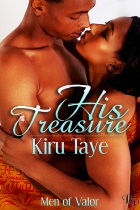
The blogger Amy McKie recently reviewed Kiru Taye’s novella His Treasure (Men of Valor)  published by Breathless Press here. I must say that I am not a fan of romance novels; they don’t really do much for me these days in my middle passage. Amy recommended it to me and I remembered I’d bought it a while back where it currently languishes on my iPad Adunni’s Kindle. This Christmas weekend I have had a lot of time on my hands – my lover had fled the coop and traveled out of the country and the kids were out of the house along with my wallet buying stuff they don’t need, in the name of Christmas.

Well, I am glad I read the book. It is a very short read – about the equivalent of 50 pages. The book takes us to a pristine village in pre-colonial South Eastern Nigeria where we follow the story of a young lady Adaku who although in love with an Igbo prince (Emeka), is made to marry someone else (Obinna) by her family. At first she is unhappy in this arrangement as she pines for her real love. Obinna proves to be quite the gentleman; understanding, caring and – to Adaku’s pleasant surprise, a hopeless romantic and every young woman’s dream in bed.

I won’t lie; the book got my ancient heart racing. It is peppered with lusty, steamy love scenes tastefully done. I can see how the author will develop a cult following among young adult readers. It is an easy and pleasant read thanks to the well-paced, well-written prose. It is a page turner also; I kept reading hoping to run into the next love scene; this was a busy couple, their nights creaked all night long. Do not read this alone if your lover is nowhere nearby, you might have to take long showers in between chapters. Thankfully or sadly the book was rather short.

I would recommend this light reading to anyone; it is certainly a nice break from the heavy overly serious stuff we are fed by many African writers lately. There are no wars, no rapes, none of the usual African story of gloom and doom; here, everyone seems well fed (you would need to, all that lovemaking!) and Taye is a careful writer; so there are precious few editorial issues in the book.

To be clear, this is not great literature as purists know it. The dialogue was sometimes stilted. Taye situates the novel in pre-colonial Nigeria; however much of the sexual activities would appear to be common with contemporary Nigeria, and so there are historical issues here to be addressed. Taye’s characters engage in robust and wide ranging sexual activities you would ordinarily not find in the characters of traditional African stories. I think it is refreshing; however the book could have benefited from research on sex and sexuality in Nigerian communities of that era. Here are some examples:

“She gasped and his gaze came up, locking on to her and pinning her to the spot. His eyes were filled with a desire she couldn’t explain. His tongue moved down her skin, searing a path to the spot at the center of her palm before licking it. Then he released her hand, and she realized she was trembling. She felt a need pulsating in her core, leaving her confused. All he’d done was lick her fingers. Yet it seemed to turn her into a trembling mass, yearning for more of his touch.” (Kindle Locations 129-132).

“When his tongue darted out and swirled around her swollen nub, she gasped out loud. He loved the taste and sound of her. She’d surrendered herself to him. Willingly. He could give her pleasure as he’d yearned to do for months. Totally. Taking her hardened nub into his mouth, he suckled on it, lapping at her nectar as it flowed freely. She writhed beneath him, and he moved a hand onto her flat stomach, holding her down. With the other he thrust his fingers into her, playing out what he yearned to do with his manhood. Even after she’d screamed out his name in her climax, he continued licking her until her body went limp beneath his touch. It was only then he pushed his throbbing manhood into her warm depth. He kissed her again soundly. She came alive, responding promptly and clinging onto his shoulders, her legs wrapped around his hips.” (Kindle Locations 437-443).

Was oral sex a common practice in the villages of pre-colonial Nigeria? Was kissing, common and standard sexual practice today, an indigenous practice in Nigerian communities at the time? How was sex enjoyed at the time? I honestly do not know these things. However in the absence of these answers, the book comes across as a contrived formulaic imposition of Western practices on a traditional Nigerian village.  As a near-aside, one of the suitors is described as a “Prince”. The Igbo like to say proudly that there’s no monarchy in Igboland. There were no kings and queens before colonialism in Igboland. So a Prince Emeka “who looked regal in rich patterned clothes and jeweled gold crown” seems, well, fictionalized. There is a conversation to be had obviously about the place of history in fiction and vice versa. Still it did not stop me from enjoying the book. I missed my lover, many thanks to the book. Let me leave you with what one of my Facebook friends called “sweet torture.”

“His body reacted the same way it always did since the first time he’d seen her. His heart rate picked up. Heat flooded his body, stirring his manhood, hardening it. She was the most beautiful woman he’d ever seen. Tall and slender, her flawless skin of darkest ebony, she had an oval face, dark-brown eyes fringed by long, black lashes, a small nose, and a pair of juicy lips. Her hair was twisted in braids and adorned with beads. The decorative markings on her body identified her as the daughter of a titled man. He ached for his wife. He longed to go to her as she stood drying her body. He wanted to taste her sweet lips, feel her softness against his skin, and sink into her warm depths again and again. Yet he didn’t move, but stood there, watching her get dressed while he wanted to undress her. This is madness.” (Kindle Locations 87-93).

So now, you know what I did on my Christmas break. Now, back to my regularly programmed activity – bashing writers who take themselves too seriously (including me!).

Are We Children of a Racist God?

How the West views us as black people has been the question that has occupied African thinkers for a very long time. It is a question that has unfortunately eclipsed the even more critical question: Why do the others view us with such condescension and disrespect, bordering on racism?

I am still fuming after reading the book Onitsha by Nobel laureate J. M. G. Le Clézio, a book set in 1948, in Nigeria. Le Clézio lived in Nigeria with his family in 1948 at the tender age of eight. He was clearly taken by the injustices he saw against Africans at the time.

It is ostensibly written from the perspective of someone sensitive to the plight of Africans in colonial Nigeria, but who ends up unwittingly revealing his own prejudices. It is the classical story of white liberal orthodoxy, the type that earned writers like Joyce Cary and Joseph Conrad, Chinua Achebe’s rage.

Think of Nigeria in 1948. The University of Ibadan was founded that year. Chief Nnamdi Azikiwe, Nigeria’s first president had been long back from London and America. Think of Soyinka’s Ake, that wondrous memoir of Soyinka’s eclectic and wholesome childhood. Think of Chukwuemeka Ike’s book The Potter’s Wheel, about the adventures of a precocious little boy set in about the same time as Onitsha’s plot.

When you read Azikiwe, Soyinka, and Ike, you come away with memories crafted by African writers of a society that was embracing Western education with a robust fervor. Just like in the West. So, what then do we make of Le Clézio’s view of the same Nigeria of the 1940s as a place of simple-minded Africans sporting exaggerated physical features and child-like emotions and innocence?

Liberal orthodoxy is avuncular and patronising and it bestows upon the “helpless” African a benevolent but malignant label – subhuman. It is malignant because most days these days we spend our waking hours trying to convince the other that well, we are human, just like them. Why do they see us differently from how we see ourselves? Is racism alone the answer to that question?

In a perverse sense, the earthquake that rocked Haiti’s wobbly foundations exposed the pathetic rubble that passes for black life not only in Haiti but almost everywhere our people live. Chew on this: 10,000 NGOs pretending to do work have gulped billions of dollars in “aid” to Haiti in recent years and yet the country is so poor, it is called a Fourth World country. Nigeria is the next embarrassment waiting to happen. Every day Nigeria is rocked by quakes of thievery, savage violence and pure unadulterated incompetence. So, what is wrong with us?

As people of colour, it sometimes seems that we spend our days loudly proclaiming our humanity. We are on the defensive all the time. It is exhausting. How can we demand respect from others when we so obviously demand disrespect and ridicule? Call me a hopeless idealist but we can prove that we are able to overcome the machinations of a racist God.

The difference between our race and the other seems to be that their cognitive elite of leaders take care of their societies, while our cognitive elite take care of themselves only, the people be damned. Why is that so? Are we cursed? I reject the notion that this constancy of turmoil and neglect is our fate. We must take care of our own just as their cognitive elite takes care of their own people. We must care for those who clawed for every penny just so we can go to school.

We are suffering the result of a virtually uncritical acceptance of any and everything alien that lands our shores. This greed is killing us. We have made ourselves the other. We have helped ourselves earn it. In the ruins of Africa intolerance comes baying out of churches and mosques. If you don’t look like them you will not be born again. I think it is disgraceful that we are condoning hate in the name of intellectual freedom.

On a fairly regular basis we are made to endure horrid expressions of hatred and bigotry. Our thinkers, our intellectuals need to reflect upon their role in building the Africa of our dreams. Let’s dream of the impossible. Let’s undo the mean harvest of racist bigoted deities. As thinkers, we must be bold, we must explore new ideas, do bold things, not simply spend all day parroting nonsense in the name of scholarship.

As writers we should push for the next level of awareness. I urge all of us as thinkers to model the behaviours that have made the Western societies we live in so much more successful than our ancestral lands. Let it not be said that we are children of a lesser god.

To Be African: Ode to Contrived Misery

The term African is becoming a burden, a pejorative used to describe certain miserable conditions of the physical and psychological. Case in point: Claudine Gay, writing in the Root seems to object to her son being called African in her essay, My Son’s Called African and I’m Upset; Why? She is black. She is not the only one by the way; the great Tiger Woods once brushed aside that label by glibly referring to himself as Cablinasian, whatever that means. He openly admits that being called African-American bothers him. I doubt that he has ever visited a black-themed event. His father is black. Gay’s essay has understandably caused quite a stir in those watering holes inhabited by African intellectuals. The term “African” is under siege as people are now realizing that it is becoming proxy for everything Africans are not and should not be. By the way, it seems these days that the (in)action of just one individual is enough to draw sweeping generalizations about an entire continent of millions of individually unique people.  Westerners visit remote parts of Africa and write breathless and patronizing essays about “Africa.” Henning Mankell has an essay in the New York Times, In Africa, the Art of Listening, which makes the baffling and maddening point that his observations about life on a park bench somewhere in Mozambique reflect life everywhere in Africa.

African intellectuals for various compelling reasons are now flung and scattered amongst the cafes of Europe and the Americas where they pontificate about the condition that is Africa and yell at the white man for every perceived slight on Africa and Africans. We have every reason to fume (yes, I am a card-carrying member of that tribe of whiners). To be African is to be associated with everything objectionable – war, disease, crime, corruption, neediness and that ever-nagging suspicion in the minds of even the most liberal Westerners that we are somehow sub-human. It is a perplexing and infuriating situation that has kept African intellectuals on the defensive. In America for example, immigration is a huge and vexing issue; an issue that was considered ho-hum until the color of immigration became brown. Native Americans remember painfully that the new America is indeed a land of immigrants. Today, immigrants of color are being chased from pillar to post for doing exactly what the “founders” of America did eons ago. In the classrooms there is the persistent debate about closing the achievement gap in academic achievement among races and ethnicities.  When leaders are talking about the gap, guess who they are glaring at? Children of the poor, children of the black and brown.  In their eyes, African Americans and Africans are parked squarely in the wrong end of the Bell Curve.

Africans have every reason to be upset. However, it is helpful to focus on why things are the way they are. In Nigeria for example, the intellectual, religious and political elite have colluded to make a mockery of any and every thing that a people stand for. This they have done using pretend-processes and pretend-structures for self-serving ends. In Nigeria, the new Christianity is the new alcoholism ravaging the already dispossessed daily. Watch this video and reflect upon the caricature nation that Nigeria is fast becoming. Watch this disturbing video of abuse of young congregants in a church. Thieving pastors have rushed whoosh into a yawning vacuum that was created by generations of failed leaders. These new thieves are now raking in millions from their own self-serving failure to lead. We are muttering to ourselves and our people are chanting themselves to lunacy and irrelevance. Thanks to succeeding regimes of irresponsible ASUU stalwarts and government kleptocrats many of our universities would be shut down today in the West if they were poultry farms. The looting goes on unabated and the funds are used to create safe havens for the elite and their overfed families at home and abroad. Any Westerner coming to visit Nigeria today would be forgiven for taking one look and wanting to just pee on the whole damn place.  In America, racial and ethnic demographic data are gleefully used by leaders to justify funding for the classroom. Do not get me wrong; the bulk of these funds have been incredibly crucial in making huge positive changes in the lives of all children in the classroom. However, it has come at a cost. Thanks to this deficit-model approach of viewing our humanity, children of African descent are looked upon as issues-laden, disrespected by those in authority. The child of color grows up to believe that that a police officer is not a friend. The feeling is mutual. But then, I know many Africans in the West who boast with pride that they live in white neighborhoods. The self-loathing is real and it comes at a cost. In these neighborhoods Africans are routinely ignored, humored and patronized by the majority-white neighbors. Any wonder children grow up resenting the label, African?

Yes, we must also reflect on our role in the creation of this pejorative. Many of our African experts in history, world renowned scholars have devoted their muscular talents to penning exotic hagiographies about a mythical place called Africa. Any attempt to offer a different perspective is met with ridicule and opprobrium. I am a huge fan of African literature; these are exciting times to be a reader, thanks to the hard work of many talented writers of African extraction and I will go to my grave clutching an African novel, yes. However, this genre of literature called “African literature” is in danger of being stereotyped as ghetto lit, mostly devoted to celebrating exclusively exotica – war, disease, crime, etc. There is no balance to these stories, instead to the extent that they present only the single story (apologies, Chimamanda Adichie) they distort the history of our challenged continent. This is especially an important point since it is not clear to me that African historians are actively doing the hard work and research of documenting and sharing with the world the sum total of Africa’s history.

“African writers” are routinely herded into Western retreats and conferences by condescending, patronizing liberals where they regale the world with tales of woe, gloom and doom.  Their books and short stories are mostly their opinions about Africa, nothing more. Increasingly and alarmingly, these book readings, speeches, and so on are based on erroneous information – and outright fabrications for profit as we now know with the celebrated writer Chris Abani.  With their powerful words (these are ordinarily good writers) they have written literally into concrete eternity, a hugely distorted and negative history of Africa.  Using Abani as a case study I have previously tried to explain how contemporary African literature may be distorting African history. The writer Kennedy Emetulu has a long piece here meticulously detailing Abani’s dark history of lying for profit and more importantly distorting history in the process. Here is a profound passage in the essay:

“To understand the effect of Abani’s lies and how much damage he has done to our national history and to our psyche as a people, while making blood money from it and acquiring fame for himself, let’s just consider one of his poems from his Kalakuta RepublicOde to Joy. We are choosing this poem, because it is one of his works that he swears to be an eyewitness account of the suffering and experience he went through in Kirikiri Maximum Security Prison. It is the poem that canonized him in the literary hall of fame in the West and had laureates like Harold Pinter gushing about its stark frankness and so on. Indeed, it is the singular most popular of his poems. Personally, reading the poem does nothing for me; but until one understands the devious cultural mind-reading underneath it and the purpose Abani used it to serve and the purpose it serves its promoters in the West, one may think it’s just an innocent poem by a young African writer.”

“Today, that poem is emblazoned in the city centre of Leiden, the sixth largest city in Netherlands where it is being ‘celebrated’. Leiden is an old historical city located on the Old Rhine, twenty kilometres from The Hague and 40 kilometres from Amsterdam. It has one of the oldest and most prestigious universities in Europe, the Leiden University, established in 1575. Its importance as a learning and cultural centre in Europe is further emphasized by the fact that the city is twinned with Oxford, the location of the oldest university in England.”

Read Leiden’s Wall of Shame here and see how every day writers like Abani collaborate with the West in canonizing the term “African” in the concrete walls and minds of the West. You can be sure of one thing; that wall will never come down. A big fat lie has now come to represent Africa thanks to the ghetto literature espoused by Abani et al (there are many like him by the way). Before we start throwing stones at the likes of Claudine Gay, we should first look into ourselves to see and confront that which ails us. We may be our own worst enemy. As intellectuals and self-appointed priests of probity and justice, we must police ourselves; otherwise we lack the moral authority to yell at a policeman for furtively collecting crumbs as bribes.

Of Writers, Writing on Conflicts and Wars in Africa

First published January 5, 2010

Forgetting is the final instrument of genocide. To witness genocide is to feel not only the chill of your own mortality, but the degradation of all humanity… even the most brilliant photography cannot capture the landscape of genocide.

 –       Simon Norfolk

The writers Okey Ndibe and Chenjerai Hove are two of Africa’s finest thinker-writers. They are awesome wordsmiths, word cannon balls boom fiercely out of their fecund minds pulverizing their targets with uncanny accuracy. They write with an uncommon sensitivity to the issues that Africa faces. This they do with respect and compassion and one is taken by the honesty and industry that they bring to their craft. They have just co-edited a slim volume of essays, Writers, Writing on Conflicts and Wars in Africa, published by Adonis & Abbey Publishers Ltd. It is a largely academic but highly accessible treasure trove of reflections on war by an army of mostly African writers who have been affected by Africa’s myriad wars and genocides. In about 200 pages and sixteen chapters (including the introduction), the reader comes face to face with the anxieties, nightmares and dreams of sixteen diverse and eclectic artists. These are issues covering past and present wars all over Africa; Biafra, Zimbabwe, the hell delta of Nigeria, Darfur, the Congo, South Africa, etc. Kudos to Ndibe and Hove for ensuring that these writers are a judicious mix of the known and unknown. The resulting essays are refreshing and filled with uncommon candor. The references alone are invaluable. I wrote down passages in the book that spoke to me and then I walked among the words, talking to them. I was shaken to my soul’s roots. Even the cover is evocative in what it does not say. It is an image of beautiful children born into wars they did not ask for. There are all these children mugging for the camera with Africa and decay as a surreal backdrop.

As an aside, this compilation of essays came out of a workshop attended by the departed poet-warrior Dennis Brutus. In the book, Ndibe and Hove recall his spirit with eerie nostalgia: “Dennis Brutus, the South African poet whose back bears the scar of an apartheid bullet, lent a measure of revolutionary gravitas and hard-earned moral capital to the workshop. When Brutus spoke or read his poems, his voice, though slightly enfeebled by age, still rang out with stunning range and power.” (p11)

This book is several conversations burning at once. The writer Yvonne A. Owuor starts the conversations rolling in a piece she admits is a rant. It is a rant pregnant with profound gems. She questions why the West glorifies its own wars with stories of valor and views Africa’s wars as savage and barbaric, pointing out that there have been equally gory examples to draw from in the West Again, Chinua Achebe, in his seminal volume of essays Home and Exile, reminds us of the proverb: “Until the lions produce their own historian, the story of the hunt will glorify only the hunter.” I agree. Africans must tell their own stories or risk the total annihilation of their humanity by the other. We should write about our own humanity, for war is about the sorting of individuals into bins of identity and differences and the hunting down of those anxieties that lurk behind ancestral masks.

This book is a defiant ode to the power of the word and Hove captures it neatly: “Those years of war… gave me scars and smiles. Scars because real bullets pierced and tore apart the bodies of real women, children and men. Smiles, for, in the midst of death and pain, I saw children, women and men who proudly showed human resilience even in the face of death as they fought for the restoration of their dignity.” (p38)

The last chapter, Reflections on Inyenzi is an evocative essay bearing a conversation between the writers Karin Samuel and Andrew Brown. Brown wrote the book Inyenzi: A Story of Love and Genocide based on the Rwandan genocide. That chapter alone is worth the price of the book. It brings to great closure several issues engaged by the other writers in the book. In simple, almost clinical prose that flogs the reader’s conscience wide awake, the writers weave fascinating images of war and one is reminded of the starkness of images of apartheid’s war housed in South Africa’s Hector Pieterson museum.

This is a slim book bearing weighty reflections on conventional wars in Africa. Wars still rage on in Africa, most of them wreaking havoc below the radar of our uncritical eyes. Every day alien religions wake Africa up and rape her with impunity and send her to bed sobbing inconsolably. Capitalism marches through Africa unchallenged reducing her millions of victims to needy supplicants to the God of more and more. We should reflect on why Africa is in this condition. The book does not. It is not a criticism; a book can only do so much. Africa is enduring many wars and while this book focuses on conventional wars, I propose that today’s most devastating wars are the unconventional. If we don’t focus on those we may be writing our way to irrelevance. Why is the world indifferent to the travails of Africa?

In the book, Lauryn Arnott’s drawings are harrowing in their detail and they nicely complement the writing. But it is not enough. In the age of the Internet, the book is dying a long slow death and it is no longer a robust medium for expressing the horrors of war or the joys of triumph over adversity. I dream of creating a virtual museum dedicated to Africa’s suffering – a total convergence of all media and all voices singing with one earth-shaking voice of the horrors that we have seen and heard. And the griots Ndibe and Hove would be the leaders of that mother of all projects.

Let’s accept some responsibility. Owuor makes this profound observation: “This war, this violence is ours. Ours is the hateful thing – a roaming stain that prowls through the society and sows seeds of chaos – that thing that appalls our within-ness. And horrifies us with the blood it wastes.” (p21) However the book is virtually silent on the crucial question: Why are things the way they are in Africa? There are many questions folded into that question. What is it with Africa and conflict? Why are we constantly forced to question and justify our humanity? What is the role of the writer in shaping events in today’s Africa? Why do some of our writers turn Goebbels on the people? What is the best medium for forcing the people to focus brightly on the fires that burn so fiercely all around Africa? Is this generation of African writers self-absorbed and narcissistic and why?  Has the African writer deserted the role of the writer as the land’s conscience, priest and town-crier? We must seek answers to the why even though it might frighten us.

The Internet, that new world that holds the promise of liberation from hell on earth, is right now busily retrieving Africa’s brightest and best minds from Africa and dumping them in Europe and America.  Virtually all of Africa’s best thinkers are writing about Africa from the outside looking in. Thanks to technology, sadly, this exodus includes those writers who physically live in Africa.

Hope Eghagha in his essay evokes the spirit of the poet-seer Christopher Okigbo using lines from Okigbo’s Hurrah for Thunder:

The smell of blood already floats in the lavender-mist of the afternoon
The death sentence lies in ambush along the corridors of power;
And a great fearful thing already tugs at the cables of the open air,
A nebula immense and immeasurable, a night of deep waters –
An iron dream unnamed and unprintable, a path of stone.

This poem was written four decades ago; one could argue that it seems prophetic today only because the situation in Nigeria is heading South fast and the future is certainly frightening. But then the question is why this constancy of turmoil. Okigbo would not know; he was murdered by Nigerian troops on Biafran soil in a war he did not ask for. This book is one more compelling proof that the sacrifices of Okigbo and other African thinkers hunted down and slaughtered for owning words have not been in vain. I salute Okey Ndibe and Chenjerai Hove.

The second coming…

[First published in Fogged Clarity literary magazine (2009)]

We sit around this fireplace
in the sky that never goes out.
We are staring at each other
and these words
are like the firewood that stokes the fire-of-many-faces.

We sit around this fireplace but we are cold.
Here take my firewood it burns bright
it burns long it burns hard.
Take my firewood and we will be warm.

In my dream I fled America, the land of large people that know no hunger, sad people that will never know the joy of feeding a pain because they are never hungry. In my dream, I landed in Nigeria on my father’s favorite palm tree drinking palm wine and eating the meal-that-satisfies-the-belly that I had stolen from my mother’s earthen pots. In my dream, my mother’s voice, strong voice of steel, rose up, sonorous in sorrow, beautiful in sadness, rose up to rebuke me for raiding her cooking pots. In my dream, my mother cursed me with the breasts that gave me life and succor. It was a beautiful curse, the rendering of it. It traveled through rivers of tribulation and rank disappointments and hit me smack in my conscience’s face:

“Your children will be aliens in the land of your birth. They will know prosperity all their lives, and in knowing wealth they will live with the poverty of prosperity all their lives. The joy of satisfying a hunger will elude them with the swiftness with which you have stolen from my pots. Their cooking tripods will always quake on two legs, because, you my son, you have made me a two-legged tripod in my old age.”

In my dream, I laughed hard and loud at the effete curses coming from my mother, this shriveled old lady perched at the foot of my father’s favorite palm tree. I shivered with sheer joy and satisfaction as my father’s palm wine and my mother’s cooking raced through me, thrilling my hunger cells with the sheer pleasure of good wine and real cooking.

Soon the voice called, called me, looking for her husband. I listened to the ululation of she-who-must-find-her-husband, and the tremors of the voice felled me from my father’s palm tree and I woke up in the bosom of a new day, staring at dew-drop dawn in America.

“Father, of my children, it is morning. Did you sleep well?”

 “Mother of my children, it is morning indeed. I slept well.”

Good morning, America. My eyes rise, lift themselves up from the icy ashes of my condition, and wag their sassy tails at life. Good morning, America. Life goes on, but this is not how the antelope planned the trip to the market place. In the antelope’s dreams, he was at the market place all decked out in the best suit the tailors of Italy could put together, his princely hooves wearing shoes made from supple soft Italian leather. When the antelope woke up, ye gods, he was all naked and tied up, and who is this filthy vermin offering him for sale to peasants? I am the antelope, and this is not how I planned this, this trip to the market place. But life goes on. Time cracks her whip. I flinch, lean out the drive-thru window into the arctic blast of winter in America and I ask the question on my master’s script: “Do you want fries to go with this ma’am?” Good morning, America. Life goes on.

This is where the cold stream froze
snap-crackle in the middle of nothingness.
This is where the cold frozen river
dragged the iroko tree by her hair to plant

The warrior sails from hair to feet of the iroko tree
and everywhere is the same
everywhere is frozen.

Sitting cold by this river of glass
watching my rabbit prepare for dusk
closing the shutters on dawn’s window.
Africa calls me with the smell
of warm ashes softening my maize and my heart.
I must go to the phone lines and talk to you
mama.

Izuma-of-the-great-plains listen to me.
Izuma-of-the-rugged-stout-bush hear me sing.

Summer slinks out of the swimming pool, waves goodbye to my children and their friend the ice cream truck, and goes back to bed with the ground hog. Good night summer, see you next year. We wake up in America reincarnated from the wet depths of winter. In America, our days do not morph into nights. The days clash into them and the explosions send us shell-shocked into the bosom of tired gods. Dawn comes with the rude roar of the bugler’s trumpet. And the cycle continues every morning. Come Spring, ice cakes flee America and slink back, into a thousand little streams to return as rock solid goddesses of the sea.

Another morning in America and like the morning before her, I fight my way out of our house, past my children’s needs, past her nostalgia for a simple place to rest from this thing called marriage. Miracles of all miracles, my jalopy wails to a start. I attack the ice on the windshield, the snow on the roof and the cold in my heart and in my bones with all the tools and strength at my disposal. The journey down the road to work is long; there are not enough roads for all the cars that the money in America has bought. We have too much and everywhere we go we take with us what our money has bought. And now the roads look like gigantic pythons suffering from indigestion. The ice crackles, breaks off and scampers off of my windshield and I join the motor lines of the new slaves going to the salt-mines of the west. And like frozen gods, the trees line either side of the boulevard to nowhere, guarding the snake lines of overweight cars as they wind through the path to the pantheon of the dollar-gods.

The heat rises from my feet and tucks me into my solitude; respite from that which chases me daily. And soon Africa comes calling to me, as she rises from deep inside the white man’s ilo* that resides in vinyl discs. Strong voices of my ancestors, indignant messengers of a constant condition, chase the drummers’ solo chant. And the rocking and wailing of horns cannot drown the beauty of our sisters’ insistent chorus. And one by one, my ancestors rise up from my windshield and remind me of the beginning of this journey that knows no end. And now I am the sum of my experiences. When I turned the corner of my mother’s favorite path, I came to this land that was like no other. Here there are no men and there are no women, there are persons. The people, they stopped going to the farm a thousand moons ago, but they still eat like famished farmers. For the food keeps coming in huge silos straight into their gullets. The people know no hunger but they hunger for the beauty that the goddess of hunger bestows on her faithful. There is no hunger in this land; even the poor know no hunger. And now there is a new hunger of the spirit that is born from prosperity. It is a hunger of the spirit. In this land called America, we have everything but we have nothing. The gods are punishing us. The gods that put hunger on this earth are angry with mere mortals for multiplying loaves of everything in their engineering labs. We were never meant to be content all the time. And now we know it.

We are never hungry. We eat when the time says we should be hungry. We went to the chicken place to get lunch, me and my mother, Izuma-of-the-restless-path. At the drive-thru, I punched the button for help and the voice called as if from the skies. The voice offered us a thousand combinations of a thousand offerings of a thousand choices that we do not need. I pine for my mother’s plate of steaming hot white rice and goat meat stew but it is not one of the thousand choices. I make a choice. I look behind me and the lines of the not-really hungry snake into the road, all staring at the drive-thru like a malevolent beast they would love to devour. Izuma watches me, her son, eyes welling with awe at the audacity and my mastery of the white man’s witchcraft. The voice asks me for money and I give the hole in the wall the plastic that gives birth to money. The hole in the wall gives me my receipt and a chute comes as if from the skies bearing our lunch. I give Izuma her lunch:

“My son, this is food from alien gods. How can I eat what the gods cooked?”

“Mama, please eat! It is food; human beings that you do not see cooked the meals.”

“How do you know this? I see no one. And you did not pay for this thing! Will they not be angry with us?”

I show Izuma my credit card and I try to explain the miracle of the plastic to her. She holds her box of chicken and after a long silence my mother’s voice delivers the verdict that flogs my dignity each time:

“The white man is amazing. He knows where God is but he will not tell us black people because if we know where he is, we will kill him!”

We will die and return in a thousand moons and there will be no nations as we know them. All these structures, all these walls, they will be gone, sold on eBay, wretched souvenirs of a time long gone. The walls of our Jericho will melt into vapor, victims of the wrath of the bugler’s horn. Think about this: These new wires in the sky that we can’t see, this thing that we can’t touch called the Internet; it is like a revolution that came, like the thief in the night. My friend the computer genius bought a big house and now he has no job. His job fled through the Internet to India where young people with accents tell you in America how to fix what ails your computer. In the bazaars of Mumbai, the food vendor sells fried potato cakes at dawn and sells computer help to the Americans come dusk. For every dollar my friend was making in America, they pay the Indians pennies. The Indians are happy, but my friend is miserable. The bank sold my friend his dream house. He bought a nightmare. Change is not coming, change has come. And why are my feet cemented to the tracks of a coming train?

Smell the ashes
swirling up from the ashes
dancing dizzy into the eaves
of the hut of happy memories.

Smell the maize
roasting merry on your fire log.
Take the maize, tongue
and this pear, tongue.
The chemist does not need your pipette
O heavens.

I am back from chasing mangoes in the mad man’s guava grove and my feet land in Nigeria, the land that houses my umbilical cord. The ashes of my childhood warm my pear and my memories. And my maize is done. Nothing has changed. Do you hear the beautiful wailing of horns? The sage Christopher Okigbo is leaning hard on his sorrows, trapped in a Fanta bottle of ogogoro,** watching his words morph into the reality that Nigeria has become. The warrior, Isaac Adaka Boro stalks the dark, dank oil polluted Niger delta in his water taxi, refusing to be consoled. The bard Celestine Ukwu has been drinking non-stop in the tombo bar wailing inconsolably for the return of Rex Lawson. And Kongi ,*** angry wise bard, offspring of the loin of the fearless gazelle, he roams the land warning of the coming inferno. Our story teller Hubert Ogunde is back, telling the deaf of yet another conflagration. Nigeria Ronu!****

It is not evening yet, but all is dark because the myrmidons of darkness have descended on our land like a swarm of locusts. My uncle Diesel is dead and our village is dying, felled by change. Death is not permanent, for the good death nurtures a rebirth. We shall see. Villages are dying in Nigeria, felled by change. Villages are dying in America, felled by the gods of Wal-Mart. But all is well. Everything is as it should be. Death is not permanent, for the good death nurtures a rebirth. Good night, uncle. Good night Diesel.

And darkness descends
wet blanket on a forlorn land
and we are touched dew-wet
and as one we have sinned…
What have we done?

African Roar 2011: African Writers Whimpering

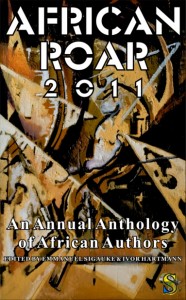
Adunni, my iPad just bought me African Roar 2011, an anthology of stories written by fifteen African writers, and edited by Emmanuel Sigauke and Ivor Hartmann. I don’t think Adunni wasted our precious money but I expected more; I hope this is not my Christmas present.  Contrary to what the anthology implies, it is not exactly representative of African writing; the writers come from just five English speaking countries; seven are from Zimbabwe, four from Nigeria, two from South Africa, and one each from Ghana and Malawi. I loved the debut annual anthology last year and reviewed it here. Sadly this year’s collection is mostly a gaggle of safe stories celebrating the familiar, tried and tired. There is little attempt at experimentation and there’s neither range not depth in many of the stories. These are mostly political statements about certain miserable conditions, wrapped in the pretend-toga of short stories. They feature pedestrian prose and lack energy and passion. Editing issues hint at a hurried publication.

Many of the stories are feverish experiments in self-absorption and narcissism. Memory Chirere’s tribute to the late writer Stanley Ruzvidzo Mupfudza is self-serving – and poorly written. Blessed silence would have been a more fitting tribute. Stories like the late Mupfudza’s Witch’s Brew are painstakingly devoted to decay, disease and conflict. Noviolet Bulawayo’s open lines in her story Main are lovely prose-poetry: “Main.   Main Street standing up straight and adjusting the rainbow-coloured wrap skirt that threatens to slide down her wide waist, black blood boiling in her veins. Bustling throbbing writhing street. Everything moving: cars, voices, ambitions, money, dreams, feet, smoke. Just moving moving moving — like a wind.” Nice, but then Main dissolves into a pointless story about death, and filth. The good news is that the story is so short it should not be called a short story. Bulawayo’s considerable literary talents are gainfully deployed to relentlessly documenting despair and mediocrity. Zukiswa Wanner’s story, A Writer’s lot about the joys and perks of being a privileged African writer doted upon by the society and the West is a botched attempt at humor. Wanner should find her own voice. She will never be Binyavanga Wainaina.

Gloom and doom have become chic signature tunes for defining the African writer – and Africa. These self-perceptions are true and they deserve the world’s attention and opprobrium but they do not speak to the range of life’s experience in Africa. Instead they only reinforce the persistent negative image that the world seems to have of Africa. African writers may be courting disrespect with their glum self-absorption. Case in point: Jerry Guo of Newsweek once conducted a profoundly incoherent interview of Chinua Achebe (Chinua Achebe on Nigeria’s Future, Newsweek, July 5, 2010) in which he referred to Things Fall Apart, as a story about “a simple yam farmer in tribal Nigeria.”  In the 21st century Things Fall Apart is being described in such a hideous fashion. Anthologies like African Roar 2011 should improve upon the silence and raise the bar for the quality of discourse in the burdens of Africa’s stories.

It is not all dreary. Dango Mkandawire’s prose shines in The Times. Ivor Hartman’s story, Diner Ten about cockroaches is so charming it could serve as a public relations charm offensive for that most loathsome of creepy crawly pests. Hajira Amla’s story Longing for Home was quite entertaining, albeit slightly inchoate and improbable. Helon Habila handles the same subject masterfully in The UK Guardian (The Second Death of Martin Lango). Uche Peter Umez’s Lose Myself gamely  makes a short story out of a one-night stand somewhere in America. It is one of the best stories in the collection. It is mostly successful but obsessive thoughts of home make the protagonist – and the story impotent.

Why are virtually all these stories so mindlessly obsessed with Africa’s political and social issues? Are African writers under pressure to write the single story? Issues of identity are on my mind. I am thinking specifically of the African writer’s preoccupation with identity. It is possible that the label African writer is having the effect of defining and limiting the writer’s range. It is as if African writers have sealed themselves hermetically in this bubble where they  toil in a culture of despair, relentlessly beating the same ‘African” dead horse to death. The good news is that, thanks to many obscure writers (alas), the literature of our continent is alive and well in many places other than in anthologies. The reader is well advised to visit those places on the Internet where all the stories of Africa dance riotously and assure the world of her people’s place in this market called humanity. I have  previously shared my appreciation here and here and on Facebook and Twitter. And yes, this is a shameless plug, please join me on Facebook and on twitter (@ikhide).

Interestingly enough last year’s debut issue of African Roar had a helpful introductory essay that provided appropriate context and coherence to that year’s collection. This year’s edition could have used an introductory essay. As an aside, next year, the editors should strive to produce a more user-friendly Kindle edition. I had trouble navigating the collection. I did find the biographies of the writers in the collection more entertaining than several of the stories. I had more fun reading The Granta Book of the African Short Story published by Granta and edited by the Nigerian writer Helon Habila. As I shared here, I have issues with that collection, but you cannot quarrel with the quality of its presentation and the thoughtfulness that went into it. Habila’s introductory essay alone is worth the price of the book.

Wainaina recently ignited a firestorm with his statements about the West’s obsession with what African writers have to write about. The article and the podcast in which Wainaina held forth about this are here. Wainaina did say, “If you are to ask me what are the greatest issues in Africa, I would say it is that people love, people fuck, people kiss, people speak.” That may be true, but you wouldn’t know it from reading African Roar 2011 (and come to think of it, Habila’s recent collection of “African stories”). These writers are too busy solving Africa’s myriad issues to make wild lust-filled love. It would appear that only misery makes them roar.

African Roar 2011 is available on Amazon.

Related essays:

The three Rs: Reading, Reading and Reading January 23, 2011

Why Are We Not Reading Books? August 29, 2011

Who Speaks for Black Africa?

The Caine Prize and Unintended Consequences May 28, 2011

The 2011 Caine Prize: How not to write about Africa May 24, 2011

Beyond the balance of the stories March 20, 2011

The writer, identity and purpose August 14, 2010

In search of the African writer January 24, 2010

Of African writers and their uncles February 6, 2011