
The other day, Adunni my trusty iPad bought me Roses and Bullets, Akachi Adimora-Ezeigbo’s new book on the Nigerian civil war. I don’t know, iPads should not be this powerful; Adunni has unfettered access to my bank account and she is always buying me books off the Internet. I wish she would buy me books that engage and entertain me like a good bottle of cognac VSOP. I won’t lie, reading Adimora-Ezeigbo’s latest offering was pure torture. The book sent me to sleep each time I opened it on Adunni’s Kindle. I stopped reading it halfway; I won’t be back to it. Life is too short to be miserable. I tried, I really did, but I could not get past the clinical aridity of this book. This is one deadly boring book. Reading it makes watching paint dry an exhilarating experience.
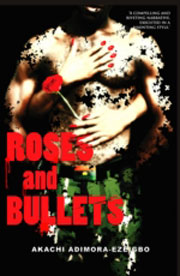 Why did I stop reading the book? Well, it reads like a neatly typed, fastidiously edited memorandum penned by a humorless civil servant who is used to writing government white papers for the Kremlin. It is relentlessly edited, stripped of every conceivable emotion, with every joy of reading wrung and bleached out of every word until the reader’s eyes beg for sleep – or death. This book should be an instrument of torture in police stations. The victim will confess to an imaginary crime just to be allowed to rest. I kept rubbing my eyes and falling asleep. All insomniacs should skip Valium and buy this book; they will be cured. This tome is borne on stilted clinical prose, a meandering tale that seems reluctant to make a point, any point.
Why was this book written? What new insights does it offer on the Nigerian civil war? How does this book improve upon the silence? Other than it is about the Nigerian civil war, I have no idea what the reader should take away from this book. The clinical antiseptic prose violently strips the novel of ambiance or atmosphere. I could not imagine Biafra; I could not imagine Nigeria, not with this book. Not even the mention of Kingsway Supermarket could drag me back to those years. Any writer worth his or her salt should be able to describe the unique smell of Kingsway and bring tears to the eyes of memory. The Nigerian civil war was a unique era, a sad time in our history that requires an expert hand to capture the sights, smells, and songs of that horrid period.
This plodding overweight non-story suffers from a poor design, well, actually from no design; it does not lay the context for the story and anyone new to the horrors of Biafra is well advised to go elsewhere first. There is no over-arching vision, and the characters are so inchoate and forgettable, I cannot remember any of them, can’t tell them apart. And this brings me to my pet peeve. Adimora-Ezeigbo goes to great lengths to italicize and explain indigenous terms like ikpi nku, chinchin, ube, udara, etc, I imagine in a bid to reach and keep a wider audience beyond her clan. I have a huge problem with this habit among African writers. They all need a healthy dose of self-confidence. In their works they are always italicizing egusi and ugali. I say, tell your story; stop italicizing our way of life. Let the reader do the research. Besides that is what Google is for. I have never seen sauerkraut in italics.
The Nigerian Civil War is a hugely important topic and it is a crying shame that many Nigerians have no idea of the enormity of that horror that visited us. A search on “Nigeria Biafra” on amazon.com yielded hundreds of hits. Chimamanda Adichie’s Half of a Yellow Sun is a good book for those who want to read everything about what Roses and Bullets is not about. I have a review of it here. There are many contentious issues that Adichie brings up – and there is no shortage of robust debate about them. That is what a book should do. Dan Obi Auduche also has a helpful bibliography of eighty books on the Biafran war here. Adichie’s book has a helpful reference list of thirty books. Where Awduche’s list is focused on books directly about the war, Adichie’s has a broader focus. Virtually all the books directly on the war on Adichie’s list are also on Awduche’s list. It would have been helpful to see the reference list Adimora-Ezeigbo drew upon for her research. My favorite essay on Biafra by the way is My Biafran Eyes by Okey Ndibe, that irrepressible owner of words. You may feast on it freely on Guernica here.
And oh, by the way, Roses and Bullets was published in Nigeria by Jalaa Writers Collective. Do not bother clicking on the link, the website of this publishing house has been suspended. Are we a serious people or what? And no, this is not a review, but a rant expressing my frustration that Adunni wasted my money on a dreadful book. There… I feel better. So tell me, I would dearly love to hear suggestions from my readers on useful resources on the Nigerian civil war. Do you have any? Why do you like it? Share…
 Pa Ikhide