Mrs. Oluremi Obasanjo: Life with an Animal

Reprinted for archival purposes; first published November 30, 2009

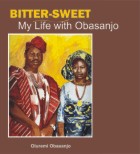
Trolling books in search of pleasure is fraught with peril; one never knows what darkness lurks between the covers of a book. There is the danger of inheriting someone else’s demons. Life is too short for such burdens, but it happens. Patrick French’s stellar biography of the writer V.S. Naipaul The World Is What It Is is an excellent example of hard covered darkness. As you read that dark book, the mind simply recoils from Naipaul’s misogyny and the heart fills with the mystery of what depravity and deficits in self esteem would permit a woman to endure such horrors of misogyny. This is a long rambling way of saying for the record that no book has upset me more in recent times than Bitter-Sweet: My Life with Obasanjo, written by Mrs. Oluremi Obasanjo, Chief Matthew Aremu Olusegun Obasanjo’s first wife. This is one horrible book on many levels. It is a perverse metaphor for all that is wrong with Nigeria, but ultimately there is a gripping story under that book’s covers. Yes, it is a gripping book; I could not put it down. Read this book and weep for the fate of the women and children of Nigeria.

This is one horrible book on many levels. It is a perverse metaphor for all that is wrong with Nigeria. My copy came in a “hard cover,” to use that term extremely loosely. The pages seemed affixed to the covers with the liberal use of eba as an adhesive. Everything about it is poorly done – the writing, the research, the production, the editing. It was perhaps not edited. Diamond Publications Ltd, the publishers of this book should be embarrassed; this is not a book befitting the status of the ex-wife of a former ruler of Nigeria. Unfortunately, this sorry excuse for a book did not prevent blurb writers of stature (Reuben Abati, Femi Osofisan, etc) from lustily singing its praises. How it is possible that they could have read past the numerous typos and grammatical errors in that book speaks volumes for the level of indifference to excellence in today’s Nigeria. To cap it all, the “foreword” was written by a university don, Professor Adigun Agbaje, Deputy Vice-Chancellor and Professor of Political Science at the University of Ibadan. It is quite simply disgraceful that a university don would append his name and prestige to such sloppiness. Why, the book is so bad, even the clichés are mangled.

In this book, Mrs. Obasanjo chronicles an acrimonious and violent marriage to a narcissistic partner, who is horrible and abusive, mean spirited, and nasty to boot. In most societies the allegations against Obasanjo, if proven in a court of law would have earned him a long stay in jail. Mr. Obasanjo is portrayed as a serial manipulator and wife abuser who loves charming all manners of women into his perverse space. In her spell-binding narrative, Mrs. Obasanjo’s life has been a terrifying roller-coaster since she first had the misfortune of meeting him late in 1955.  According to the book, Obasanjo is a ruthless man, one who was fond of offering unsolicited slaps and merciless beatings to subordinates, house help and wives (the late Stella Obasanjo included). Nothing seems beneath Mr. Obasanjo – witchcraft, sorcery and diabolical behavior. To understand the specific nature of the allegations, imagine an African statesman (Aremu Obasanjo), knife in hand, chasing his terrified wife (Oluremi Obasanjo) down the street, not to give her flowers, but perhaps to murder her. Mrs. Obasanjo has been abused beyond the imagining of it. It is tempting to heap blame on Mrs. Obasanjo for hanging around long enough to endure such horrors, except that psychiatrists would describe her odd enabling behavior (of Obasanjo’s sick antics) as emanating from the abused spouse syndrome. Regardless, she represents Nigerians’ willingness to take unspeakable abuse from leaders – for a chance at the table of wretched crumbs.

In the celebration of the remains of narcissistic ME the author glosses over substance at every opportunity. It is largely because, like her husband, she is innocent of substance. When she tries to be deep, it is comical. It is all about style for her. All sizzle and no suya. This is a shame because through the roughness peeps sensitivity. She needed a good ghost writer. There is very little analysis, although there are interesting anecdotes. Mrs. Obasanjo reveals that during the civil war years, there were simmering tensions between Benjamin Adekunle and Obasanjo. Chukwuma Kaduna Nzeogwu cuts a dashing and romantic, if quixotic figure, He showered her with the kind of attention normally reserved for lovers – she should have married him, he was such a gentle man. It is a book about missed and wasted resources. We come face-to-face with pathetic lives preoccupied with the accumulation of the banal and the trite. There are all these powerful soldiers and civilians accumulating an army of dead peers, victims of naked ambition – none related to securing Nigeria’s fortunes.

By Mrs. Obasanjo’s own account, Obasanjo treated her worse than the wretched chickens of Otta Farms. Still, it is strange, after all that she went through, she was in the habit of loitering around the corridors of power calling herself Obasanjo’s wife and apparently collecting favors. As his “wife”, she led “delegations” to other countries, to do what, it is hard to tell. Gaps in the narrative rankle and blatant hagiographies abound as she strangely channels Obasanjo’s delusions of grandeur. Her spirited defense of her daughter Iyabo Obasanjo defies and defiles logic. It tears to shreds the book’s pretense to credibility. The self-absorbed ME looms large in the narrative and once more Nigeria is an Okada motorcycle being ridden to its demise by a handful of overweight riders. In this sad horrid book, everything comes together in one perverse convergence – the collusion of rogue intellectuals with rogue soldiers and a willing populace to screw Nigeria to death. History will hopefully be just to Obasanjo and Nigeria. Obasanjo was a horrid husband; Mrs. Obasanjo would know. Obasanjo was a horrid leader, we would know.

For John Pepper Clark-Bekederemo: Triumphing Over an Imaginary Tragedy

Note: Reprinted for archival purposes; first published June 20, 2011

I revere Buchi Emecheta, Ola Rotimi, Flora Nwapa, Elechi Amadi, Cyprian Ekwensi, Gabriel Okara, Chinua Achebe, John Pepper Clark-Bekederemo, Vincent Chukwuemeka Ike, Wole Soyinka, and TM Aluko. Together, they raised and nurtured those of my generation who loved the world of ideas and we devoured their works like starved children. We owe much of what we are today to these great owners of words.

So imagine my excitement the other day when I chanced upon a used copy of Clark’s book, America, their America. As a teenager I had been awed by the audacity of this African that had gone to America, hated her patronizing and condescending attitude, and spat at her faux generosity. I cheered then, when in the end he was unceremoniously ejected from America for being a prickly non-conformist. Clark was defiant to the end. I was a hot headed youth in those days and I loved beret wearing, brandy swilling, cigar chomping rebels, so romantic. Besides I always liked JP Clark, as we called him in those days. As a playful secondary school student, I appreciated that his poems were always more accessible to me than those of Soyinka. Try this: Read Clark’s Abiku and then read Soyinka’s Abiku. Your headache will ambush you after reading the latter.

America their America. America, their America is an angry book from cover to cover written by a gifted young man that railed against the alienation and sense of loss he felt upon turning the corner and seeing the nightmare that was their America. Clark gleefully deployed muscular prose to settle scores with America. The America he saw was not the America of his dreams. And this young man was not impressed. He spoke truth to their power in prose. It is an important book; I will always include it in a study of Africans in exile, along with Nnamdi Azikiwe’s My Odyssey and Buchi Emecheta’s early books. I still think America, their America is an important book; however, upon re-reading the book recently, I was taken by how angry Clark was in the book. Clark used the novel to settle scores with his American guests. As I read the book again, it occurred to me that I did not know much about Clark beyond his poetry and the book. Indeed, we do not have a robust culture of writing reliable biographies of our literary heroes.

I am always filled with envy when I read unflinching high quality biographies of folks in the West, most recently of VS Naipaul by Patrick French. So, I was thrilled to learn that Adewale Maja-Pearce had just written a biography about Clark, titled, A Peculiar Tragedy: J.P. Clark-Bekederemo and the Beginning of Modern Nigerian Literature in English. I went online to buy the book; with taxes, shipping and handling and other forms of robbery fees, I was looking at $30. Not happening, the economy is bad. Seeing that the book was published in Nigeria (The New Gong), I begged friends to scour bookstores in Nigeria in search of the book. It turns out that The New Gong publishing company is owned by none other than Maja-Pearce himself and the distribution structure on the ground in Nigeria is non-existent. To cut a long story short, this self-published book is not available in Nigeria. I finally relented and bought the book online. I did not waste our family’s money but I expected more for $30, I really did.

Hagiography or Biography? So, how did this biography come about? It goes something like this: Maja-Pearce dreams up a proposal to write Clark’s “biography” and applies somewhere for a $63,000 grant to fund the project (don’t ask me why he needed that much to write a book). When he doesn’t get the grant, he approaches Clark who agrees to foot the bill for the “project.” A flattered Clark readily agrees and pays Maja-Pearce one million Naira (about $7,000) with a promise to pay an additional one million Naira later. There are other perks; Maja-Pearce is allowed free access to Clark’s records, house and wine bar (and Maja-Pearce admits that he helped himself generously to everything, especially the alcohol). Soon, things go wrong; Clark does not like drafts of the manuscript and balks at the use of a certain letter. The relationship goes south badly. Maja-Pearce is unceremoniously ejected from Clark’s home and heart and he goes off in a huff to write a stinging tell-all tale.

The conflict of interest inherent in this pay-for-your-hagiography scheme shreds whatever credibility the book has. Clark was right in demanding that the product fit his specifications. Well, think about it, if you commission an artist to paint your portrait wouldn’t you want the portrait to be flattering of your jowls? What doomed the project from the onset, besides the sloppy writing is the loss of credibility. When someone pays you to write his biography, he is most definitely not interested in an objective tome. He wants something that will provide a mirror to the side that flatters him the most. Why would you demand payment from someone to do their biography? Who does that? It reads like a shake-down to me. And it was.

What Maja-Pearce has written is not a biography in the real sense. I am not sure what to call it. Let’s just say that Clark will not be pleased with the book. Wole Soyinka will not be pleased either. Neither will Achebe. Maja-Pearce is an equal opportunity hack savaging the dignity of any and every one in his jaded sight. Which brings me to another point: Sometimes you wonder if this is really about Clark or about Maja-Pearce’s desperate need to put together all his sloppy research about various subjects in one book. He succeeds in that and fails in virtually everything else.

If the aim of the book was to diminish Clark and his generation of writers, Maja-Pearce misses the mark terribly. The reader actually comes away empathizing with Clark at the end of the book. And it was not for lack of Maja-Pearce trying. He expends extraordinary energy toward diminishing the man. Insults and put-downs fly gleefully and no one escapes Maja Pearce’s teasing, especially Soyinka and Clark. It is an unnecessary exercise that merely diminishes Maja-Pearce himself. And as an aside, the notion of setting Clark up as a rival to Soyinka and Achebe is a needless distraction. Maja-Pearce plays up the rivalry between Soyinka and Clark to very tasteless levels. Each writer is different, endowed with extraordinary gifts and if Clark is a literary failure, as Maja-Pearce implies, many of us would like to fail like that. The bottom line is this: The history of African literature, indeed English literature would be incomplete without Clark’s contributions.

Analysis or Personal Opinions? Maja-Pearce should have enlisted the help of someone who knows poetry; his analysis of the works of Soyinka, Okigbo and Clark is disgraceful. He readily admits that he knows little about Okigbo’s poetry but he did some work on it because it “was just a job with a modest fee at the end of it.” One thing about Maja-Pearce, he is honest. He presents himself as a hustler lurking in the seamy edge of the literary world scheming to make a quick buck. Here is a man who measures a writer’s worth by the number of google hits: Achebe is more important that Soyinka who is more important than Okri. Who does that? His standard of success is suspect. Biases and prejudices mar the book’s quality and credibility. I would read Robert M. Wren’s Those Magical Years: The Making of Nigerian Literature at Ibadan first before reading this book. The few insightful observations in Maja-Pearce’s book are inspired, if not lifted from that book.

In this highly disorganized book, Maja-Pierce fails to provide the appropriate context for his thesis. Who is Clark? Why are we reading this book? The analysis of several weighty issues falls short, for example Maja-Pearce lacks an appreciation for the complicated relationship minorities had among the major ethnic groups leading to and even after the Nigerian Civil war. He concludes that Clark’s decision to side with the Federal government, rather than the Biafran side, was reactionary and self-serving. To ascribe Clark’s decision to side with the Federal side as self-serving is to totally miss the complexities of that unfortunate war. Maja-Pearce does not get it: Clark and Saro-Wiwa especially would never have joined the Biafran side. His analysis of this issue is typical of the strands of his arguments – they are mostly shallow and glib retorts to weighty positions.

Despite all my misgivings, I would still recommend this book. Maja-Pearce spent a lot of time developing and accessing sources for his book. The cited sources alone are worth the steep cost of the book. It is a gossipy, fairly entertaining and engaging book written in an accessible style. He provides useful insights about the lives of Clark, Achebe, Soyinka and Okigbo. The reader learns for instance about the influence of the CIA on African intellectuals (funding grants, workshops, etc). One learns that Government College Umuahia produced a bountiful crop of great writers: Achebe, Elechi Amadi, Vincent Chukwuemeka Ike, and Gabriel Okara. Clark’s valiant struggle to sustain several high quality literary magazines is nicely documented here.

Slivers of Brilliance and Petulance. Maja-Pearce is more at home with plays. In Chapter 3, he devotes literary muscle and rigor to analysis of plays. Chapter 3 is almost worth the price of the book but it has little to do with Clark. It reads like a failed manuscript from a different project. The book provides some good history showing Clark as a visionary when it comes to promoting our literature (Mbari, Black Orpheus, etc.). However, Maja-Pearce manages to diminish Clark’s contributions by ascribing significant credit to the late Ulli Beier. He is genetically incapable of giving unqualified praise.

The most egregious failing of this book is Maja-Pearce’s misrepresentation of a 1975 letter which clearly showed that Clark was in the oil business and was soliciting business overseas. Maja Pearce sought to represent that Clark “benefitted from an oil contract for services rendered to the nation following his support for the federal side during the civil war.” The letter, a copy of which is in the book’s appendix, makes no such claim. I think it was irresponsible journalism, bordering on blackmail for Maja-Pearce’s part to make such an insinuation. In a responsible society he would have been hauled before an ethics commission.

Grammatical issues plague the book and careless statements are paraded as facts. The book is a dizzy harvest of tipsy thoughts struggling to pass the sobriety test. As a result, the book fails grandly. There are all these loopy drunken sentences dripping with vinegary venom. Maja-Pearce quotes myriad sources but there is ample evidence that he did not read them thoroughly. I urge a more talented writer to use the same sources and write a real book about a great man- John Pepper Clark-Bekederemo.

Shakedown Inc. Faced with Clark’s alleged pettiness, Maja-Pearce rises above the effluvium with his own brand of pettiness. In that department he easily bests Clark. The story of the book is of a shakedown gone awry. And Clark is the victim here. Maja-Pearce’s fee to write a shoddy book is a hefty $63,000 and he is piqued when Clark asks him why he would need all that money to write a damn book. This is one Nigerian intellectual pining for alien wines, turning tricks for quick bucks.

Maja-Pearce describes Clark’s eagerness to fund the book as part of an elaborate plan to rehabilitate his image, in the hope that he might get the Nobel Prize. Bizarre. Some of it smacks of megalomania on Maja-Pearce’s part. It is quite possible that Clark was unimpressed by the work. Maja-Pearce had trouble selling the book to Western publishers but he ascribed ulterior motives to their refusal to publish his book. Reading this poorly edited book, I can see why no one would want to touch the manuscript. It is poorly written, poorly organized and certainly not marketable as presented.

Maja-Pearce portrays Clark as a tragic Walter Mitty character who still harbors dreams of making it big on the world stage. Maja-Pearce is no angel himself. A self-confessed heavy drinker, in one forgettable passage, he leaves Clark’s dining table after a feud but does not forget to grab a half-empty bottle of wine on his way to his bedroom. What a class act. The Clarks were generous to him, paying for his writing and buying his wife’s expensive art. Still he whines nonstop; he even complains that the Clarks put him in a bedroom that lacked a balcony. Someone hand me my violin.

Broken Guns for Word Deities. Clark is a well-read complex thinker. It would have been more respectful and productive to pair him with a thoughtful and gifted interlocutor. Clark is an accomplished playwright and poet and nothing can take that away from him, not even his own demons and there are many of those.  Clark is not the only victim here; Maja-Pearce dismisses Achebe’s Things Fall Apart but offers no reason for such recklessness. Who does that? One of the chapters offers an egregiously awful rumination on writing in one’s own language, one that calls to serious question, Maja-Pearce’s ability to engage in these kinds of debates.  It is a poorly articulated filler that was relentlessly stretched to give the impression that it is somehow about Clark. There is scant evidence that he personally interviewed Soyinka, Achebe, Ike, etc. And missing are the insights of the female writers of the time, someone like Buchi Emecheta who is still alive.

The book is a petulant retort to a spurned relationship with JP Clark-Bekederemo Paul Theroux wrote Sir Vidia’s Shadow, a good book on VS Naipaul based on a sustained decades-long personal relationship with Naipaul. It was a work of rigor and scholarship. Maja-Pearce is no Theroux. For one thing, Maja-Pearce desperately needs to read new writing to update his opinions.

Many decades ago, Paul Theroux, a young aspiring writer befriended an older writer VS Naipaul. The friendship of two complex persons was to be a marathon journey of at least three decades that Naipaul ended abruptly and on a sour note.  Theroux did not take being unceremoniously dumped well. He wrote a caustic but important and well-received biography of Naipaul, Sir Vidia’s Shadow:  A Friendship Across Five Continents. Patrick French followed up with his own book, The World Is What It Is: The Authorized Biography of VS Naipaul which largely corroborated the main burden of Theroux’s book. In neither instance was the subject of the biography asked to pony up money for the privilege of being flattered or lampooned. Such an act would have been inappropriate and unethical. Maja-Pearce owes Clark a huge apology.

The chapter on how to win the Nobel Prize is yet another long unnecessary chapter that has a long unnecessary riff about Soyinka. The chapter has little or nothing to do with Clark. Tasteless is the rumination about whether Soyinka was worth the Nobel. One senses that he is unhappy with Soyinka because the latter wisely declined to be a reference for one of his numerous money making schemes. (p253).

Recreating Faux Naipaulean Drama. In his book, Maja-Pearce’s attempt to recreate a Theroux-Naipaul drama is self-serving and falls short on many levels. There is clearly no chemistry between the two men and Maja-Pearce is in too much of a hurry to make a quick buck to establish a rapport with a clearly more complex man. And when Clark boots him out of his house, he responds with a poorly written book that is remarkable mostly for its vindictiveness and cutting sarcasm. He paints Clark as a has-been writer for whom several doors are no longer open. Did he not know this before going to Clark with a proposal to write a biography about him?  This is the same man who in the book proposal to Clark praised him as the most underrated writer of four men, the rest being Achebe, Okigbo and Soyinka; who stated that Clark’s plays were more accomplished than Soyinka’s; and who shared that  he had a poor opinion of Achebe’s Things Fall Apart (p 125).. It would appear that he basically said all of this to make money off an old man.  The intellectual dishonesty is blatant and galling.

There is a pattern to Maja-Pearce’s mischief; he has sought to sustain a tottering career in letters by attacking better known and accomplished writers. He is probably best remembered for his long rambling attack-review of Soyinka in 2007 under the smirking title Credulous Grammarian a scathing “review” of Soyinka’s You Must Set Forth at Dawn that is so full of ridicule, it barely has room for substance.

Quoting liberally from Soyinka’s The Man Died, Maja-Pearce makes sinful literary hay out of the tensions between Clark and Soyinka and pits both men against each other. He is quite gossipy, Maja-Pearce is not someone you want to invite into your home, you will regret the result. The disrespect shown Okigbo, Soyinka, Achebe, Clark and even Odia Ofeimun is particularly troubling. There is no compassion for the bravery, intellect and erudition of these men who taught several generations of youths even as they were youths themselves. Despite their flaws and demons, these men deserve our gratitude not ridicule. Maja-Pearce owes these great men unqualified apologies.

Again, the burden on these brave warriors of letters in the face of the birth of a new nation is hard to quantify. They were certainly no angels, but that is what makes their narrative powerful, evocative and compelling. Try to imagine as a twenty something year old, writing Things Fall Apart long hand without the benefit of a word processor and definitely without the Internet and you get some sense of what these griots accomplished. A balanced objective biography that tells the truth warts and all and respectfully is what we need. In the twilight of their life’s journeys we should treat these brave men and women with compassion, respect and definitely with appreciation for making our world a better place than they met it. I salute Professor John Pepper Clark-Bekederemo, warts and all.

The Poet Lives in Us

As someone who thoroughly enjoys reading Nigerian poetry, let me just observe that several of our new poets are timid holdovers from the Soyinka-Okigbo era; that era that Chinweizu famously derided as unreadable and obscurantist. Such an uncritical adherence to that era ignores the fact that even as oblique as their works were, Wole Soyinka and Christopher Okigbo were truly relevant to the times in at least one sense. They spoke in decipherable code to their fellow intellectuals (some of them in military uniform) and the intended audience listened closely. Soyinka has many seasons of incarceration to show for the effectiveness of his poetic rage. Okigbo died carrying his message.

An uncritical adherence to a Euro-centric approach has the unintended consequence of isolating our best voices, and assigning their songs to a pantheon of obscure mediocrity. On behalf of our long-suffering people, I would like to urge a return of voices to the true songs of our people. Africa cannot afford the consignment of its griots to the barracks of the unreadable. How does the poet become truly relevant to the yearnings and anxieties of our people?

Soyinka, Gabriel Okara, Okigbo, these poets spoke to the oppressors in the language they understood. Our new oppressors do not understand the complex nuance of the type of poetry that many of our poets seem to favor, that pass the smell test in the West. And if therefore they do not read our poetry, when will they hear the clanging of the chains around our people’s necks? Which begs the question again: What are our poets living for today? It is about seizing opportunities. Our lands lie devastated, enduring rape upon rape. Our poets stare stunned, in disbelief and in shame, because, this time, their voices have been drowned in shallow pools of self-absorption. Word to the poet: turn your poems into songs of freedom, and let your songs morph into weapons of war. We are at war, what are you doing stringing together incoherent sentences?

The poet lives, breathes in all of us. And as Soyinka would probably say it, the poet dies in all who keep silent in the face of tyranny. Let us honestly divine the difference between poetry and unadulterated drivel. The consumer is the ultimate arbiter of what good poetry is and what is painful to the eyes. But I miss the haunting lyricism and imagery of poets like Okogbule Wonodi. Hear him sing to me: “But we have poured more wine/than the gods can drink/more than the soil can drink/and have become outcasts/dispersing the fishes/for which the baskets are laid/and the fisherman did not like us.” [Okogbule Wonodi, Icheke: IV]

Is Wonodi a bad poet? I would never know. I hope that there are many more bad poets where he came from. I come from a land of simple people who hide deep meanings inside simple words. One has to listen carefully to my people to get the insult or the accolade. I look for those kinds of poems to enjoy. Freed from the stifling confines of classrooms, I have taught myself to only pay for that which my heart seeks. If a poem turns out to be what the acerbic reviewer Randall Jarrell refers to as giving “the impression of having been written on a typewriter by a typewriter,” I will simply move on quietly to a more worthy pursuit. Our poetry is not dead; it just needs packaging.

Thriving societies of thinkers and doers look at their world and they see visions of possibilities and they say, why not? We have inherited a culture that celebrates customs as sacrosanct, and the past poses as the present tense. The great societies take their best thinkers and exhort them to think, no, dream of a better world, and worry about the constraints later. Every day, we lose our tenuous grip on our continent; I think we are going to drown in the syrupy fluid of Western customs and traditions.

In the beginning there were walls. And in the beginning walls defined every being and everything. The Berlin Wall is no more and poets lament the coming of the new dispensation. Except that the new dispensation is not new; it is here. Books are dying, poetry as we know it is limping on life support and prose is hawking her wares in obscure literary journals like a junkie in need of a fix.  But the world lives, life goes on and ideas continue to rock our foundations. In the seeming irrelevance of the written word, the poet lives. Poet, do not cripple your voice with silly little sentences that make sense only to the terminally drunk. I say, speak up, don’t stutter. Straighten up and lift our people’s dreams on the strong backs of your strong voices, and carry them through to the deaf myrmidons of darkness who live beyond the valley of darkness, past the hills of decadence. And sing it; sing it for a people long used to the silence of her priests. The poet lives. The poet lives in all of us.

For Professor Toyin Falola: Celebrating Our Stories…

Writing is a mystery. Why do we think about things and write them down? Writing is a laborious, messy, painful, sensual, time consuming process. The poor soul drawn to this form of self-flagellation er self-expression may attract fame, more likely notoriety, but it is almost always the case that riches will not accrue from this disability. Disability? Yes. Many would consider the ability to write and engage an audience a gift, but one suspects that a typical writer would confess to a crushing burden, of sometimes having to stop any and everything to record something. Many times, that something makes absolutely no sense. The truly burdened or gifted writer is moved by an unseen hand to transport mind matter through the hand into words – of wonder and sometimes of inanity. It is what it is, a mystery. But in the fiction of our word griots lies the history of our people.

Africa’s owners of words have attained a new status as custodians of our history because the oral history of our clans cannot compete with the written. Warriors die with their stories and the living are left to re-tell the stories. Stuff gets lost in the re-telling, memory is a forgetful lover. Some of the best poets I have ever known died without ever writing a book. Many more will die. It is the nature of things. But then, there is no book robust enough to capture all of history. History is easily distorted, as Chinua Achebe reminds us with the East African proverb, “Until the lions produce their own historian, the story of the hunt will glorify only the hunter.” We know now that much of what passes for African history is defined by the (white) written, much of it distorted by the lenses of the (white) historian. It does not help that many African historians have fled to more nurturing societies where they unwittingly toil at writing and teaching someone else’s perversion of African history. What remains is remarkable only for its shoddiness and laziness of craft.

American history is deeply and apologetically Eurocentric and indifferent to those periods that make the majority uncomfortable. Indeed re-writing the right history of America will soon become a civil rights issue.   Every day young warriors of color swim mean seas, scale impossible peaks and ride on the roofs of indifferent trains into America (“illegal aliens” these beautiful warriors are called) and they forcibly change the landscape. You don’t see that in the history books of this country, because it is HIS-story, NOT our story.  In fifth grade my daughter Ominira’s class Ominira participated in a “field trip” called Westward Ho where they were required to reprise the rush West. As parents, we were required to walk behind them through brooks, streams, hills and all sorts of contrived hurdles designed to simulate the white man’s struggle to get to Nirvana. Nowhere was there mention of the fate of Native Americans and needless to say, the fate of black slaves was nowhere to be observed. I almost wept when in the evening, my daughter broke away from a dance to offer me “Santa Fe Stew and corned bread”, dressed in an apron and a bonnet. The conquest is complete and irreversible.

While we are being frog-marched to Babylon, we can at least sing ourselves our songs. Upon the death of Dim Ojukwu, many of us donned the flag of Biafra. One young Nigerian reached out to me on Facebook and asked what the flag was about. I told him. He asked me to tell him more about Biafra. I asked him how old he was. 35 years old. A man born in Nigeria in the 70’s told me that very little of Biafra was taught him in school. How can that be? After all these moons living far away from the land that cradles my placenta, I have become aware of the power of the historian. Many events have shaped my awareness. Dark were the days when I visited the Holocaust Museum in Washington DC and the Hector Pietersen Museum in Soweto, dark were the days.  Civilization is a euphemism for barbarism, markers for those humiliating periods when the world went mad.

Many versions of our history lie in the fiction of our griots, from Ngugi Wa Thiong’o to Chimamanda Ngozi Adichie and finally to Professor Toyin Falola. Falola? Google Falola and your computer may crash from the umpteen hits. I will never forget reading his autobiography, A Mouth Sweeter than Salt: An African Memoir which I reviewed here.  Falola has probably written dozens of books about the African journey. One of them, Etches on Fresh Waters, a collaborative effort in poetry with Dr. Aderonke Adesola Adesanya is a coffee table book with muscle. It sits my living room with pride, showcasing the dignity of our humanity.  Falola does not know it, but like Achebe, Soyinka, Ngugi, Adichie, Pius Adesanmi, Okey Ndibe, Lola Shoneyin, Chika Unigwe and others, he is an inspiration to many of us.  On this February, what we call Black History Month in America, I rise to salute you, Alagba Falola.

Lost in America: At the Bookstore…

America. I am at the bookstore shopping for a gift to celebrate a friend’s retirement. She must leave with a piece of me. Procrastination dropped the day on me without warning and I had to go to a bookstore to buy a book. Who does that anymore? I will give my friend Teju Cole’s new book, Open City. She loves New York, classical music, art, museums, classical music, pretty people, gourmet food and wines, and stuff like that. She will like Open City, there’s lots of that in the book.

At the bookstore. There are computer monitors everywhere, you can look up who and what you want and you can even print a map that takes you to the book inside the store. I don’t like going to bookstores. I feel sheepish inside this huge bookstore. I ignore the computers; I did not come to the bookstore to play with computers. Customer Service. I tell a young man, I guess I can look it up myself, but maybe you can help me, do you have Teju Cole’s book, Open City? He looks at me with practiced faux enthusiasm, Oh sure, glad to help! I spell T-E-J-U C-O-L-E and tell him proudly, he wrote Open City. The clerk looks it up on the computer, nope, it is not in stock, I can order it for you.  Nope, I say, not unless you can postpone my friend’s retirement party. What about Chimamanda Ngozi Adichie? I spell A-D-I-C-H-I-E. I do not spell the other names. He divines his computer again. Ah yes, Purple Hibiscus, Half of a Yellow Sun, The Thing Around Your Neck. He says they are in Fiction upstairs. Wow, Fiction upstairs! Not in “Black American,” not in “African-Caribbean,” not in the back of the bookstore, gathering dust with losers. Nice.

I decline the young man’s offer to take me to Fiction, and thank him profusely, nice man. I will go to Fiction upstairs, browse around and pick out something nice for my friend.  At Fiction, I start with G for Petina Gappah, yes, my friend will like An Elegy for Easterly, I love that book, I must have given away half a dozen to grateful readers. There is no Gappah, too bad. This is why bookstores are dying all over America, who needs this? My laptop Cecelia always has these books, point, click and pay, and they show up in three days, plus free shipping.

I scoot over to the A section, A for Adichie, Chris Abani, Chinua Achebe, Uwem Akpan. Abani’s Graceland is there posing with attitude, no, I don’t want my friend to attempt suicide with such a depressing book. Akpan is there with Say You’re One of Them, no, I don’t want my friend to attempt suicide with such a depressing book.  All of Achebe’s books are there; Arrow of God, Things Fall Apart, etc. No more Achebe, please, we have skyscrapers in Africa now and we eat ice cream, she won’t like reading about cute yam farmers. I settle on Adichie’s Half of a Yellow Sun. I also grab a copy of Pablo Neruda’s 100 Love Sonnets; don’t ask me why, it is a long delightful story.

The cashier’s line is a pleasant line, summer is all lined up. A pretty lady behind me keeps smiling at me, I wonder what is wrong. There is a mother-daughter couple in front of me; they seem to thoroughly love being with each other and my heart yearns for my daughters and sons. I wonder where they are, what they are doing.  My turn. A cashier with auburn tresses calls me up to the counter. I am a member of the store’s club; I give her my identification number so she can shave off a few pennies from my bill. She pulls up my information and pronounces my name the way my ancestors like it. Her tongue wraps around my father’s name like she owns it. Wow! Lovely! I beam with pride at the mention of my name in all the right places. I compliment her profusely, impressive!

She squirms happily like a puppy offered treats. Did I pronounce it right? Yes, thanks! Good! When I was young I had an impossible to pronounce name also so I take care to pronounce impossible to pronounce names correctly. Thanks, I gush with gratitude. From West Africa? Yes, I cry with pleasure, I am going to fall in love with this soulmate! Which country? Nigeria, I say with pride. I passed through Nigeria once. Really? Which Airport? Lagos. As she mentions Lagos, her eyes lower into pretty ice picks, I was going to Senegal and the Congo. They stole my luggage in Lagos, it was awful. She spits out the dagger-words sweetly. Her pain stabs my pain. I deflect. How was Senegal? It was okay, a bit too sleek, I liked the Congo. The Congo was innocent. Innocent! Oh Africa! I flee with my bag of books. Memo to self: Please begin to catalogue all the losses you have endured everywhere in America. Beginning with this bookstore.

Ikhide the Terrible (Book Critic)

I get a lot of feedback on my columns, publicly and privately, I always appreciate those. Sometimes people write to hurl abuse at me under an alias; I find that cute because I can usually guess at the source from the literary style if the author is a prolific writer. Literary styles are like fingerprints, each one is unique to the author. I was reminded of my plight when I recently read Philip Hensher’s review of James Thackara’s The Book of Kings. This mother of mean reviews is full of well-crafted put-downs that are sure to end the career of even the most stoic of writers. I also read Amy McKie’s honest and fairly blunt review of Professor Akachi Adimora-Ezeigbo’s new book on the Nigerian civil war, Roses and Bullets. Amy was not happy with the book, which is a mean feat in itself; she is blessed with an even temperament. For her efforts, she heard loudly from Adimora-Ezeigbo’s fans. They were not happy with her and they lectured her on her blog. Interestingly enough, when I had earlier complained about the book in Of Biafra, Roses, Bullets and Valium, I suffered the same fate in the hands of her fans. Professor Adimora-Ezeigbo has a lot of loyal fans.

My detractors scoff at the idea that I am a critic. They are right; I am not a book critic. What I am is a consumer, a consumer of ideas. I do read a lot of books and offer my views as a consumer of the books. If I like the book, I fawn all over the author. If I hate the book, I retch all over the book. It is my right, especially since I buy most of the books I comment on. I am a picky consumer, yes, that is what I am. I have a huge problem with being called a book critic because it assumes that all I do all day is sit around patiently waiting for someone to write a book so I can gleefully pee on the book. First of all, I don’t think in the year 2012 people should be calling themselves “book critics”; that is so yesterday. The book is dying and ideas live everywhere now. We should have ideas critics. Let’s start a new industry of media critics; there is money to be made in ether!

So, I have gotten a lot of not-so positive feedback based on my loud opinions about books and the politics of literature. They have ranged in temperament. Emmanuel Iduma’s 2011 Caine Prize: Ikhide’s Complaint and Mukoma Wa Ngugi’s Wanted dead or alive: Happy African Writers, are polite but firm analyses of my works. However, a few have been fairly abusive. I am a faithful fan of the Nigerian writer Ngozi Chimamanda Adichie, but when I sheepishly suggested that her book The Thing Around Your Neck was not quite ready for prime time (here), her fans literally declared a fatwa on me. I am still in hiding.

A while back I got a request from a friend to review his friend’s book. I thought the book was awful and shared my thoughts with him via private email. He forwarded the email to his friend (sigh!) who responded with thunderous fury. He called me an arrogant   ignoramus. I am not an ignoramus. Another time, the writer Ahmed Maiwada was kind enough to send me his book Musdoki to read; I did not like many things about the book and I said so. That created a ruckus the likes of which I probably will never witness again. His friends threw him a pity party, and the wailing and carrying on was heart-rending. I was called all sorts of hilarious names, my favorite being an ignorant ethnocentrist who cannot stand successful Northern writers. For the record, Southern writers vehemently disagreed with this falsehood; they countered that I am an equal-opportunity jerk who hates ALL African writers.

A while back, the writer Sefi Atta launched an attack on me from an unrelated question during an interview. I remembered reviewing her book several years ago. Apparently she never forgot that review; her comments about my person are unprintable. Well, here is what she said: “I’m only aware of one critic who reviewed Swallow negatively, and that was in Next. Apparently, he is a bit of a joke and his reviews barely qualify as blogs.” I don’t remember her expressing her appreciation when I fawned all over her book Everything Good Will Come. I live in her head rent-free. We should both go to counseling to sort this out.

The latest writer to throw mud at what’s left of my dignity is Professor Tanure Ojaide. I love Ojaide’s poetry, but I do think he should stay away from prose, he is just not good at it and I said as much many years back when I read his novel, The Activist. Since then, it has stayed with him and finally this January, he lashed out at me in the Sun newspaper: “I don’t know whether it was a misadventure. Ikhide Ikheloa, who made that statement is not a serious critic. He also said a similar thing on Akachi Ezeigbo’s latest work, Bullets and Roses, saying he read only four pages and threw it away and that nobody should read the book. Nobody takes him seriously as a critic.”  Hmmm. I don’t know what I am, but one thing I know is this: I am not going away. Enjoy the review that has kept the gentle professor up at night. Here.

For January: I Am Still Here

January 2012. Strange month. I have been quiet on this blog. But I am still here. I never really left. I said a lot elsewhere but people were looking for me in the same places where my sometimes discordant, often cantankerous rant fills the marketplace. It is just that January 2012 was a strange month. There was the removal of the fuel subsidy on (New Year’s Day, no less) by President Goodluck Jonathan, the president of our Nigeria. As we all now know, #OccupyNigeria was immediately born and it proceeded to occupy our consciousness. That was some conflagration, albeit brief. It was as if Nigerians had finally woken up to the monumental fraud that passes for democracy in Nigeria. And man, they fought back ferociously. It is fair to say that despite the outcome, Nigeria will not be the same again ever after the Harmattan that was Operation #OccupyNigeria.

The days of January were incredibly exciting and frightening. The role of the Internet and the social media in fueling and organizing the rage on the ground was fascinating. News and information travelled all over the world at lightning speed, gunned by the multiplier effect of dissemination on Facebook and Twitter. Nigeria’s leaders looked like obese sheep caught in the headlights of an oncoming train wreck. This has to be the most incompetent and corrupt regime ever in the history of Nigeria. In retrospect, it makes sense now that brute force was the only tool that this government had to crush the uprising.

In the mayhem, something magical happened. A new word came upon the scene and this time people felt it – accountability. All it took to get the attention of powerful ministers in Nigeria was one hundred and forty characters on twitter. It was amazing. Many Nigerians found themselves tweeting multiple times per hour as information filtered in through what seemed to be infinite sources. For once, a few words on Twitter could get Aso Rock’s beleaguered spokesman Reuben Abati to reach for his decrepit tools of damage control. He was no match for e-journalists like Omoyele Sowore (Sahara Reporters) and the warriors of Twitter and Facebook. Nothing was more hilarious than watching President Jonathan read a speech that we had already read on Sahara Reporters (I swear everybody in Aso Rock secretly works for Sahara Reporters – including the president!). We saw many Nigerian writers of note and stature mixing it up with their readers on Twitter and Facebook and supporting the struggle with the force of their words. In this fight, we learned that there are new and infinitely rewarding ways of connecting with each other.

There was a dark side to this new empowerment. The power of free expression and random access organization was also a double-edged sword as it soon became clear that the filtering and quality control mechanisms of traditional (read analog) communications tools were missing. It did not seem to matter; disenfranchised Nigerian youths found a liberating outlet for their angst and frustration against a regime of thugs and thieves that had united to deny them basic rights like a decent education, and a future to look forward to. And as I look in the  e-eyes of all my friends on Twitter and Facebook, I get the sense that this struggle continues – in the name of all the blood of our young people that was spilled by the thugs of Aso Rock.

New leaders are born every day and many of them are avatars we will never feel or see. Let me just say that even the help in Aso Rock know the name Tolu Ogunlesi. Every re-tweet of his to his thousands of followers ensured that #OccupyNigeria activists were not going to retreat an inch from their position. Today, the word is even more powerful and dangerous that it ever has been in the history of the world. And the writer has a moral obligation to weigh the impact of his or her words on the world. As we saw in January, words can now spread like wild e-fire and send chills down the spines of even the worst dictators – or pour ice water on the raging fires of change as happened in the end when Nigeria’s organized labor pulled out of the battle.

The Internet continues to shape our world relentlessly. In the age of the Internet, new paradigms become tired clichés in nanoseconds. Facebook is becoming the new Microsoft with energetic and more visionary upstarts yapping at her knees. For the writer and the reader, life is good. It is now possible to review an entire book on Twitter or Facebook and get even more of an audience than from a newspaper.  So, I am on Twitter, Facebook, Yahoo Messenger, the BlackBerry Messenger, etc. And I have this blog. I have a lot to tell you. I wrote a lot while worrying about the young warriors of January. I have a lot to tell you because I read lots of books (the book is dying by the way, but the book will outlive me and I intend to be around for another 100 years). There are other things on my mind that I would like to share. But first I have to type them into Cecelia my computer from the foolscap paper I wrote them in with my biro. And yes, I said this first on Twitter and Facebook: The two best books of fiction I read last year were Twitter and Facebook. They were witty, insightful and free. I heartily recommend them. Don’t go away. I am still here. Don’t go away.

Christmas Without You…

Christmas 2011. Sexism isn’t all that bad. Sometimes one is a beneficiary of it, just like reverse racism. Christmas 2011, my lover decided to flee our coop for a wedding in sun-filled, peaceful no-bombs Abuja, Nigeria. Right now, she is cowering under a bed in a secret location praying for her flight to come to take her to war-torn Washington DC. Well, when she broke the news of her trip to us as a family, the kids took the news very well. Actually, not quite. They shrieked in panicked unison, “DADDY! DADDY!!! Mom is leaving!!!! WHAT ARE YOU GOING TO DO FOR XMAS?” This was a slight problem since I don’t celebrate Christmas; too commercial, etc. Our kids and my lover celebrate Christmas. It is an important part of our life.

I do look forward to Christmas because I always get new clothes. I did not want my lover to go to idyllic Abuja because I knew that the Christmas holidays would not be the same without her. I would miss her a lot; our spiritual leader and head of the household. I worried about what Christmas would look and feel like without her. I was not alone. I kept getting calls from her concerned friends, wondering how I would cope, cook, etc. Someone helpfully suggested that I should go to a fast food restaurant on Christmas eve and buy food for the celebration. Our kids are allergic to McDonalds on Christmas Day.

I am actually a good cook, if I must say so myself. On Christmas day, I cooked turkey (it was a huge success, very moist turkey), jollof rice the way my mama taught me (Maggi cube, salt, atarodo, tomatoes and native fowl; the fewer the ingredients, the more money was available to my mom to buy shoes, aso-ebi, etc.), macaroni and cheese, stuffing, mashed potatoes, etc. You all would have been proud of me.

Unbeknown to me, our children had put out an SOS to ALL our friends BEGGING them to cook Christmas dinner the way their mom cooks it. Wow. On Christmas day, come and see drama, all these beautiful ladies ringing our doorbell bringing platters of food. I swear we had at least three well-fed turkeys, the equivalent of three well fed goats, one entire cow, etc. The men followed behind sheepishly bringing with them my favorite red wines from Chile’s earth. Somehow, our family friends believed my kids when they assured them that life without my lover at Christmas would be well, hell. My people, on Christmas day enh, every one of our four kids had a turkey leg to him or herself. They are grinning and asking me “Daddy, this is fun, can mummy go to Abuja every Christmas????” I just put her next trip to Abuja on layaway. And ah, yes, Chile makes great wines. Happy holidays, people. I wish you all the best in the new year. And may Lufthansa deliver my lover from the bombs of Abuja… Pray for Nigeria…

Xmas Interlude: On Lustful Treasures

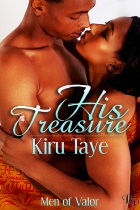
The blogger Amy McKie recently reviewed Kiru Taye’s novella His Treasure (Men of Valor)  published by Breathless Press here. I must say that I am not a fan of romance novels; they don’t really do much for me these days in my middle passage. Amy recommended it to me and I remembered I’d bought it a while back where it currently languishes on my iPad Adunni’s Kindle. This Christmas weekend I have had a lot of time on my hands – my lover had fled the coop and traveled out of the country and the kids were out of the house along with my wallet buying stuff they don’t need, in the name of Christmas.

Well, I am glad I read the book. It is a very short read – about the equivalent of 50 pages. The book takes us to a pristine village in pre-colonial South Eastern Nigeria where we follow the story of a young lady Adaku who although in love with an Igbo prince (Emeka), is made to marry someone else (Obinna) by her family. At first she is unhappy in this arrangement as she pines for her real love. Obinna proves to be quite the gentleman; understanding, caring and – to Adaku’s pleasant surprise, a hopeless romantic and every young woman’s dream in bed.

I won’t lie; the book got my ancient heart racing. It is peppered with lusty, steamy love scenes tastefully done. I can see how the author will develop a cult following among young adult readers. It is an easy and pleasant read thanks to the well-paced, well-written prose. It is a page turner also; I kept reading hoping to run into the next love scene; this was a busy couple, their nights creaked all night long. Do not read this alone if your lover is nowhere nearby, you might have to take long showers in between chapters. Thankfully or sadly the book was rather short.

I would recommend this light reading to anyone; it is certainly a nice break from the heavy overly serious stuff we are fed by many African writers lately. There are no wars, no rapes, none of the usual African story of gloom and doom; here, everyone seems well fed (you would need to, all that lovemaking!) and Taye is a careful writer; so there are precious few editorial issues in the book.

To be clear, this is not great literature as purists know it. The dialogue was sometimes stilted. Taye situates the novel in pre-colonial Nigeria; however much of the sexual activities would appear to be common with contemporary Nigeria, and so there are historical issues here to be addressed. Taye’s characters engage in robust and wide ranging sexual activities you would ordinarily not find in the characters of traditional African stories. I think it is refreshing; however the book could have benefited from research on sex and sexuality in Nigerian communities of that era. Here are some examples:

“She gasped and his gaze came up, locking on to her and pinning her to the spot. His eyes were filled with a desire she couldn’t explain. His tongue moved down her skin, searing a path to the spot at the center of her palm before licking it. Then he released her hand, and she realized she was trembling. She felt a need pulsating in her core, leaving her confused. All he’d done was lick her fingers. Yet it seemed to turn her into a trembling mass, yearning for more of his touch.” (Kindle Locations 129-132).

“When his tongue darted out and swirled around her swollen nub, she gasped out loud. He loved the taste and sound of her. She’d surrendered herself to him. Willingly. He could give her pleasure as he’d yearned to do for months. Totally. Taking her hardened nub into his mouth, he suckled on it, lapping at her nectar as it flowed freely. She writhed beneath him, and he moved a hand onto her flat stomach, holding her down. With the other he thrust his fingers into her, playing out what he yearned to do with his manhood. Even after she’d screamed out his name in her climax, he continued licking her until her body went limp beneath his touch. It was only then he pushed his throbbing manhood into her warm depth. He kissed her again soundly. She came alive, responding promptly and clinging onto his shoulders, her legs wrapped around his hips.” (Kindle Locations 437-443).

Was oral sex a common practice in the villages of pre-colonial Nigeria? Was kissing, common and standard sexual practice today, an indigenous practice in Nigerian communities at the time? How was sex enjoyed at the time? I honestly do not know these things. However in the absence of these answers, the book comes across as a contrived formulaic imposition of Western practices on a traditional Nigerian village.  As a near-aside, one of the suitors is described as a “Prince”. The Igbo like to say proudly that there’s no monarchy in Igboland. There were no kings and queens before colonialism in Igboland. So a Prince Emeka “who looked regal in rich patterned clothes and jeweled gold crown” seems, well, fictionalized. There is a conversation to be had obviously about the place of history in fiction and vice versa. Still it did not stop me from enjoying the book. I missed my lover, many thanks to the book. Let me leave you with what one of my Facebook friends called “sweet torture.”

“His body reacted the same way it always did since the first time he’d seen her. His heart rate picked up. Heat flooded his body, stirring his manhood, hardening it. She was the most beautiful woman he’d ever seen. Tall and slender, her flawless skin of darkest ebony, she had an oval face, dark-brown eyes fringed by long, black lashes, a small nose, and a pair of juicy lips. Her hair was twisted in braids and adorned with beads. The decorative markings on her body identified her as the daughter of a titled man. He ached for his wife. He longed to go to her as she stood drying her body. He wanted to taste her sweet lips, feel her softness against his skin, and sink into her warm depths again and again. Yet he didn’t move, but stood there, watching her get dressed while he wanted to undress her. This is madness.” (Kindle Locations 87-93).

So now, you know what I did on my Christmas break. Now, back to my regularly programmed activity – bashing writers who take themselves too seriously (including me!).